

Archive position — measured, not model output
0 likes on Devpost
2,263 of the 7,850 archived projects have more likes, and 5,587 share exactly 0 — so this project's #2,544 place in the like-ranked listing is a tie-break inside that group, not a ranking.
Projects (log scale)
Likes on Devpost. ▲ marks this project's group.
Show the figures
| Likes | Projects | Share of archive |
|---|---|---|
| 0 | 5,587 | 71.2% |
| 1 | 1,758 | 22.4% |
| 2 | 284 | 3.6% |
| 3–4 | 132 | 1.7% |
| 5–9 | 75 | 1.0% |
| 10+ | 14 | 0.2% |
 User Stories BotA demo video on every pull request
Get a demo video on every new feature
GitHub App that watches your pull requests and records a narrated, captioned demo.
Save time on demo prep and make informed decisions faster with a video walkthrough of every new feature.
Executive Summary
What the company appears to be
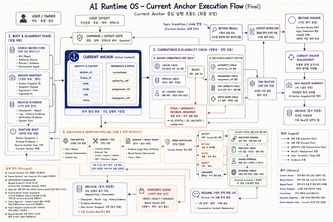
The project described as ai-career is a self-reported runtime layer that aims to manage AI agent alignment and collaboration across sessions by enforcing governance, task boundaries, evidence requirements, and state recovery. It is built around source-backed contracts (Markdown, Git) and uses Python and SQLite for execution.
What changed
The author states that the project was developed as part of a hackathon submission, with an emphasis on separating governance alignment from executable runtime startup — a key architectural evolution during development.
Single most important open question
Is there any evidence of real-world usage or integration beyond the developer’s own testing and tutorial mode?
What The Product Actually Is
The description states that ai-career is a repository-backed collaboration runtime for AI agents. It loads governance, task frames, and evidence before applying roles or modes. It uses Markdown contracts to define authority, currentness, task boundaries, and execution permissions.
It includes:
- A Currentness Anchor, which records session state including role, task, authority, and evidence.
- Task Frames that bound work and require evidence-backed results.
- Guarded execution mechanisms to prevent unauthorized mutations.
- Checkpoints and resume records for recovery across sessions.
- A read-only Tutorial Mode that explains the system without installing or modifying anything.
It is built using:
- Git-backed source control
- Markdown contracts
- Python reference runtime
- SQLite for persistence
The system is described as a source-backed runtime layer around ordinary AI tools, not a standalone platform or toolset.
Inference: The product appears to be a conceptual framework and prototype, not yet a commercial offering. It is designed to be integrated into existing AI workflows rather than used in isolation.
Positioning & Claim Evolution
The author positions ai-career as a solution for AI collaboration issues where long-running sessions lose track of state, task boundaries, or authorization. The core claim is that it keeps AI agents aligned across sessions by making session state explicit and recoverable.
Key claims:
- AI collaboration should depend less on perfect conversation memory.
- Session state must be inspectable, validated, and resumable.
- Governance rules are loaded from repositories instead of relying on conversation context.
- Results from workers must be backed by evidence before being adopted.
The project evolved from an initial prototype to a more structured architecture:
- Initially, governance boot and local runtime startup were coupled.
- Later, this was separated as a major architectural change.
- The system now distinguishes between governance alignment and executable runtime proof.
Inference: This suggests the team has iterated on conceptual clarity and technical separation — but not necessarily on product-market fit or traction.
Target Customer & ICP
The description does not clearly identify a specific customer segment or ideal customer profile (ICP). However, it implies use cases for:
- Developers working with AI agents in long-running sessions.
- Teams managing AI-assisted development workflows.
- Users who want to ensure that AI-generated outputs are validated before adoption.
It is described as a runtime layer, suggesting it targets developers or integrators rather than end-users directly.
Not evidenced: No explicit customer personas, use cases, or target industries are provided. The positioning remains conceptual and not tied to any real-world deployment.
Business Model & Pricing Evidence
There is no evidence of pricing, monetization strategy, or business model in the description.
The project is presented as a hackathon submission, with no mention of revenue streams, licensing, subscriptions, or paid features.
Not evidenced: No indication of how this would be sold or monetized if it were to become a product.
Technical & Delivery Signals
The system is built using:
- Git-backed source control
- Markdown contracts
- Python reference runtime
- SQLite for persistence
- Local session processes and host adapters
It supports:
- Deterministic execution state
- Evidence-backed result packets
- One-time execution receipts
- Cross-host comparison contracts
- Bounded task execution
- Guarded file mutations
The author notes that Codex (GPT-5.6) was used extensively in development, including for design, implementation, testing, and documentation.
Inference: The system is technically sophisticated but remains a prototype or proof-of-concept. It lacks evidence of production-grade delivery or scalability.
Traction & Maturity Signals
There is no evidence of traction, customers, revenue, or adoption beyond the author’s own development and tutorial mode.
The project is described as:
- A hackathon submission
- Built by one person (konezero KIM)
- Tested internally via tutorial mode and golden fixtures
- Not integrated into any external AI tools or platforms
Not evidenced: No real-world usage, user feedback, or performance data are provided. The maturity level is limited to a prototype.
Competitive Context
The description does not mention competitors or existing solutions in the space of AI agent alignment or collaboration.
It appears to address problems related to:
- AI session state management
- Task delegation and evidence handling
- Governance enforcement across AI tools
However, no comparison with other tools or platforms is made.
Not evidenced: No competitive landscape or differentiation strategy is described.
Open Questions & Risks
- Unproven market demand: The project is a hackathon submission with no evidence of real-world usage.
- Single-person development: Limited team size raises questions about scalability and long-term maintenance.
- Conceptual vs. commercial readiness: The system is described as a prototype, not a product ready for enterprise use.
- No pricing or monetization model: Unclear how this would be commercialized.
- Limited integration claims: No evidence of integration with existing AI platforms or tools.
Inference: This project may be too early-stage to evaluate for investment or partnership unless further development and traction are demonstrated.
Questions the description leaves open
- What specific AI workflows or use cases does this address in practice?
- Has the system been tested with multiple AI hosts or models beyond what was used during development?
- How would you envision integrating this into existing development environments or platforms?
- Are there any plans to build out a marketplace or ecosystem around these governance contracts?
- What are the key assumptions about how developers will interact with this system in real-world settings?
Overall Assessment
Not evidenced No data on revenue, customers, traction, or commercial viability.
The project is described as a hackathon submission, built by one developer, and tested only in internal environments. It presents an interesting conceptual framework for AI agent alignment but lacks evidence of real-world application, scalability, or product-market fit.
Inference: At this stage, it is not suitable for investment or partnership unless there are clear signs of traction or a path toward commercialization. The idea has potential, but the current state is that of a prototype.
User Stories BotA demo video on every pull request
Get a demo video on every new feature
GitHub App that watches your pull requests and records a narrated, captioned demo.
Save time on demo prep and make informed decisions faster with a video walkthrough of every new feature.
Source
Submitted to the OpenAI 2026 hackathon on Devpost. Project home on Devpost. Back to the full gallery on Devpost.
This competitive analysis was produced by top-founders.com (opens in a new tab)
Generated by a language model from this project's public Devpost page — its tagline, the author's own write-up and any built-with tags listed there — as captured in August 2026. Short quotations are the author's words. It is an opinion on the idea as a business, not on the people behind it, and it reflects the description as published then. If the project has moved on, request a correction below. The analysis is not independent research and contains no verified traction, revenue or customer data.
An independent guide by KFG International LLC — not affiliated with, endorsed by, or connected to Devpost or OpenAI.