

Archive position — measured, not model output
1 like on Devpost
505 of the 7,850 archived projects have more likes, and 1,758 share exactly 1 — so this project's #1,633 place in the like-ranked listing is a tie-break inside that group, not a ranking.
Projects (log scale)
Likes on Devpost. ▲ marks this project's group.
Show the figures
| Likes | Projects | Share of archive |
|---|---|---|
| 0 | 5,587 | 71.2% |
| 1 | 1,758 | 22.4% |
| 2 | 284 | 3.6% |
| 3–4 | 132 | 1.7% |
| 5–9 | 75 | 1.0% |
| 10+ | 14 | 0.2% |
 User Stories BotA demo video on every pull request
Get a demo video on every new feature
GitHub App that watches your pull requests and records a narrated, captioned demo.
Save time on demo prep and make informed decisions faster with a video walkthrough of every new feature.
Executive Summary
What the company appears to be: Pathwise-AI Career CoPilot is a self-reported web application that uses AI to analyze a user’s resume and target job role, then generates a personalized career plan including fit scores, skill gaps, learning roadmap, mock-interview feedback, and resume suggestions. It was built as a hackathon project by one founder (ravi murthy) using OpenAI API, Supabase, and Node.js.
What changed: The author states they built this tool to help people stuck in job searching find clear next steps, with an emphasis on actionable career advice rather than generic guidance. A Guided Demo mode was added to allow exploration without consuming API credits.
The single most important open question: Is there any evidence of user adoption or product-market fit beyond the author’s own development and self-reporting?
Analysis basis: The entire analysis is based on the self-reported project description provided by the caller. No external verification, revenue data, customer list, or traction metrics are available.
What The Product Actually Is
The description states that Pathwise-AI Career CoPilot is an AI-powered web application designed to help users create a personalized career plan. It allows users to upload or paste a resume and specify a target job role. Based on this input, the system provides:
- Fit score
- Strengths and skill gaps
- A four-week improvement plan
- Resume suggestions
- Interview practice
- Tailored introduction
The author notes that GPT-5.6 powers these features, with Supabase managing user authentication and saved plans, and deployment handled via Render.
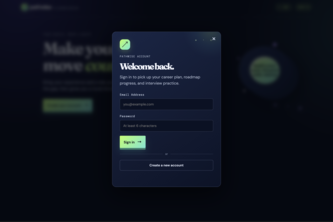
Inference: The product is described as a web-based AI career planning tool, but no screenshots, UI details, or functional demonstrations are provided in the description.
Positioning & Claim Evolution
The author claims that Pathwise-AI Career CoPilot addresses a gap in job-search advice by offering a clear, actionable next step instead of generic suggestions. It positions itself as a "career copilot" that guides users through skill development and interview preparation.
Key claims:
- Helps people who feel stuck or unsure how to move toward a new role.
- Provides practical starting points for career transitions.
- Does not promise job placement but aims to clarify the next step.
Claim vs Fact: These are self-reported intentions. There is no evidence of actual user feedback, usage patterns, or success metrics to confirm whether these claims reflect real impact.
Target Customer & ICP
The description does not explicitly define a target customer segment or ideal customer profile (ICP). However, it implies that the tool is aimed at individuals who are:
- Searching for jobs
- Feeling uncertain about their next career move
- Looking to improve their resume and interview readiness
It also suggests a user base that might include job seekers in transition, professionals aiming to switch roles, or those preparing for interviews.
Inference: The target audience is inferred from the stated problem (uncertainty during job search), but no explicit segmentation or persona details are given.
Business Model & Pricing Evidence
There is no evidence of a business model or pricing structure in the description. The author mentions adding "request limits" and a "Guided Demo mode" to manage API usage, suggesting some form of rate limiting or access control, but nothing about monetization, subscriptions, or paid tiers.
Not evidenced: No indication of how the product would generate revenue or whether it has any pricing strategy beyond the developer’s own use of API credits.
Technical & Delivery Signals
The author built Pathwise using:
- HTML, CSS, JavaScript
- Node.js
- Supabase (for authentication and data storage)
- OpenAI API (specifically GPT-5.6)
- Codex for development assistance
- Deployed on Render
It is described as a web application with a guided demo mode to allow exploration without consuming credits.
Inference: The tech stack suggests a lightweight, server-side rendered or full-stack JavaScript app built quickly using AI-assisted tools and open APIs. No mention of scalability, performance, or long-term infrastructure planning.
Traction & Maturity Signals
There is no evidence of traction or maturity beyond the author’s own development effort. The project was submitted to a hackathon (OpenAI 2026), indicating it is likely in early-stage prototype form.
Not evidenced: No data on user engagement, retention, conversion rates, or product usage history exists in the description.
Competitive Context
The description does not reference competitors or similar products. It does not compare Pathwise-AI Career CoPilot to existing tools in the career planning, resume optimization, or AI coaching space.
Not evidenced: No competitive analysis, market positioning, or differentiation from other platforms is included.
Open Questions & Risks
- Single founder project: With only one team member (ravi murthy), scalability and long-term maintenance are concerns.
- No revenue or traction: The tool has not demonstrated any commercial viability or user adoption.
- Unverified claims: All benefits and features are self-reported without external validation.
- Limited product scope: The tool appears to be a prototype, not a fully developed SaaS offering.
- Dependence on third-party APIs: Heavy reliance on OpenAI API and Supabase introduces risk if those services change or become costly.
Inference: These risks are based on the lack of evidence for any commercial traction or robust product development beyond a hackathon submission.
Questions the description leaves open
- What specific problems do users face when trying to transition into new roles, and how does Pathwise address them?
- Have you tested this with real users? If so, what were the key insights from that testing?
- How do you plan to monetize the product beyond the current API usage model?
- Are there any plans for scaling beyond a single developer’s effort?
- What are your assumptions about user behavior and willingness to pay for such a service?
Overall Assessment
At this stage, Pathwise-AI Career CoPilot appears to be an early-stage prototype built as part of a hackathon project. There is no evidence of revenue, customers, or product-market fit.
Assessment: Not ready for investment or partnership consideration at this time. The tool lacks commercial traction and maturity. Further due diligence would require evidence of user engagement, product usage, and a clear path to monetization.
User Stories BotA demo video on every pull request
Get a demo video on every new feature
GitHub App that watches your pull requests and records a narrated, captioned demo.
Save time on demo prep and make informed decisions faster with a video walkthrough of every new feature.
Source
Submitted to the OpenAI 2026 hackathon on Devpost. Project home on Devpost. Back to the full gallery on Devpost.
This competitive analysis was produced by top-founders.com (opens in a new tab)
Generated by a language model from this project's public Devpost page — its tagline, the author's own write-up and any built-with tags listed there — as captured in August 2026. Short quotations are the author's words. It is an opinion on the idea as a business, not on the people behind it, and it reflects the description as published then. If the project has moved on, request a correction below. The analysis is not independent research and contains no verified traction, revenue or customer data.
An independent guide by KFG International LLC — not affiliated with, endorsed by, or connected to Devpost or OpenAI.