

Archive position — measured, not model output
0 likes on Devpost
2,263 of the 7,850 archived projects have more likes, and 5,587 share exactly 0 — so this project's #2,362 place in the like-ranked listing is a tie-break inside that group, not a ranking.
Projects (log scale)
Likes on Devpost. ▲ marks this project's group.
Show the figures
| Likes | Projects | Share of archive |
|---|---|---|
| 0 | 5,587 | 71.2% |
| 1 | 1,758 | 22.4% |
| 2 | 284 | 3.6% |
| 3–4 | 132 | 1.7% |
| 5–9 | 75 | 1.0% |
| 10+ | 14 | 0.2% |
 User Stories BotA demo video on every pull request
Get a demo video on every new feature
GitHub App that watches your pull requests and records a narrated, captioned demo.
Save time on demo prep and make informed decisions faster with a video walkthrough of every new feature.
Executive Summary
What the company appears to be
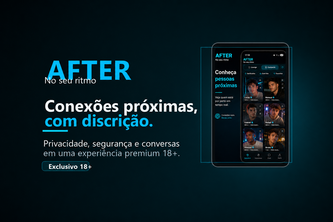
The description states that AFTER is a real Android relationship app built by an independent Brazilian creator with Codex as an engineering partner. The author describes it as a product that helps gay men discover nearby people and start meaningful conversations, including features like chat, photo sharing, location-based discovery, and moderation tools.
What changed
The project was developed over a short timeframe (a "Build Week") using AI engineering assistance from Codex. It transitioned from an idea to a shipped product with a public Android app and web experience.
Single most important open question — the commercial due-diligence read
Is there evidence of any sustainable business model or customer traction beyond this single developer’s personal project? The description makes no claims about revenue, users, or monetization strategies. It is unclear whether this represents a prototype or a viable product with market demand.
What The Product Actually Is
The description states that AFTER is an Android relationship app built for gay men to discover nearby people and start meaningful conversations. It includes features such as:
- Lounge and Compact discovery views
- Profiles and galleries
- Favorites and connections
- Real-time chat with text, photos, audio, and location
- Recent-presence signals
- Blocking and reporting
- Age safeguards
- Push notifications
- Photo moderation
- An administrative dashboard
The app is already distributed through Google Play and the web experience is publicly available.
Evidence
- The author describes the app’s functionality in detail.
- It uses React and Capacitor 8 for mobile development.
- Supabase handles authentication, storage, and real-time features.
- Firebase Cloud Messaging powers Android notifications.
- Google Cloud Vision SafeSearch supports photo moderation.
- Vercel hosts the web experience.
Inference The app appears to be a functional prototype with core social networking features tailored to a niche audience (gay men in Brazil), but no evidence of scale or commercial adoption.
Positioning & Claim Evolution
The author positions AFTER as:
- A Brazilian alternative to expensive, noisy, and impersonal relationship apps.
- Focused on proximity, discretion, safety, and direct human connection.
- Free from aggressive advertising.
- Built by someone without a traditional software-engineering background, with Codex acting as an engineering partner.
Evidence
- The tagline: “A real Android relationship app built by an independent Brazilian creator with Codex as an engineering partner.”
- The inspiration behind the project is described as a personal question about whether non-engineers can build production apps using AI.
- The author emphasizes that the app was built without traditional engineering teams.
Inference The positioning reflects a niche, socially conscious approach to app development. However, there is no evidence of market validation or user feedback beyond the creator’s own experience.
Target Customer & ICP
The description states that AFTER targets:
- Gay men looking for nearby connections.
- Users who value proximity, discretion, safety, and direct human connection.
- A Brazilian audience, specifically.
Evidence
- The app is described as a “Brazilian alternative” to mainstream relationship apps.
- It includes features like age safeguards, blocking/reporting, and photo moderation, suggesting a focus on user safety.
- The discovery views are based on proximity.
Inference The target customer segment appears to be gay men in Brazil seeking safe, low-pressure social interaction. However, no data or metrics about actual users or market size are provided.
Business Model & Pricing Evidence
There is no evidence of a business model or pricing strategy in the description.
Evidence
- The author mentions optional premium value that “never depends on disruptive advertising.”
- No mention of subscription plans, in-app purchases, or monetization methods.
- No revenue figures, customer acquisition costs, or pricing tiers are stated.
Inference While the app may eventually support monetization through premium features, there is no indication of how this will be implemented or whether it has been tested with users.
Technical & Delivery Signals
The project was built using:
- React and Capacitor 8 for mobile development
- Supabase for Auth, Postgres, Storage, Realtime, Row Level Security, and Edge Functions
- Firebase Cloud Messaging for Android notifications
- Google Cloud Vision SafeSearch for photo moderation
- Vercel for hosting the web experience
The author reports:
- Migration to Capacitor 8 while maintaining web functionality
- Shared mobile photo pipeline for profile, gallery, and chat flows
- Stabilized real-time messaging with text, images, voice messages, and location cards
- Native notifications, secure-screen support, moderation, and administrative controls
Evidence
- The author describes the stack used.
- Technical challenges such as Android content URIs, photo formats, and release signing are mentioned.
Inference The technical architecture shows a solid foundation for a mobile app with real-time capabilities. However, no evidence of scalability, performance testing, or production monitoring is provided.
Traction & Maturity Signals
There is no evidence of traction or maturity beyond the single developer’s personal project.
Evidence
- The app is live on Google Play and Vercel.
- The author reports accomplishments such as migrating to Capacitor 8 and stabilizing messaging.
- No mention of user numbers, retention rates, engagement metrics, or revenue.
Inference The product has reached a basic functional state but lacks any indication of adoption or growth. It remains a prototype or early-stage MVP.
Competitive Context
The description does not provide information about competitors or the competitive landscape.
Evidence
- The author states that relationship apps can be expensive, noisy, and impersonal.
- No mention of specific competitors or market positioning relative to them.
Inference It is unclear whether AFTER competes with existing platforms like Tinder, Bumble, or local Brazilian dating apps. No competitive analysis or differentiation strategy is evident.
Open Questions & Risks
Several key risks and open questions are present:
- The project was built by a single developer using AI assistance — no team structure or operational support.
- No evidence of user feedback, market testing, or product-market fit.
- No revenue model or monetization plan beyond optional premium features.
- No indication of long-term sustainability or scalability.
- The app is described as a personal project, not a commercial venture.
Evidence
- Team size: 1 member (Emerson Silva).
- The author states that the app was built during a hackathon-style event.
- No mention of funding, partnerships, or business development activities.
Inference This is a solo developer project with no signs of institutional backing or commercial viability. It may not be scalable or sustainable beyond its creator’s involvement.
Questions the description leaves open
- What is the actual user base and engagement level for AFTER?
- How do you plan to monetize the app beyond optional premium features?
- Are there any plans to expand beyond Brazil or target other demographics?
- Has the app undergone any formal security audits or compliance checks?
- What are the key technical challenges that remain unresolved or under-tested?
- Is there a roadmap for future development, and how is it prioritized?
- How does Codex contribute to the product beyond code generation?
Overall Assessment
There is no evidence of commercial traction, revenue, or customer adoption. The project is described as a personal endeavor built by one developer with AI assistance during a hackathon-style event.
Evidence
- No financials, users, or market data.
- No indication of scalability or long-term viability.
- No formal business model or monetization strategy beyond vague mentions of optional premium features.
Inference This is not a commercial product or venture with investment-ready potential. It is a prototype or proof-of-concept that demonstrates technical capability but lacks any signs of market demand or sustainable growth. The project should be viewed as an experiment rather than a business opportunity.
User Stories BotA demo video on every pull request
Get a demo video on every new feature
GitHub App that watches your pull requests and records a narrated, captioned demo.
Save time on demo prep and make informed decisions faster with a video walkthrough of every new feature.
Source
Submitted to the OpenAI 2026 hackathon on Devpost. Project home on Devpost. Back to the full gallery on Devpost.
This competitive analysis was produced by top-founders.com (opens in a new tab)
Generated by a language model from this project's public Devpost page — its tagline, the author's own write-up and any built-with tags listed there — as captured in August 2026. Short quotations are the author's words. It is an opinion on the idea as a business, not on the people behind it, and it reflects the description as published then. If the project has moved on, request a correction below. The analysis is not independent research and contains no verified traction, revenue or customer data.
An independent guide by KFG International LLC — not affiliated with, endorsed by, or connected to Devpost or OpenAI.