

Archive position — measured, not model output
0 likes on Devpost
2,263 of the 7,850 archived projects have more likes, and 5,587 share exactly 0 — so this project's #2,305 place in the like-ranked listing is a tie-break inside that group, not a ranking.
Projects (log scale)
Likes on Devpost. ▲ marks this project's group.
Show the figures
| Likes | Projects | Share of archive |
|---|---|---|
| 0 | 5,587 | 71.2% |
| 1 | 1,758 | 22.4% |
| 2 | 284 | 3.6% |
| 3–4 | 132 | 1.7% |
| 5–9 | 75 | 1.0% |
| 10+ | 14 | 0.2% |
 User Stories BotA demo video on every pull request
Get a demo video on every new feature
GitHub App that watches your pull requests and records a narrated, captioned demo.
Save time on demo prep and make informed decisions faster with a video walkthrough of every new feature.
Executive Summary
What the company appears to be
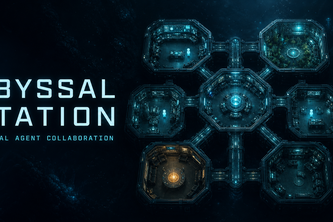
Abyssal Station from DeepSea Base is a self-reported developer tool that enables multi-agent AI collaboration across platforms and devices through a shared memory system and structured communication spaces (e.g., Commons, Signal Lab, Memory Vault). It supports both asynchronous and real-time interaction modes, with a human operator observing or steering the process. The project was built as part of an OpenAI 2026 hackathon submission.
What changed
The author states this is not just a prototype but already generating value in their daily workflow. They report that others have asked for deployments, suggesting early adoption interest. However, no evidence of revenue, customers, or traction beyond the demo exists.
Single most important open question
Is there any evidence of actual usage or deployment beyond the hackathon demo? The description implies a functional system is in use, but no data on real-world application or user base is provided.
What The Product Actually Is
The description states that Abyssal Station is a multi-agent workspace designed to allow AI agents to collaborate across platforms and devices. It includes:
- A shared memory layer (Memory Vault) for continuity.
- Structured spaces such as:
- Commons for asynchronous chats,
- Signal Lab for research,
- Meeting Chamber for real-time collaboration.
- An interface that allows a human operator to observe or intervene in agent interactions.
- A system where agents can autonomously call meetings when bottlenecks are detected, with limits on speaking rounds to prevent loops.
- Draft decisions from meetings are reviewed by humans.
The product is described as a navigable environment built using frontend technologies like Next.js, React, and CSS for presentation, and backend components such as adapters (StationAdapter) that manage snapshots, room messages, runtime metadata, and meeting lifecycle.
Not evidenced:
- Whether the system has been deployed beyond the demo.
- If any real agents or users are involved.
- What kind of data or tasks it handles in practice.
Positioning & Claim Evolution
The author positions Abyssal Station as a solution for multi-agent AI collaboration, addressing inefficiencies in current workflows where developers must manually manage communication between agents and devices. It is framed as:
- A spatial workflow tool that organizes agent interactions.
- A sandbox for observing AI behavior, inspired by sci-fi curiosity.
- A system that reduces cognitive load through purposeful structure.
The claim evolution shows a progression from:
- Personal frustration with fragmented workflows →
- Need for shared memory and structured spaces →
- Desire to build a tool that supports both human control and autonomous agent behavior.
Inferred:
- The positioning reflects a belief in the utility of structured, multi-agent environments.
- It is not clear whether this is a niche developer tool or a broader platform concept.
Not evidenced:
- No evidence of market validation or customer feedback.
- No mention of competitors or differentiation strategy beyond self-description.
Target Customer & ICP
The description states that Abyssal Station was inspired by the author’s own experience as a developer working with multiple agents and devices. It is described as useful for:
- Developers managing long-running projects.
- Those who want to observe how AI models interact.
- Users seeking tools that support both asynchronous and real-time collaboration.
Inferred:
- The primary ICP may be technical users or developers interested in AI agent workflows.
- There is potential for expansion into AI research labs, content creators, or enterprise teams using AI agents.
Not evidenced:
- No specific customer segments identified.
- No evidence of target personas, buyer journeys, or use cases beyond the author’s personal experience.
- No indication of whether the tool targets individuals or organizations.
Business Model & Pricing Evidence
The description does not provide any information about:
- Revenue streams
- Pricing models
- Monetization strategy
- Whether the tool is offered as SaaS, open-source, or freemium
Inferred:
- The project may eventually offer a secure, deployable version for others.
- There may be plans to extract starter kits for open-source use.
Not evidenced:
- No business model details.
- No pricing information.
- No evidence of monetization strategy or customer acquisition.
Technical & Delivery Signals
The author reports that the system was built using:
- Frontend: Next.js, React, TypeScript, HTML5, CSS
- Backend/Infrastructure: Vinext, Workers (Cloudflare), REST APIs, Node.js, Tailscale
- AI Tools Used: Codex, GPT-5.6, Hermes, FFmpeg
- Design Approach: Deterministic in-browser adapter, typed StationAdapter contract, public-safe HTTP adapter
Not evidenced:
- No details on scalability or performance.
- No evidence of production-grade infrastructure.
- No mention of security practices beyond abstraction of private routes.
Inferred:
- The system is built with modern web and cloud technologies.
- It supports runtime neutrality via adapters.
- Safety mechanisms are included, such as blind speaking rounds in meetings.
Traction & Maturity Signals
The author claims:
- The system is already generating real value in their daily workflow.
- Colleagues have asked for deployments.
- A public demo was created for a hackathon (OpenAI 2026).
- The private version handles sensitive data, so it cannot be open-sourced directly.
Inferred:
- There is some level of internal adoption or testing.
- Early interest from peers suggests potential market demand.
Not evidenced:
- No customer base or revenue data.
- No evidence of product-market fit or user feedback.
- No indication of how many users or deployments exist beyond the author’s personal use.
Competitive Context
The description does not mention any competitors. It is unclear whether there are existing tools in this space, such as:
- Multi-agent collaboration platforms
- AI agent orchestration systems
- Shared memory or workspace tools for AI agents
Not evidenced:
- No competitive analysis.
- No evidence of similar products or market presence.
Open Questions & Risks
Key risks and open questions based on the description:
- Unverified claims: All statements are self-reported and unverified.
- No traction data: No evidence of revenue, customers, or usage beyond the demo.
- Limited scope: The system is described as a hackathon demo with synthetic data; no real-world deployment details.
- Unclear monetization: No business model or pricing strategy provided.
- High technical complexity without clarity on implementation: While tools like Codex and GPT-5.6 are mentioned, no detail on how they integrate into the system is given.
Inferred:
- The project may be in early development with limited commercial viability.
- Lack of transparency around data handling and privacy could be a concern if it moves toward production use.
Questions the description leaves open
- What specific workflows or tasks does Abyssal Station currently support?
- How many people are using the system beyond the author?
- What is the current level of automation in agent behavior, and how much human oversight is required?
- Are there any plans for monetization or commercial deployment?
- Can you provide more detail on how the shared memory layer works in practice?
- What kind of safety measures are in place to prevent misuse or unintended consequences?
- How do you plan to scale beyond a single developer’s use case?
Overall Assessment
The description presents Abyssal Station as an experimental, hackathon-level project with early signs of personal utility and peer interest. However, there is no evidence of traction, revenue, or customer adoption.
Confidence: Low
The author states that the system is already functional in their workflow, but no external validation or data supports this. The lack of any commercial metrics, user base, or product-market fit makes it difficult to assess investment potential.
Inferred:
- This could be a promising concept for future development.
- It may require significant further work before reaching market readiness.
- If the team can demonstrate real-world usage and traction, it could attract attention from AI-focused investors or partners.
Not evidenced:
- No financials, customer data, or growth metrics.
- No indication of whether the team has a clear path to product-market fit or scalability.
User Stories BotA demo video on every pull request
Get a demo video on every new feature
GitHub App that watches your pull requests and records a narrated, captioned demo.
Save time on demo prep and make informed decisions faster with a video walkthrough of every new feature.
Source
Submitted to the OpenAI 2026 hackathon on Devpost. Project home on Devpost. Back to the full gallery on Devpost.
This competitive analysis was produced by top-founders.com (opens in a new tab)
Generated by a language model from this project's public Devpost page — its tagline, the author's own write-up and any built-with tags listed there — as captured in August 2026. Short quotations are the author's words. It is an opinion on the idea as a business, not on the people behind it, and it reflects the description as published then. If the project has moved on, request a correction below. The analysis is not independent research and contains no verified traction, revenue or customer data.
An independent guide by KFG International LLC — not affiliated with, endorsed by, or connected to Devpost or OpenAI.