

Archive position — measured, not model output
0 likes on Devpost
2,263 of the 7,850 archived projects have more likes, and 5,587 share exactly 0 — so this project's #2,290 place in the like-ranked listing is a tie-break inside that group, not a ranking.
Projects (log scale)
Likes on Devpost. ▲ marks this project's group.
Show the figures
| Likes | Projects | Share of archive |
|---|---|---|
| 0 | 5,587 | 71.2% |
| 1 | 1,758 | 22.4% |
| 2 | 284 | 3.6% |
| 3–4 | 132 | 1.7% |
| 5–9 | 75 | 1.0% |
| 10+ | 14 | 0.2% |
 User Stories BotA demo video on every pull request
Get a demo video on every new feature
GitHub App that watches your pull requests and records a narrated, captioned demo.
Save time on demo prep and make informed decisions faster with a video walkthrough of every new feature.
Executive Summary
What the company appears to be
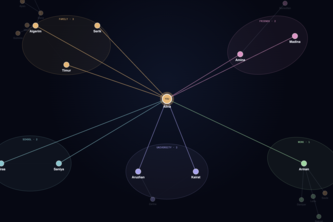
7links is a self-reported relationship management tool that visualizes personal connections in a graph-based interface. The product is described as a "private relationship atlas" that organizes relationships into categories like family, friends, school, and work, with a focus on maintaining user centrality while showing indirect connections.
What changed
The project was submitted to the OpenAI 2026 hackathon, indicating it is in an early-stage development or prototype phase. No commercial traction, revenue, or customer data are evidenced.
Single most important open question
Is there a viable market need for a private relationship management tool that visualizes connections in this way, and does the team have a clear path to product-market fit or monetization?
Note: This analysis is based solely on the self-reported description provided by the authors. No external verification, traction data, or financials are available.
What The Product Actually Is
The description states that 7links is a private relationship atlas. It organizes direct connections into islands such as family, friends, school, and work. Secondary connections remain visible but dimmed, and selecting someone reveals their branch and connection back to the user. It also includes features like relationship notes, event reminders, search, and a "Bridge Finder" that shows how two people are connected.
The tool uses React, TypeScript, Vite, D3, react-force-graph, Supabase Auth, and Vercel for its implementation. The interface is described as using custom layouts to keep direct connections organized while arranging secondary connections into readable trees.
Inference: The product appears to be a graph-based visualization tool for personal relationships, with an emphasis on privacy and user control over connection visibility.
Positioning & Claim Evolution
The description states that 7links was inspired by Kazakh culture, specifically the tradition of Жеті ата (Zheti Ata), which emphasizes remembering seven generations of ancestors. This cultural inspiration is used to frame the product’s positioning as a tool that brings traditional values into modern relationships.
The product claims to help users "remember the connections, so you can focus on the people", suggesting an emotional or personal value proposition rather than a productivity one.
Inference: The positioning is rooted in cultural heritage and personal relationship management, not business or professional use. It is unclear whether this has evolved from an initial idea to a more refined vision.
Target Customer & ICP
The description does not clearly define the target customer or ideal customer profile (ICP). It describes 7links as a tool for organizing personal relationships and mentions that it supports "family, friends, school, and work" connections. However, no specific user persona or segment is identified.
Inference: The product appears aimed at individuals who value personal relationships and may be looking for tools to manage them more effectively, but the exact audience is not defined.
Business Model & Pricing Evidence
There is no evidence in the description of a business model or pricing strategy. The project is described as a hackathon submission with no mention of monetization, subscriptions, or paid features.
Inference: No commercial model is evident from the self-reported description.
Technical & Delivery Signals
The product was built using:
- Frontend: React, TypeScript, Vite
- Backend/Database: Supabase Auth
- Visualization: D3, react-force-graph
- Deployment: Vercel
It includes features like:
- Graph visualization of relationships
- Search and event reminders
- Bridge Finder to show connection paths
- Privacy-first contact importing (mentioned as a future feature)
Inference: The tech stack suggests a modern web-based application with graph visualization capabilities. The use of Supabase implies a backend-as-a-service approach, but no details on scalability or data handling are provided.
Traction & Maturity Signals
The project is described as a hackathon submission to the OpenAI 2026 hackathon. It has:
- A team of two members
- No evidence of revenue, customers, or adoption
- No mention of user testing, feedback loops, or product iterations
Inference: The product is in an early prototype stage with no demonstrated traction or market validation.
Competitive Context
The description does not provide any information on competitors. It does not reference existing tools for managing personal relationships or social networks.
Inference: No competitive landscape is evident from the self-reported description.
Open Questions & Risks
- No commercial traction or revenue: The product is a hackathon submission with no evidence of adoption or monetization.
- Unclear market need: There is no indication that users have expressed demand for such a tool.
- Limited team size: Only two members are listed, which may limit execution speed and scalability.
- Privacy and data handling: While privacy is mentioned as a feature, no details on how data is stored or protected are given.
- No pricing or monetization strategy: No indication of how the product will be monetized.
Inference: The lack of traction, unclear market need, and absence of a business model are significant open questions for commercial viability.
Questions the description leaves open
- What specific user problem are you solving, and how do you know people care about it?
- Have you conducted any user research or interviews to validate demand?
- How do you plan to monetize the product, if at all?
- What is your roadmap for scaling beyond a prototype?
- What are the technical challenges in handling larger networks or syncing data across devices?
- Are there any existing tools that already solve this problem, and how does 7links differ?
Overall Assessment
The project is described as a hackathon submission with no evidence of commercial traction, revenue, or customer adoption. The product is in an early prototype stage, and the team has not demonstrated any path to monetization or market fit.
Assessment: Not ready for investment or partnership at this time. The idea is conceptually interesting but lacks validation, scalability, and a clear business model. Further due diligence would require evidence of user feedback, product-market fit, and a defined go-to-market strategy.
User Stories BotA demo video on every pull request
Get a demo video on every new feature
GitHub App that watches your pull requests and records a narrated, captioned demo.
Save time on demo prep and make informed decisions faster with a video walkthrough of every new feature.
Source
Submitted to the OpenAI 2026 hackathon on Devpost. Project home on Devpost. Back to the full gallery on Devpost.
This competitive analysis was produced by top-founders.com (opens in a new tab)
Generated by a language model from this project's public Devpost page — its tagline, the author's own write-up and any built-with tags listed there — as captured in August 2026. Short quotations are the author's words. It is an opinion on the idea as a business, not on the people behind it, and it reflects the description as published then. If the project has moved on, request a correction below. The analysis is not independent research and contains no verified traction, revenue or customer data.
An independent guide by KFG International LLC — not affiliated with, endorsed by, or connected to Devpost or OpenAI.