

Archive position — measured, not model output
0 likes on Devpost
2,263 of the 7,850 archived projects have more likes, and 5,587 share exactly 0 — so this project's #7,395 place in the like-ranked listing is a tie-break inside that group, not a ranking.
Projects (log scale)
Likes on Devpost. ▲ marks this project's group.
Show the figures
| Likes | Projects | Share of archive |
|---|---|---|
| 0 | 5,587 | 71.2% |
| 1 | 1,758 | 22.4% |
| 2 | 284 | 3.6% |
| 3–4 | 132 | 1.7% |
| 5–9 | 75 | 1.0% |
| 10+ | 14 | 0.2% |
 User Stories BotA demo video on every pull request
Get a demo video on every new feature
GitHub App that watches your pull requests and records a narrated, captioned demo.
Save time on demo prep and make informed decisions faster with a video walkthrough of every new feature.
Executive Summary
Tripshaper.com is a self-reported, map-first travel platform for Indonesia, built by one person (Randy Horton) using AI tools like Codex, ChatGPT, Laravel, and JavaScript. The product allows travelers to explore destinations on an interactive map, ask local providers questions, build and share trips, and make direct bookings without commissions. It is positioned as a bilingual guide that connects travelers with local providers directly, bypassing traditional booking platforms.
The author states the platform is in beta, using Google Ads for traffic and analytics dashboards to track user behavior. The project was submitted to the OpenAI 2026 hackathon and is described as a personal endeavor that would typically require a team. No revenue, customer base, or traction data are provided beyond self-reporting.
The single most important open question
Is there evidence of early user engagement or product-market fit beyond the author's own use of analytics dashboards?
What The Product Actually Is
- The description states that Tripshaper is a bilingual, map-first guide to Indonesia, designed for travelers.
- It allows users to:
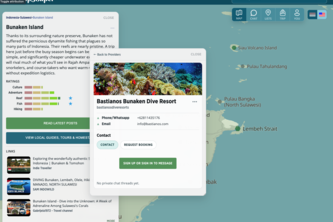
- Explore more than 1,100 Indonesian destinations on an interactive map
- Ask local providers practical questions
- Build and share their own trips
- Make direct, commission-free bookings
- The author built it using Codex, ChatGPT (GPT-5.5 and GPT-5.6), Laravel, JavaScript, with backend technologies like MySQL, Redis, OpenStreetMap, MapLibre, Planetiler, PMTiles.
- It is described as a personal project that would typically require a team of developers.
Note
The product is not demonstrated or shown in action; the description is entirely self-reported and unverified.
Positioning & Claim Evolution
- The author claims Tripshaper is a bilingual travel guide, helping travelers build better trips.
- It positions itself as a platform that connects travelers directly with local providers without booking commissions.
- The product is described as a map-first experience, emphasizing visual exploration of destinations.
- The author states the platform was built by one person, highlighting its personal and experimental nature.
- The project evolved from a personal need during travel planning to a tool for travelers and local providers.
Inference The positioning appears to be evolving from a simple map-based itinerary builder into a more complex platform with direct booking capabilities and AI-driven trip generation.
Target Customer & ICP
- The description states that Tripshaper is for travelers exploring Indonesia.
- It targets users who want to:
- Explore destinations on an interactive map
- Ask local providers questions
- Build and share trips
- Make direct bookings without commissions
- The platform is described as bilingual, suggesting it may target both local and international travelers.
Note
No specific customer segments, personas, or user data are provided. The ICP is inferred from the stated use cases.
Business Model & Pricing Evidence
- The description states that Tripshaper helps travelers connect directly with local providers without booking commissions.
- It allows users to make direct, commission-free bookings, implying a model where providers pay for access or visibility, not travelers.
- No explicit pricing structure is mentioned in the description.
- The author mentions using Google Ads to drive traffic, suggesting a potential monetization path through advertising.
Inference The business model may be based on provider visibility or commissions from local providers, but this is not explicitly stated.
Technical & Delivery Signals
- Built with:
- AI tools: Codex, ChatGPT (GPT-5.5 and GPT-5.6)
- Frameworks: Laravel, JavaScript
- Databases: MySQL, Redis
- Mapping technologies: MapLibre, OpenStreetMap, Planetiler, PMTiles
- The author mentions building analytics and health dashboards to track user behavior, latency, errors, server performance, and friction.
- The platform is described as a personal project, built by one person over time.
Note
No evidence of scalability, infrastructure robustness, or technical architecture beyond the tools used.
Traction & Maturity Signals
- The product is described as being in beta.
- It uses a small stream of visitors from Google Ads to study behavior and improve usability.
- The author mentions using analytics dashboards to track user engagement.
- No revenue, customer base, or adoption metrics are provided.
Inference There is no evidence of traction beyond the author’s own use of dashboards. The platform lacks measurable user growth or monetization.
Competitive Context
- The description does not mention competitors.
- It positions itself as a map-first travel guide that connects travelers with local providers without commissions.
- It is described as an alternative to traditional booking platforms, which charge 15–20% commissions.
Note
No competitive analysis or market positioning against existing travel tools or platforms is provided.
Open Questions & Risks
- The platform is self-built by one person, raising questions about scalability and long-term maintenance.
- It is in beta with no clear path to monetization or user growth.
- The author states that the product was built using AI tools, but there is no evidence of AI-driven value beyond initial development.
- No evidence of customer feedback, user testing, or engagement beyond dashboards.
- The platform’s monetization model is unclear.
Inference The lack of traction, revenue, and clear monetization signals raises concerns about viability and commercial potential.
Questions the description leaves open
- What specific user feedback have you gathered from beta users?
- How are you currently measuring success beyond analytics dashboards?
- What is your plan for monetizing the platform beyond Google Ads?
- Are there any partnerships or provider agreements in place?
- How do you plan to scale beyond a single developer’s effort?
Overall Assessment
- The description states that Tripshaper is a self-built, personal project.
- It is in beta, with no evidence of traction, revenue, or customer adoption.
- The author has not provided any data on user engagement, monetization, or growth.
- The platform’s positioning and features are described but not validated.
Assessment Not evidenced. This is a self-reported, unverified project with no measurable commercial signals. It is early-stage and lacks the evidence required for due-diligence evaluation.
User Stories BotA demo video on every pull request
Get a demo video on every new feature
GitHub App that watches your pull requests and records a narrated, captioned demo.
Save time on demo prep and make informed decisions faster with a video walkthrough of every new feature.
Source
Submitted to the OpenAI 2026 hackathon on Devpost. Project home on Devpost. Back to the full gallery on Devpost.
This competitive analysis was produced by top-founders.com (opens in a new tab)
Generated by a language model from this project's public Devpost page — its tagline, the author's own write-up and any built-with tags listed there — as captured in August 2026. Short quotations are the author's words. It is an opinion on the idea as a business, not on the people behind it, and it reflects the description as published then. If the project has moved on, request a correction below. The analysis is not independent research and contains no verified traction, revenue or customer data.
An independent guide by KFG International LLC — not affiliated with, endorsed by, or connected to Devpost or OpenAI.