

Archive position — measured, not model output
0 likes on Devpost
2,263 of the 7,850 archived projects have more likes, and 5,587 share exactly 0 — so this project's #7,331 place in the like-ranked listing is a tie-break inside that group, not a ranking.
Projects (log scale)
Likes on Devpost. ▲ marks this project's group.
Show the figures
| Likes | Projects | Share of archive |
|---|---|---|
| 0 | 5,587 | 71.2% |
| 1 | 1,758 | 22.4% |
| 2 | 284 | 3.6% |
| 3–4 | 132 | 1.7% |
| 5–9 | 75 | 1.0% |
| 10+ | 14 | 0.2% |
 User Stories BotA demo video on every pull request
Get a demo video on every new feature
GitHub App that watches your pull requests and records a narrated, captioned demo.
Save time on demo prep and make informed decisions faster with a video walkthrough of every new feature.
Executive Summary
What the company appears to be
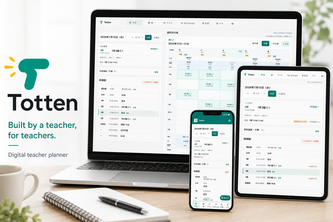
Totten is a self-described exception-first digital workspace for Japanese high school teachers, built as a solo project by a public school English teacher with no prior programming experience. It integrates fragmented school information (schedules, attendance, evaluations, documents) into one daily view across devices, using AI-assisted development tools like Codex and GPT-5.6.
What changed
The author states that Totten was extended during OpenAI Build Week 2026 with new features including Google Calendar synchronization, time-driven special schedules, safer cross-device workflows, evaluation export, and a fictional demonstration environment. These additions were implemented using AI engineering partners.
Single most important open question — the commercial due-diligence read
Is there evidence of real-world adoption or traction beyond the author’s own use and a fictional demo? The description contains no data on actual users, revenue, or product-market fit beyond self-reporting.
What The Product Actually Is
The description states that Totten is:
- A teacher workspace designed around school exceptions from the beginning.
- Not a calendar adapted for teachers but a digital workspace built for irregular school life.
- Intended to bring together schedules, attendance, evaluations, documents, and daily tasks into one reliable view across desktop, tablet, and mobile.
It supports:
- Understanding today’s schedule and upcoming events
- Recording what happened (attendance, notes, evaluations)
- Connecting school information (announcements, materials)
- Moving work between tools (Google integrations)
- Keeping work available (local-first storage, synchronization, recovery)
The author describes Totten as a production web application that runs on multiple devices and has over 1,100 automated tests.
Evidence
- The description states Totten is a working application.
- It includes technical details about interfaces, authentication, local storage, synchronization, and Google integrations.
- It lists features such as Google Calendar sync, Sheets export, and PDF processing.
Inference
- The author claims the app was built with AI tools like Codex and GPT-5.6.
- It is described as a local-first, offline-capable system with row-level security and recovery safeguards.
Positioning & Claim Evolution
The description states:
- Totten is not a calendar adapted for teachers; it is a teacher workspace designed around school exceptions.
- Generic calendars assume repeating events; school schedules are irregular and full of exceptions.
- It connects outputs from Google Calendar, cloud storage, spreadsheets, LMS platforms, and school systems around the teacher’s actual day.
Key claims
- Totten is timetable-first and exception-first.
- It does not replace existing tools but connects them.
- The goal is to give teachers an immediate understanding of what is happening now, what comes next, and what still needs attention.
Evidence
- The author contrasts Totten with Google Calendar and other generic tools.
- It emphasizes the need for handling exceptions in school schedules (e.g., exams, business trips, special timetables).
- The app is positioned as a workspace that connects fragmented information rather than replacing it.
Inference
- The positioning implies a niche market: Japanese high school teachers.
- The claim of exception-first design suggests a specific workflow need not addressed by mainstream tools.
Target Customer & ICP
The description states:
- Totten is built for Japanese public high school teachers.
- The author is a public high school English teacher in Japan with no prior programming experience.
- It was designed to solve the problem of fragmented information across paper planners, spreadsheets, printed schedules, messaging tools, cloud storage, and personal notes.
Evidence
- The author identifies as a Japanese public high school teacher.
- The app is described as solving a real-world problem in that specific context.
Inference
- The ICP appears to be a subset of educators—specifically, Japanese high school teachers managing irregular schedules.
- No mention of other roles or markets (e.g., administrators, university professors).
Business Model & Pricing Evidence
The description does not state:
- Whether Totten has a business model
- How it is monetized
- If there are pricing tiers or plans
Evidence
- The author describes building the app independently and using AI tools.
- No mention of revenue, subscriptions, or paid features.
Not evidenced
- Business model, pricing structure, or monetization strategy.
Technical & Delivery Signals
The description states:
- Totten was built with Codex and GPT-5.6 as engineering partners.
- It uses technologies like Next.js, React, TypeScript, Supabase, PostgreSQL, and Vercel.
- Features include responsive design, authentication, local-first storage, offline synchronization, row-level security, and conflict recovery.
Evidence
- The app supports desktop, tablet, and mobile.
- It includes Google Drive and Calendar integrations.
- It has 1,100+ automated tests.
- It uses Git for version control and traceable development.
Inference
- The use of AI tools like Codex suggests a rapid prototyping or low-code approach to development.
- The technical architecture implies scalability and safety features for handling sensitive data.
Traction & Maturity Signals
The description states:
- Totten is a working production web application.
- It has been tested across multiple devices.
- Other teachers have already used the application.
- A fictional demonstration environment was created using real workflows.
Evidence
- The app runs in production and supports multiple devices.
- It includes automated testing (1,100+ tests).
- It uses a real authentication, storage, synchronization, and evaluation workflow.
- The demo uses a fictional class of 30 students and a Sakura Municipal High School environment.
Not evidenced
- No data on actual users beyond the author and other teachers who tested it.
- No evidence of revenue, customer acquisition, or adoption metrics.
- No mention of user feedback or retention.
Competitive Context
The description states:
- Totten is not competing with Google Calendar or school systems.
- It connects outputs from those tools around the teacher’s day.
- Generic calendars assume repeating events; school schedules are irregular and full of exceptions.
- Existing tools solve part of the problem but do not integrate well.
Evidence
- The author contrasts Totten with Google Calendar, spreadsheets, LMS platforms, and school systems.
- It is positioned as a connector rather than a replacement.
Inference
- The competitive space includes productivity tools (e.g., Google Workspace), LMS platforms, and generic calendars.
- Totten’s niche is in handling exceptions in school schedules.
Open Questions & Risks
The description states:
- The author built the app alone with no prior programming experience.
- It handles sensitive data like student attendance and evaluations.
- The app was built using AI tools (Codex, GPT-5.6), which may raise questions about quality control or scalability.
Open questions
- Solo development by someone without prior coding experience raises concerns about long-term maintainability and scalability.
- Use of AI for development may introduce inconsistencies or lack of traceability in code quality.
- No evidence of real-world traction or user feedback beyond the author’s own use and a fictional demo.
- The app is described as a prototype or MVP, not a fully commercialized product.
Inference
- Risk of technical debt or scalability issues due to solo development and AI-assisted engineering.
- Lack of real-world data makes it difficult to assess product-market fit or user retention.
Questions the description leaves open
- What is the actual usage rate among teachers beyond the author and testers?
- How does Totten handle data privacy and compliance (e.g., GDPR, FERPA)?
- Are there plans to monetize or scale the product beyond its current demo state?
- What are the technical limitations of AI-assisted development in terms of maintainability and scalability?
- Has the app been tested with real teachers in a production environment?
- How does Totten differentiate itself from existing LMS platforms or Google Workspace tools?
- What is the long-term roadmap for product evolution?
Overall Assessment
The description states that Totten is a working application built by one person, using AI tools, with no evidence of revenue, customers, or traction beyond the author’s own use and a fictional demo.
Assessment This is a self-reported, unverified product in early-stage development. There is no evidence of commercial viability, user adoption, or financial performance. The app appears to be a prototype or MVP built by a solo developer with no prior programming experience, using AI tools for development.
Confidence level Low — the description provides no independent validation of traction, revenue, or product-market fit.
Recommendation
Further due diligence is required before considering investment or partnership. The project needs to demonstrate real-world usage, user feedback, and a clear path to monetization or scalability.
User Stories BotA demo video on every pull request
Get a demo video on every new feature
GitHub App that watches your pull requests and records a narrated, captioned demo.
Save time on demo prep and make informed decisions faster with a video walkthrough of every new feature.
Source
Submitted to the OpenAI 2026 hackathon on Devpost. Project home on Devpost. Back to the full gallery on Devpost.
This competitive analysis was produced by top-founders.com (opens in a new tab)
Generated by a language model from this project's public Devpost page — its tagline, the author's own write-up and any built-with tags listed there — as captured in August 2026. Short quotations are the author's words. It is an opinion on the idea as a business, not on the people behind it, and it reflects the description as published then. If the project has moved on, request a correction below. The analysis is not independent research and contains no verified traction, revenue or customer data.
An independent guide by KFG International LLC — not affiliated with, endorsed by, or connected to Devpost or OpenAI.