

Archive position — measured, not model output
0 likes on Devpost
2,263 of the 7,850 archived projects have more likes, and 5,587 share exactly 0 — so this project's #7,316 place in the like-ranked listing is a tie-break inside that group, not a ranking.
Projects (log scale)
Likes on Devpost. ▲ marks this project's group.
Show the figures
| Likes | Projects | Share of archive |
|---|---|---|
| 0 | 5,587 | 71.2% |
| 1 | 1,758 | 22.4% |
| 2 | 284 | 3.6% |
| 3–4 | 132 | 1.7% |
| 5–9 | 75 | 1.0% |
| 10+ | 14 | 0.2% |
 User Stories BotA demo video on every pull request
Get a demo video on every new feature
GitHub App that watches your pull requests and records a narrated, captioned demo.
Save time on demo prep and make informed decisions faster with a video walkthrough of every new feature.
Executive Summary
What the company appears to be
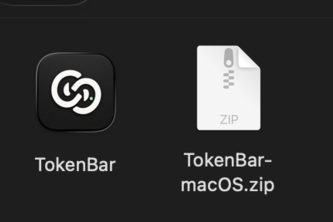
TokenBar is a self-reported macOS menu bar application that visualizes local OpenAI Codex usage, including token history, quota pressure, reset timing, estimated spend and projected usage pace. It is described as a lightweight tool designed for glanceable information, with an eventual roadmap toward becoming a developer companion integrating builder identities, community discovery and provider integrations.
What changed
The project was submitted to the OpenAI 2026 hackathon by a single founder (Arnav Salkade), who describes it as an early public release focused on Codex usage analytics. It is positioned as a local-first tool that lives in the macOS menu bar and integrates with a CLI for diagnostics and statistics.
The single most important open question
Is there any evidence of actual user adoption, revenue or traction beyond the author’s own description? The self-reported nature of this project means no verified usage data, customer base or monetization exists.
What The Product Actually Is
- The description states that TokenBar is a lightweight macOS menu bar application.
- It reads local Codex session logs and presents visualizations related to token history, quota pressure, reset timing, estimated spend, projected usage pace and work patterns.
- It includes a terminal interface, accessible via
pip install tokenbarand running the commandtokenbar. - The tool is described as local-first, meaning it does not read browser cookies, passwords or authentication tokens.
- It is built using Swift, SwiftUI, shell scripting, and macOS technologies.
- It integrates with OpenAI Codex and uses GPT-5.6 for product design refinement.
Inference: The tool appears to be a developer utility focused on AI usage analytics within the macOS environment. It is not a SaaS platform or marketplace but rather a desktop application with CLI integration.
Positioning & Claim Evolution
- The author claims that TokenBar is a developer companion designed to live quietly in the background and keep developers aware of their AI workflow.
- It is positioned as an alternative to fragmented workflows involving multiple apps (e.g., GitHub, X, Reddit, documentation).
- The project is described as “the beginning of a developer operating system for the AI era”, suggesting a long-term vision beyond just usage tracking.
- The author states that TokenBar aims to evolve into a platform for builder identities, community discovery, and resource recommendations.
Inference: The positioning has evolved from a simple quota tracker to a broader ecosystem for AI-powered software development. However, this is a self-reported claim with no evidence of traction or adoption.
Target Customer & ICP
- The target customer is described as developers using OpenAI Codex, particularly those who work in environments where they need real-time awareness of usage.
- It is aimed at builders — people creating software with AI agents, especially those who value privacy and local-first tools.
- The tool is intended for users who are already working within macOS and want to stay informed about their AI usage without switching contexts.
Inference: The ICP appears to be early-stage developers or power users of Codex who are looking for a more integrated experience. No evidence of specific customer segments, personas or market validation is provided.
Business Model & Pricing Evidence
- There is no evidence in the description of any pricing model or monetization strategy.
- The tool is described as free to install via pip, and no mention of subscriptions, fees or paid features is made.
- It is presented as a local-first tool with no backend required, implying minimal infrastructure costs.
Inference: No business model or pricing structure is evident. The author does not describe how the product would generate revenue.
Technical & Delivery Signals
- Built using Swift, SwiftUI, shell scripting and macOS technologies.
- Uses GPT-5.6 for product design and information hierarchy refinement.
- Integrates with OpenAI Codex, parsing session logs locally.
- Includes a CLI interface accessible via
pip install tokenbar. - The tool is described as local-first, not requiring backend services or cloud access.
Inference: Technical delivery seems feasible, with clear use of native macOS development tools and integration with Codex. However, no evidence of scalability or performance data exists.
Traction & Maturity Signals
- The project is described as an early public macOS (Apple Silicon) release.
- It is a single-person effort, built by Arnav Salkade.
- No mention of user adoption, downloads, or feedback from users.
- The author states that the tool is “not just a quota tracker”, but no evidence of product-market fit or usage beyond its own development is provided.
Inference: There is no evidence of traction or maturity. It remains an early-stage prototype with no verified user base or adoption metrics.
Competitive Context
- The author does not name competitors.
- The tool is described as not a traditional dashboard, but rather a local-first, glanceable solution that lives in the macOS menu bar.
- It aims to integrate AI usage intelligence with community discovery and builder identities, which may position it against tools like GitHub, X or Discord for developer engagement.
Inference: No competitive analysis is provided. The author does not reference existing tools or platforms that might compete or overlap with TokenBar’s vision.
Open Questions & Risks
- The project is self-reported and unverified, with no third-party validation.
- It is a single-person effort, which raises questions about scalability, long-term maintenance and growth potential.
- No evidence of revenue, customers or monetization strategy.
- The author’s vision for the product extends far beyond its current functionality, raising concerns about execution risk.
- The tool relies on local-first design, which may limit its appeal to users who want centralized dashboards or team collaboration features.
Inference: Risks include lack of traction, unclear monetization, limited team capacity and a high-risk roadmap that may not align with current user needs.
Questions the description leaves open
- What is the actual usage of TokenBar among developers? Are there any metrics or feedback from users?
- How does the tool plan to scale beyond a single-person development effort?
- Is there a clear path to monetization, and what are the assumptions behind it?
- What specific features or integrations are planned for the roadmap, and how do they align with developer needs?
- What is the long-term vision for community discovery and builder identities? How will this be implemented?
Inference: These questions aim to uncover whether the author’s vision is grounded in real user needs or speculative ambition.
Overall Assessment
- The project is described as a self-contained, early-stage macOS tool with a vision for becoming a developer ecosystem.
- There is no evidence of traction, revenue, customer base or monetization.
- The author’s claims about the product’s potential are not substantiated by any external data.
- It is a single-person project, which raises concerns about execution and scalability.
Inference: At this stage, there is no compelling commercial case for investment or partnership. The project appears to be an early prototype with strong positioning claims but no demonstrated value or traction.
User Stories BotA demo video on every pull request
Get a demo video on every new feature
GitHub App that watches your pull requests and records a narrated, captioned demo.
Save time on demo prep and make informed decisions faster with a video walkthrough of every new feature.
Source
Submitted to the OpenAI 2026 hackathon on Devpost. Project home on Devpost. Back to the full gallery on Devpost.
This competitive analysis was produced by top-founders.com (opens in a new tab)
Generated by a language model from this project's public Devpost page — its tagline, the author's own write-up and any built-with tags listed there — as captured in August 2026. Short quotations are the author's words. It is an opinion on the idea as a business, not on the people behind it, and it reflects the description as published then. If the project has moved on, request a correction below. The analysis is not independent research and contains no verified traction, revenue or customer data.
An independent guide by KFG International LLC — not affiliated with, endorsed by, or connected to Devpost or OpenAI.