

Archive position — measured, not model output
0 likes on Devpost
2,263 of the 7,850 archived projects have more likes, and 5,587 share exactly 0 — so this project's #7,086 place in the like-ranked listing is a tie-break inside that group, not a ranking.
Projects (log scale)
Likes on Devpost. ▲ marks this project's group.
Show the figures
| Likes | Projects | Share of archive |
|---|---|---|
| 0 | 5,587 | 71.2% |
| 1 | 1,758 | 22.4% |
| 2 | 284 | 3.6% |
| 3–4 | 132 | 1.7% |
| 5–9 | 75 | 1.0% |
| 10+ | 14 | 0.2% |
 User Stories BotA demo video on every pull request
Get a demo video on every new feature
GitHub App that watches your pull requests and records a narrated, captioned demo.
Save time on demo prep and make informed decisions faster with a video walkthrough of every new feature.
Executive Summary
What the company appears to be
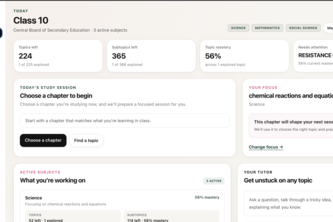
Synapses is a self-reported adaptive learning platform built for students preparing for exams. The author states it uses psychometric math (Item Response Theory, Free Spaced Repetition Scheduler) and AI-powered tutoring to diagnose student mistakes, repair misconceptions, and schedule spaced review. It claims to offer a syllabus-agnostic engine that can be mapped to global curricula.
What changed
The project was submitted as part of the OpenAI 2026 hackathon. The author describes building it in 7 days with OpenAI tools (Codex, ChatGPT), and states no revenue, customers or traction data are available.
Single most important open question
Is there any evidence that Synapses has moved beyond a proof-of-concept or prototype stage? The description is self-reported and unverified; no external validation of its functionality, adoption, or performance exists.
What The Product Actually Is
The description states that Synapses is:
- A curriculum-aware, evidence-led adaptive learning workspace
- Built with a 3-tier architecture (UI → API → Prisma workflows → TypeScript engine)
- Powered by mathematical models including Item Response Theory (IRT), Free Spaced Repetition Scheduler (FSRS), and logit-space updates
- Designed to diagnose before drilling, using a 6-tier priority hierarchy for orchestrating study steps
- Capable of serving single-skill probes when multi-skill questions fail
- Uses an explainable orchestrator that returns human-readable reasons for every decision
It also includes:
- A Socratic AI tutor
- Interactive LearnCards with 15+ widgets (Formula Explorers, Decision Trees, etc.)
- A dual-state engine separating long-term mastery ($M$) from time-decayed recall retrievability ($R$)
- An Actionable Frontier graph search to avoid infinite prerequisite loops
Inference The product is described as a hybrid system combining deterministic psychometric models with AI tutoring, but no evidence of actual deployment or usage exists.
Positioning & Claim Evolution
The author states:
- Synapses is built around the thesis: “Diagnose before you drill”
- It aims to replace static question banks or generic AI chatbots with a more structured and explainable approach
- The system is designed to isolate root causes of mistakes, repair misconceptions, and schedule timely retrieval practice
Inference The positioning appears to be that Synapses offers a more sophisticated alternative to typical edtech platforms, focusing on diagnostic precision and pedagogical rigor. However, this is a self-stated claim without evidence of real-world impact or user feedback.
Target Customer & ICP
The description states:
- The primary users are students preparing for national exams, SATs, APs, or university courses
- It initially launched on the CBSE Class 9–10 curriculum
- The system is described as syllabus-agnostic, capable of mapping to global curricula (US K-12, AP, IB, SAT, higher education)
Inference The target customer segment appears to be K-12 and higher education students, particularly those preparing for standardized exams. However, no evidence of actual customers or user data is provided.
Business Model & Pricing Evidence
The description does not contain any information about:
- Revenue streams
- Pricing models
- Monetization strategy
- Customer acquisition plans
Not evidenced
Technical & Delivery Signals
The author states:
- Built with React/Next.js UI, tRPC API, Prisma workflows, and TypeScript
- Uses OpenAI Codex and ChatGPT for development assistance
- Implements mathematical formulas based on IRT, FSRS, and logit-space updates
- Features a dual-state engine ($A = M \times R$)
- Includes an explainable orchestrator with 6-tier decision logic
Inference The technical stack suggests a modern web application with backend logic grounded in psychometrics. However, no evidence of live deployment or performance metrics is available.
Traction & Maturity Signals
The description states:
- Built in 7 days
- Initially benchmarked and launched on the CBSE Class 9–10 curriculum
- No mention of:
- Users
- Revenue
- Customers
- Product usage data
- Market traction or adoption
Not evidenced
Competitive Context
The description does not include any reference to:
- Competitors
- Market positioning relative to existing edtech platforms
- Differentiation from other adaptive learning systems
Not evidenced
Open Questions & Risks
- No evidence of product-market fit or real-world usage
- The system is described as a hackathon project, not a commercial product
- No mention of:
- Funding
- Team size or structure
- Revenue
- Customers
- Product maturity
- Heavy reliance on self-reported claims and unverified technical implementation
- The use of OpenAI tools for development may indicate limited independent engineering capability
Questions the description leaves open
- What is the current status of Synapses? Is it a prototype, MVP, or live product?
- Have you tested the system with real students or educators?
- How do you plan to scale beyond CBSE Class 9–10 to global curricula?
- What are your plans for monetization and customer acquisition?
- Can you demonstrate how the explainable orchestrator works in practice?
- Are there any partnerships or institutional pilots underway?
Overall Assessment
Not evidenced
The description is entirely self-reported, unverified, and lacks any evidence of traction, revenue, customers, or product maturity. The project appears to be a hackathon submission with no indication of commercial viability or operational readiness.
The author states that the system was built in 7 days using OpenAI tools, and there is no indication of ongoing development, user feedback, or market validation.
Confidence: Low
This analysis is based solely on the self-reported project description. No external data, customer feedback, or performance metrics are available to support any claims made about Synapses’ functionality, adoption, or business potential.
User Stories BotA demo video on every pull request
Get a demo video on every new feature
GitHub App that watches your pull requests and records a narrated, captioned demo.
Save time on demo prep and make informed decisions faster with a video walkthrough of every new feature.
Source
Submitted to the OpenAI 2026 hackathon on Devpost. Project home on Devpost. Back to the full gallery on Devpost.
This competitive analysis was produced by top-founders.com (opens in a new tab)
Generated by a language model from this project's public Devpost page — its tagline, the author's own write-up and any built-with tags listed there — as captured in August 2026. Short quotations are the author's words. It is an opinion on the idea as a business, not on the people behind it, and it reflects the description as published then. If the project has moved on, request a correction below. The analysis is not independent research and contains no verified traction, revenue or customer data.
An independent guide by KFG International LLC — not affiliated with, endorsed by, or connected to Devpost or OpenAI.