

Archive position — measured, not model output
1 like on Devpost
505 of the 7,850 archived projects have more likes, and 1,758 share exactly 1 — so this project's #1,999 place in the like-ranked listing is a tie-break inside that group, not a ranking.
Projects (log scale)
Likes on Devpost. ▲ marks this project's group.
Show the figures
| Likes | Projects | Share of archive |
|---|---|---|
| 0 | 5,587 | 71.2% |
| 1 | 1,758 | 22.4% |
| 2 | 284 | 3.6% |
| 3–4 | 132 | 1.7% |
| 5–9 | 75 | 1.0% |
| 10+ | 14 | 0.2% |
 User Stories BotA demo video on every pull request
Get a demo video on every new feature
GitHub App that watches your pull requests and records a narrated, captioned demo.
Save time on demo prep and make informed decisions faster with a video walkthrough of every new feature.
Executive Summary
Company: StoryFactory
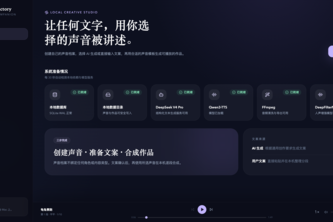
Self-reported purpose: A local-first AI voice content studio for parents, couples, and content creators.
Key claim: Enables users to create personalized audio content using their own voice while keeping all data on-device.
What changed: The project is a single-person hackathon submission that describes a functional prototype of a privacy-focused audio generation tool.
Single most important open question: Is there any evidence of user adoption, revenue, or traction beyond the author’s self-description?
This is a self-reported, unverified account of a local-first AI voice content creation tool built as a hackathon project. The description does not contain evidence of revenue, customers, or product-market fit beyond the author's own claims.
What The Product Actually Is
The description states that StoryFactory is a local-first AI voice content studio, designed for parents, couples, and content creators. It allows users to:
- Record or upload an authorized voice sample.
- Create a reusable voice profile.
- Generate a personalized script from a topic, tone, audience, and duration using AI.
- Write or paste their own script without sending it to a remote language model.
- Review and edit the complete script before generating audio.
- Generate narration locally using Qwen3-TTS and the selected voice profile.
- Regenerate individual segments or the entire recording.
- Apply adjustable DeepFilterNet3 speech enhancement without rerunning TTS.
- Play, save, favorite, and export the final result as WAV or MP3.
The system is built to keep all data local, including voice samples, generated audio, projects, and playback data. Only text fields required for AI script generation are sent to a configured language model.
Inference: The product appears to be a single-user web application with a focus on privacy and local processing. It integrates multiple technologies (e.g., FastAPI, React, Qwen3-TTS, DeepFilterNet3) to achieve its goals.
Positioning & Claim Evolution
The description states that StoryFactory was inspired by the idea of preserving the familiarity of a voice in bedtime stories while making personalized audio creation easier. It positions itself as an alternative to existing AI voice tools that require uploading sensitive voice samples to the cloud.
Key claims:
- Users can create personalized content using their own voice.
- Voice data and generated audio remain on-device.
- No registration or cloud storage is required.
- The tool supports both AI-generated and manually written scripts.
Inference: StoryFactory positions itself as a privacy-first, local-first solution for voice-based content creation. It emphasizes user control over their data, which may appeal to privacy-conscious users or creators who want to avoid cloud-based processing.
Target Customer & ICP
The description states that StoryFactory is intended for:
- Parents
- Couples
- Content creators
It also mentions use cases such as:
- Recording stories for a child when away
- Creating comforting voice messages
- Reusable narration without repeated recording
Inference: The ICP (Ideal Customer Profile) appears to be individuals or small groups who value privacy and personalization in audio content creation. It is not clear whether the tool targets enterprise, B2B, or mass consumer use.
Business Model & Pricing Evidence
The description does not state anything about:
- Revenue model
- Pricing structure
- Monetization strategy
- Paid features or tiers
Not evidenced: No business model or pricing information is provided.
Technical & Delivery Signals
The project is built as a local single-user web application optimized for Apple Silicon, using:
- Frontend: React, Vite, TypeScript, Tailwind CSS, TanStack Query, Zustand, MediaRecorder API, Web Audio API
- Backend: FastAPI, Pydantic, SQLAlchemy, Alembic, SQLite in WAL mode
- AI/ML: Qwen/Qwen3-TTS-12Hz-1.7B-Base via oMLX, deepseek-v4-pro through OpenAI-compatible API
- Speech enhancement: DeepFilterNet3, FFmpeg
Inference: The tool is designed for local execution, with a focus on resilience and recovery logic (e.g., persistent jobs, atomic file writes). It supports segment-level regeneration, noise reduction, and audio mastering.
Traction & Maturity Signals
The description states that this is a hackathon submission to the OpenAI 2026 hackathon. No evidence of:
- Revenue
- Customers
- Product-market fit
- Usage metrics
- Adoption beyond the author’s own use
Not evidenced: There is no traction or maturity data.
Competitive Context
The description does not mention any competitors, nor does it provide context on how StoryFactory compares to existing tools in the AI voice generation space. It only states that most existing tools require uploading sensitive voice samples to the cloud.
Inference: The tool may compete with other AI voice cloning or text-to-speech tools, but there is no evidence of direct comparison or market positioning.
Open Questions & Risks
- Single-person development: No team, no external validation.
- No revenue or traction: The project is described as a hackathon submission.
- Limited platform support: Currently optimized for Apple Silicon.
- Privacy as a feature, not a product: May not scale into a monetizable offering without additional features or user base.
- Technical complexity: Local inference and audio processing may be difficult to maintain or scale.
Questions the description leaves open
- What is the actual use case for this tool beyond personal or family use?
- Are there any plans to expand beyond Apple Silicon or support other platforms?
- How do you plan to monetize this product if it remains local-first and privacy-focused?
- Have you tested the tool with real users, or is it purely a prototype?
- What are the limitations of the current TTS model (Qwen3-TTS) in terms of voice quality or naturalness?
- How do you plan to handle edge cases like audio artifacts or inconsistent voice profiles?
Overall Assessment
Not evidenced: No evidence of commercial traction, revenue, or scalability beyond a single-person hackathon project.
Confidence level: Low
Assessment: This is a self-reported prototype, not a product with demonstrated market demand or business model. It may be an interesting technical experiment or early-stage idea, but lacks the commercial due-diligence signals needed for investment or partnership consideration.
User Stories BotA demo video on every pull request
Get a demo video on every new feature
GitHub App that watches your pull requests and records a narrated, captioned demo.
Save time on demo prep and make informed decisions faster with a video walkthrough of every new feature.
Source
Submitted to the OpenAI 2026 hackathon on Devpost. Project home on Devpost. Back to the full gallery on Devpost.
This competitive analysis was produced by top-founders.com (opens in a new tab)
Generated by a language model from this project's public Devpost page — its tagline, the author's own write-up and any built-with tags listed there — as captured in August 2026. Short quotations are the author's words. It is an opinion on the idea as a business, not on the people behind it, and it reflects the description as published then. If the project has moved on, request a correction below. The analysis is not independent research and contains no verified traction, revenue or customer data.
An independent guide by KFG International LLC — not affiliated with, endorsed by, or connected to Devpost or OpenAI.