

Archive position — measured, not model output
0 likes on Devpost
2,263 of the 7,850 archived projects have more likes, and 5,587 share exactly 0 — so this project's #6,972 place in the like-ranked listing is a tie-break inside that group, not a ranking.
Projects (log scale)
Likes on Devpost. ▲ marks this project's group.
Show the figures
| Likes | Projects | Share of archive |
|---|---|---|
| 0 | 5,587 | 71.2% |
| 1 | 1,758 | 22.4% |
| 2 | 284 | 3.6% |
| 3–4 | 132 | 1.7% |
| 5–9 | 75 | 1.0% |
| 10+ | 14 | 0.2% |
 User Stories BotA demo video on every pull request
Get a demo video on every new feature
GitHub App that watches your pull requests and records a narrated, captioned demo.
Save time on demo prep and make informed decisions faster with a video walkthrough of every new feature.
Executive Summary
Company
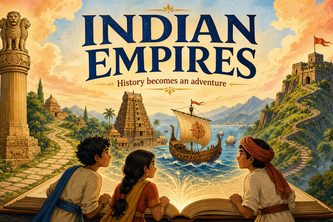
StoryBook Indian Empires
Self-reported basis
The entire analysis is based on the author's own description of the project, submitted to the OpenAI 2026 hackathon on Devpost. No external verification or historical data is available.
What it appears to be
A self-contained, AI-powered interactive historical-fiction platform for children and teenagers, built as a personal project by one developer (Gowtham Ram). It features illustrated stories across Indian empires, with an AI Story Helper that answers questions about the historical context of each tale.
What changed
The author describes this as a hackathon submission, implying it is in early development or prototype form. There is no evidence of prior versions, funding, or commercial traction.
Most important open question
Is there any evidence of user engagement, adoption, or monetization beyond the author’s own description?
What The Product Actually Is
The description states that StoryBook Indian Empires is an interactive historical-fiction storybook for children and teenagers, built as a personal project. It includes:
- Illustrated stories across multiple Indian empires.
- Fictional young protagonists with culturally appropriate names.
- Responsive reading experience (desktop, tablet, mobile).
- Adjustable typography and simplified reading mode.
- Bookmarks and reading progress tracking.
- Firebase authentication and protected reader features.
- An animated Story Helper that answers history-related questions about the current story.
- Dynamic empire availability: empires become live when stories are published.
- Clear notices distinguishing AI-generated fiction from verified history.
The platform uses:
- Frontend: Next.js, React, TypeScript, Tailwind CSS
- Backend: Python, FastAPI
- Cloud services: Firebase Authentication, Firestore, Google Cloud Storage, Cloud Run
- Image generation models: gemini nano, gpt image gen 2.0
Inference The product is a prototype or proof-of-concept built for a hackathon, not a commercial product with users or revenue.
Positioning & Claim Evolution
The author states that the project was inspired by a desire to make Indian history more engaging for younger readers through fictional storytelling. It aims to spark curiosity and encourage further exploration of historical sources.
Key claims:
- The goal is not to replace textbooks or storybooks, but to spark curiosity.
- The platform provides interactive, illustrated, AI-generated stories with an AI Story Helper.
- The stories are fictional, but grounded in real history and culture.
- It uses AI for content generation, including prose, structure, historical plausibility checks, and illustrations.
Inference The positioning is educational and culturally focused, targeting children and educators. However, the description does not indicate any commercial or marketing strategy beyond the hackathon submission.
Target Customer & ICP
The author states that the platform targets children and teenagers, with a focus on making Indian history more engaging through fictional storytelling.
Inference The ICP appears to be:
- Young readers (ages likely 6–16)
- Educators or parents interested in culturally relevant, interactive learning tools
- Museums or educational institutions seeking supplementary content
However, there is no evidence of actual users, customer interviews, or market research.
Business Model & Pricing Evidence
The description does not mention any pricing model, monetization strategy, or business model. It is unclear whether the platform will be free-to-use, subscription-based, or supported by grants or partnerships.
Inference No business model or pricing evidence is provided beyond the author’s own description.
Technical & Delivery Signals
The project was built using:
- Frontend: Next.js, React, TypeScript, Tailwind CSS
- Backend: Python, FastAPI
- Infrastructure: Firebase Authentication, Firestore, Google Cloud Storage, Cloud Run
- AI Tools: gemini nano, gpt image gen 2.0, GPT SOL and GPT Terra for pipeline design
Key technical features:
- Multi-stage story generation pipeline (planning, creative prose, historical review, editing)
- Structured checks for coherence, tone, repetition, and historical plausibility
- Story illustrations generated with non-photorealistic styles
- Responsive UI with accessibility controls
- Firebase authentication and user profile management
Inference The technical stack is modern and well-suited to a web-based interactive platform. However, the project is described as a single-developer hackathon submission, not a scalable or production-ready product.
Traction & Maturity Signals
The description states that this was submitted to the OpenAI 2026 hackathon. There is no evidence of:
- User adoption
- Revenue
- Customers
- Product usage metrics
- Prior versions or iterations
- Funding or investor interest
Inference The project is in early development, likely a prototype or proof-of-concept, with no demonstrated traction.
Competitive Context
The author does not mention any competitors. However, the concept of historical-fiction storybooks for children, especially those with AI-powered tools, could overlap with:
- Educational platforms like Khan Academy or National Geographic Kids
- Interactive storytelling apps (e.g., Epic!, Storybird)
- AI-generated content tools for education
Inference No competitive analysis is provided. The project appears to be in a niche space with limited known competitors.
Open Questions & Risks
- Single developer: The platform was built by one person (Gowtham Ram), raising concerns about scalability and long-term maintenance.
- No commercial traction: No evidence of users, revenue, or adoption beyond the author’s own description.
- Unverified historical content: While the project aims to be historically grounded, there is no indication of how accuracy is verified or audited.
- Prototype nature: The project is described as a hackathon submission, suggesting it is not yet a mature product.
- AI-generated content risks: The use of AI for creative writing and illustration raises questions about quality control, cultural sensitivity, and originality.
Questions the description leaves open
- What is the actual historical research process behind each story?
- How are you ensuring cultural and historical accuracy in AI-generated content?
- Have you tested the platform with children or educators?
- Is there a plan to monetize or scale this beyond a prototype?
- What are your long-term goals for the platform, and how do you intend to reach users?
- How do you plan to maintain quality control as more stories are added?
Overall Assessment
Not evidenced.
There is no evidence of:
- Revenue
- Customers
- Traction
- Product-market fit
- Commercial viability
- Funding or investor interest
The project is described as a personal hackathon submission, not a commercial venture. As such, there is no basis for an investment or partnership recommendation at this time.
Confidence level Very low — the description provides no evidence of any commercial or user-facing activity beyond the author’s own account.
User Stories BotA demo video on every pull request
Get a demo video on every new feature
GitHub App that watches your pull requests and records a narrated, captioned demo.
Save time on demo prep and make informed decisions faster with a video walkthrough of every new feature.
Source
Submitted to the OpenAI 2026 hackathon on Devpost. Project home on Devpost. Back to the full gallery on Devpost.
This competitive analysis was produced by top-founders.com (opens in a new tab)
Generated by a language model from this project's public Devpost page — its tagline, the author's own write-up and any built-with tags listed there — as captured in August 2026. Short quotations are the author's words. It is an opinion on the idea as a business, not on the people behind it, and it reflects the description as published then. If the project has moved on, request a correction below. The analysis is not independent research and contains no verified traction, revenue or customer data.
An independent guide by KFG International LLC — not affiliated with, endorsed by, or connected to Devpost or OpenAI.