

Archive position — measured, not model output
0 likes on Devpost
2,263 of the 7,850 archived projects have more likes, and 5,587 share exactly 0 — so this project's #6,862 place in the like-ranked listing is a tie-break inside that group, not a ranking.
Projects (log scale)
Likes on Devpost. ▲ marks this project's group.
Show the figures
| Likes | Projects | Share of archive |
|---|---|---|
| 0 | 5,587 | 71.2% |
| 1 | 1,758 | 22.4% |
| 2 | 284 | 3.6% |
| 3–4 | 132 | 1.7% |
| 5–9 | 75 | 1.0% |
| 10+ | 14 | 0.2% |
 User Stories BotA demo video on every pull request
Get a demo video on every new feature
GitHub App that watches your pull requests and records a narrated, captioned demo.
Save time on demo prep and make informed decisions faster with a video walkthrough of every new feature.
Executive Summary
What the company appears to be
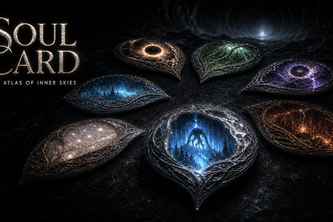
The author describes a single-person project called Soul Card: The Atlas of Inner Skies, an offline iPhone card game built with Swift and SwiftUI. It is positioned as a narrative-driven, deterministic, and privacy-preserving experience where players interact with "living" Soul Cards representing people and their unfinished vows. The game uses AI tools like Codex and GPT-5.6 during development but does not rely on AI for gameplay or user interaction.
What changed
This is a hackathon submission (submitted to the OpenAI 2026 hackathon), indicating it's an early-stage prototype. It is described as a playable demo built to test core solo gameplay and not yet ready for release, with plans to complete performance validation, story depth, and multiplayer features.
Single most important open question
Is there any evidence of traction, revenue, or user engagement beyond the author’s own account? The description does not indicate any users, monetization, or adoption beyond a prototype.
What The Product Actually Is
The description states that Soul Card: The Atlas of Inner Skies is:
- An offline-first iPhone game built for iOS 18+.
- A portrait-oriented card game with seven playable Soul Cards and three Mystery Cards.
- A deterministic, explainable battle system with a three-act structure (Opening, Clash, Resolve).
- Built using Swift, SwiftUI, SpriteKit, SwiftData, and Swift Package Manager.
- Designed to be played without login, analytics SDKs, or cloud dependencies.
Inference The product is a narrative-driven card game that emphasizes storytelling, privacy, and deterministic gameplay. It uses AI tools in development but does not appear to integrate AI into the core user experience.
Positioning & Claim Evolution
The author claims:
- The game reimagines card games as “apertures into living worlds,” rather than collections of inventory.
- Players do not collect power; they learn how these worlds relate.
- The game is offline-first, privacy-preserving, and free to play.
- Battles are explainable, with outcomes determined before presentation.
Inference The positioning is rooted in narrative depth, player agency, and a rejection of traditional monetization or data collection models. It appears to be a counterpoint to mainstream card games that rely on loot boxes, paywalls, or analytics.
Target Customer & ICP
The description states:
- The primary demo path is solo play.
- No account, network connection, or second device is required.
- The experience is designed for iPhone users who value offline play and storytelling.
Inference The target customer appears to be iPhone users who are interested in offline-first, narrative-driven games. The ICP likely includes players seeking immersive, non-commercialized experiences with a focus on story and interaction over monetization.
Business Model & Pricing Evidence
The description states:
- The game is free to play.
- No paywall or analytics SDKs are used.
- The experience is driven by local story evidence, not data collection or retention.
Inference There is no evidence of a business model or pricing structure. The author implies the game is free and offline-first, but does not describe any monetization strategy beyond the prototype stage.
Technical & Delivery Signals
The description states:
- Built with Swift, SwiftUI, SpriteKit, SwiftData, and Swift Package Manager.
- Engine owns versioned card data, rules, event log, and replay digest; SwiftUI handles interface and navigation; SpriteKit renders battle scenes.
- AI tools (Codex and GPT-5.6) were used for development but not in gameplay.
- The system supports 45 unique card pairings from 90 viewpoints while keeping results reproducible.
Inference The technical stack is native iOS, with a clear separation of concerns between game engine and UI. AI was used as a development tool, not a gameplay feature. The architecture suggests scalability and reproducibility in battle outcomes.
Traction & Maturity Signals
The description states:
- This is a hackathon prototype.
- It is playable but not yet ready for release.
- The author plans to complete performance validation, story depth, and multiplayer features.
Inference There is no evidence of traction, revenue, or user adoption. The project is described as a prototype with no commercial or user engagement data.
Competitive Context
The description does not mention any competitors or market positioning beyond the general category of card games.
Inference No competitive analysis is provided. The author’s positioning appears to be unique in its focus on offline-first, privacy-preserving, and narrative-driven gameplay, but there is no evidence of how it compares to existing products.
Open Questions & Risks
- Unverified claims: All information is self-reported and unverified.
- No traction or monetization: No evidence of users, revenue, or adoption.
- Prototype stage: The project is described as a hackathon prototype, not a finished product.
- Limited scope: The game appears to be solo-focused with no multiplayer or community features mentioned.
- AI dependency in development: While AI was used for development, it’s unclear if this introduces risks or dependencies in the final product.
Questions the description leaves open
- What is the current status of performance validation on physical devices?
- Are there any plans to monetize the game beyond its current prototype stage?
- How does the author plan to scale the story and Constellation experience for release?
- Has the author considered how the deterministic battle system will be perceived by players seeking more randomness or unpredictability?
- What are the long-term goals for multiplayer features, if any?
Overall Assessment
Not evidenced.
The description does not provide sufficient information to assess whether this project is a viable investment or partnership opportunity. It is a hackathon prototype with no evidence of traction, revenue, or user engagement. The author’s claims about the product are self-reported and unverified.
Confidence level Low. This analysis is based entirely on the self-reported description provided by the caller. No external validation or data exists to support any commercial or strategic conclusions.
User Stories BotA demo video on every pull request
Get a demo video on every new feature
GitHub App that watches your pull requests and records a narrated, captioned demo.
Save time on demo prep and make informed decisions faster with a video walkthrough of every new feature.
Source
Submitted to the OpenAI 2026 hackathon on Devpost. Project home on Devpost. Back to the full gallery on Devpost.
This competitive analysis was produced by top-founders.com (opens in a new tab)
Generated by a language model from this project's public Devpost page — its tagline, the author's own write-up and any built-with tags listed there — as captured in August 2026. Short quotations are the author's words. It is an opinion on the idea as a business, not on the people behind it, and it reflects the description as published then. If the project has moved on, request a correction below. The analysis is not independent research and contains no verified traction, revenue or customer data.
An independent guide by KFG International LLC — not affiliated with, endorsed by, or connected to Devpost or OpenAI.