

Archive position — measured, not model output
1 like on Devpost
505 of the 7,850 archived projects have more likes, and 1,758 share exactly 1 — so this project's #1,960 place in the like-ranked listing is a tie-break inside that group, not a ranking.
Projects (log scale)
Likes on Devpost. ▲ marks this project's group.
Show the figures
| Likes | Projects | Share of archive |
|---|---|---|
| 0 | 5,587 | 71.2% |
| 1 | 1,758 | 22.4% |
| 2 | 284 | 3.6% |
| 3–4 | 132 | 1.7% |
| 5–9 | 75 | 1.0% |
| 10+ | 14 | 0.2% |
 User Stories BotA demo video on every pull request
Get a demo video on every new feature
GitHub App that watches your pull requests and records a narrated, captioned demo.
Save time on demo prep and make informed decisions faster with a video walkthrough of every new feature.
Executive Summary
Company: SophMate
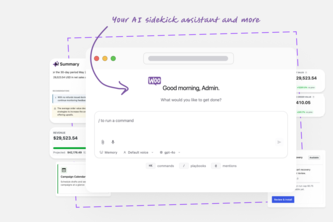
Tagline: A governed AI operations workspace for WordPress/WooCommerce
Self-reported basis: The analysis is based entirely on the project description provided by the caller — including the name, tagline, author's own write-up and technology stack. No external verification or historical data is available.
What it appears to be: SophMate is a self-described AI-powered operations workspace for WordPress/WooCommerce, built as a solo founder project. It allows users to manage sites via natural language, with features like automation, insights, marketing studio, personalization, and agents. The product is positioned as a modern alternative to outdated tools.
What changed: The author states that the tool evolved from a focus on WooCommerce to broader WordPress support, and that it now uses GPT-5.6 and Codex as its primary AI tools, replacing earlier models and manual review processes.
Single most important open question: Is there any evidence of product-market fit or early adoption beyond the solo founder's own development?
What The Product Actually Is
The description states that SophMate is “a governed AI operations workspace for WordPress/WooCommerce.” It allows users to manage sites through natural language, turning requests into approval-gated action plans. Features include automation, insights, marketing studio, personalization, and agents.
It was built using HTML, JavaScript, PHP, TypeScript, WooCommerce, and WordPress technologies.
Inference: The product is a custom-built AI tool integrated with WordPress/WooCommerce environments, intended to automate site management tasks via natural language commands.
Positioning & Claim Evolution
The author claims that SophMate aims to be “unlike the existing outdated tools” and brings “the full strength of GPT and other models right inside of your store and site.”
It started with a focus on WooCommerce, then expanded to WordPress in general. The author also mentions adding features such as Automation, Insights, Marketing Studio, Personalization, and Agents.
Inference: The positioning evolved from a niche WooCommerce tool to a broader WordPress management platform, with an emphasis on AI integration and modern UX.
Target Customer & ICP
The description states that SophMate is for “WordPress site owners, agencies, and WooCommerce teams.”
It also mentions that the product supports “approval-gated action plans,” suggesting it may be aimed at teams or businesses requiring governance over AI actions.
Inference: The target customer appears to be small to mid-sized WordPress/WooCommerce users or agencies managing multiple sites. It is not clear if there’s a specific ICP defined beyond this general audience.
Business Model & Pricing Evidence
No information is provided about pricing, monetization, or business model in the description.
Not evidenced: There is no mention of revenue streams, subscription tiers, or customer acquisition costs.
Technical & Delivery Signals
The author states that they used “strict clean architecture” from the beginning and that early development was difficult due to limitations in AI models. They now use GPT-5.6 and Codex as their primary tools.
They also mention that manual review work has been reduced thanks to newer AI models, and that the project is built with HTML, JavaScript, PHP, TypeScript, WooCommerce, and WordPress.
Inference: The technical approach is rooted in clean architecture and modern AI tooling. The author’s experience suggests a learning curve but eventual alignment with current AI capabilities.
Traction & Maturity Signals
The description does not provide any evidence of traction or maturity beyond the solo founder's development journey.
There is no mention of:
- Customers
- Revenue
- User base
- Product usage metrics
- Market validation
Not evidenced: No data on adoption, retention, or business performance.
Competitive Context
No competitive analysis or market positioning relative to other tools is provided in the description.
Not evidenced: No information about competitors, market share, or differentiation strategy.
Open Questions & Risks
- Solo founder model: The project is described as a solo effort (1 person team), which may signal limited scalability or resource constraints.
- No traction evidence: There is no indication of early adoption or revenue, raising questions about product-market fit.
- Unverified claims: All descriptions are self-reported and unverified; there is no third-party validation.
- Limited scope: The tool is described as a personal project, not yet commercialized or tested in production environments.
Questions the description leaves open
- What specific use cases have you validated with potential users?
- Have you conducted any customer interviews or early feedback sessions?
- How do you plan to monetize the product beyond the current development stage?
- What are your go-to-market plans for reaching WordPress/WooCommerce site owners and agencies?
- Can you describe how the approval-gated action plans work in practice?
Overall Assessment
Not evidenced: There is no evidence of revenue, customers, or traction to support an investment or partnership decision.
The description is self-reported and unverified. It describes a solo founder’s vision for a tool that integrates AI with WordPress/WooCommerce but lacks any data on product-market fit, adoption, or commercial viability.
Confidence level: Low — the evidence provided is minimal and entirely self-reported.
User Stories BotA demo video on every pull request
Get a demo video on every new feature
GitHub App that watches your pull requests and records a narrated, captioned demo.
Save time on demo prep and make informed decisions faster with a video walkthrough of every new feature.
Source
Submitted to the OpenAI 2026 hackathon on Devpost. Project home on Devpost. Back to the full gallery on Devpost.
This competitive analysis was produced by top-founders.com (opens in a new tab)
Generated by a language model from this project's public Devpost page — its tagline, the author's own write-up and any built-with tags listed there — as captured in August 2026. Short quotations are the author's words. It is an opinion on the idea as a business, not on the people behind it, and it reflects the description as published then. If the project has moved on, request a correction below. The analysis is not independent research and contains no verified traction, revenue or customer data.
An independent guide by KFG International LLC — not affiliated with, endorsed by, or connected to Devpost or OpenAI.