

Archive position — measured, not model output
3 likes on Devpost
128 of the 7,850 archived projects have more likes, and 93 share exactly 3 — so this project's #200 place in the like-ranked listing is a tie-break inside that group, not a ranking.
Projects (log scale)
Likes on Devpost. ▲ marks this project's group.
Show the figures
| Likes | Projects | Share of archive |
|---|---|---|
| 0 | 5,587 | 71.2% |
| 1 | 1,758 | 22.4% |
| 2 | 284 | 3.6% |
| 3–4 | 132 | 1.7% |
| 5–9 | 75 | 1.0% |
| 10+ | 14 | 0.2% |
 User Stories BotA demo video on every pull request
Get a demo video on every new feature
GitHub App that watches your pull requests and records a narrated, captioned demo.
Save time on demo prep and make informed decisions faster with a video walkthrough of every new feature.
Executive Summary
What the company appears to be
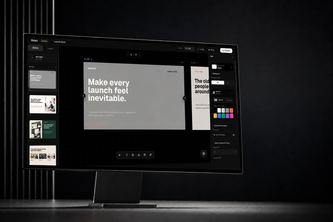
SlideX is a browser-based presentation tool built as a single-person project, using MDX for content creation and React/Next.js for the frontend. The author describes it as a tool for makers, product designers, and developers who want to create polished presentations without complex visual editing.
What changed
The project evolved from a side project into a functional tool with core features like editing, previewing, project management, templates, and HTML export. It is described as having moved beyond prototype status.
The single most important open question
Is there evidence of user adoption or feedback that would indicate real market demand for this type of presentation tool?
Analysis basis
This report is based entirely on the self-reported description provided by the author. No external verification, traction data, revenue figures, customer names or third-party sources are available.
What The Product Actually Is
- The description states that SlideX is a browser-based presentation tool.
- It allows users to create, edit, preview, manage, and share presentations in one place.
- Content is written using MDX (a markdown-based format with JSX support).
- Users can organize slides and structure presentations quickly.
- It supports previewing directly in the browser.
- Multiple presentations are managed as projects.
- Presentations can be exported as shareable HTML files.
- Templates are available for reuse without rebuilding everything.
- The interface is designed to feel fast, clear, and approachable.
Inference The tool appears to be a lightweight, web-native alternative to traditional presentation software, optimized for clarity and speed over visual complexity.
Positioning & Claim Evolution
- The author claims SlideX aims to simplify the presentation creation workflow.
- It is positioned as an alternative to tools that focus heavily on visual editing but fragment the process of organizing ideas, structuring slides, previewing, and sharing.
- The goal is described as making presentation creation feel less like operating complicated design software and more like building a clear story.
- The author emphasizes that it’s intended for makers, product designers, developers, and others who want to turn an idea into a presentation without spending hours adjusting layouts.
Inference SlideX positions itself as a minimalistic, developer-friendly tool focused on content-first workflows rather than visual polish or advanced design features.
Target Customer & ICP
- The author states that SlideX is aimed at makers, product designers, developers, and anyone who wants to turn an idea into a presentation without spending hours adjusting layouts.
- It is described as being especially useful for people who want to avoid complex visual editing tools.
- The tool is intended for practical use cases such as product proposals, project briefs, startup pitches, course materials, etc.
Inference The ICP likely includes technical professionals and creators who prioritize clarity and efficiency over aesthetics in their presentations. However, no explicit segmentation or customer validation data is provided.
Business Model & Pricing Evidence
- No pricing information or business model details are mentioned.
- The description does not indicate whether SlideX will be free, freemium, paid, or monetized through any other means.
- There is no mention of subscriptions, usage-based billing, or enterprise features.
Inference The business model remains unknown; the author has not described how they plan to generate revenue from this tool.
Technical & Delivery Signals
- Built with MDX, Next.js, PostgreSQL, Railway, React, Supabase, Tailwind CSS, and TypeScript.
- Features include a presentation editor, live preview experience, reusable templates, and database-backed project system.
- AI-assisted coding was used during development for implementation, debugging, and iteration.
- The author mentions continuous testing and refinement of user experience.
- Mobile usability challenges were addressed through rethinking navigation and editing controls.
Inference The technical stack suggests a modern, full-stack web application built with developer-friendly tools. The use of AI in development implies rapid iteration capabilities.
Traction & Maturity Signals
- SlideX is described as having evolved from a small side project into a usable product.
- It includes editing, browser previews, project management, templates, presentation storage, and HTML export.
- The interface has been redesigned several times based on actual usage rather than keeping the first version.
- The author notes that it is no longer just a concept or prototype but a product people can open, use, and provide feedback on.
Inference There is some evidence of product maturity and iterative improvement, but no data on user adoption, retention, or engagement metrics.
Competitive Context
- No mention of competitors or competitive landscape.
- The author does not reference existing tools in the market such as Google Slides, PowerPoint, Notion, or other presentation platforms.
- No comparison to similar tools is made.
Inference There is no evidence of awareness or positioning relative to existing solutions in the marketplace.
Open Questions & Risks
- The tool is built by a single person (team size: 1), which raises concerns about scalability, long-term maintenance, and feature development.
- No revenue, customer base, or traction data are provided.
- The lack of pricing information makes it unclear how the product will be monetized.
- The absence of competitor analysis suggests limited market understanding.
- The author’s own account is the only source of evidence — no third-party validation or user feedback beyond self-reported usage.
Inference Risk factors include lack of traction, unclear monetization strategy, and potential scalability issues due to single-person development.
Questions the description leaves open
- What specific problems are users facing with current presentation tools that SlideX solves?
- Have you conducted any user research or gathered feedback from real users beyond yourself?
- How do you plan to monetize SlideX, and what is your pricing strategy?
- Are there plans to add collaboration features or integrations with other platforms?
- What are the biggest technical challenges you've encountered in scaling this tool?
- Do you have any data on how many people are currently using SlideX or how often they use it?
- How do you intend to compete with established tools like Google Slides, PowerPoint, or Notion?
Overall Assessment
- SlideX is a self-contained, single-person project that has progressed from prototype to functional tool.
- It addresses a niche need for content-first presentation creation and is built with modern web technologies.
- However, there is no evidence of traction, revenue, or customer validation.
- The lack of pricing strategy, competitive analysis, and team size raises questions about its viability as a scalable business.
Assessment Not evidenced. This project lacks sufficient commercial due-diligence signals to assess investment or partnership potential. A deeper evaluation would require data on user engagement, monetization plans, and market positioning.
User Stories BotA demo video on every pull request
Get a demo video on every new feature
GitHub App that watches your pull requests and records a narrated, captioned demo.
Save time on demo prep and make informed decisions faster with a video walkthrough of every new feature.
Source
Submitted to the OpenAI 2026 hackathon on Devpost. Project home on Devpost. Back to the full gallery on Devpost.
This competitive analysis was produced by top-founders.com (opens in a new tab)
Generated by a language model from this project's public Devpost page — its tagline, the author's own write-up and any built-with tags listed there — as captured in August 2026. Short quotations are the author's words. It is an opinion on the idea as a business, not on the people behind it, and it reflects the description as published then. If the project has moved on, request a correction below. The analysis is not independent research and contains no verified traction, revenue or customer data.
An independent guide by KFG International LLC — not affiliated with, endorsed by, or connected to Devpost or OpenAI.