

Archive position — measured, not model output
0 likes on Devpost
2,263 of the 7,850 archived projects have more likes, and 5,587 share exactly 0 — so this project's #6,577 place in the like-ranked listing is a tie-break inside that group, not a ranking.
Projects (log scale)
Likes on Devpost. ▲ marks this project's group.
Show the figures
| Likes | Projects | Share of archive |
|---|---|---|
| 0 | 5,587 | 71.2% |
| 1 | 1,758 | 22.4% |
| 2 | 284 | 3.6% |
| 3–4 | 132 | 1.7% |
| 5–9 | 75 | 1.0% |
| 10+ | 14 | 0.2% |
 User Stories BotA demo video on every pull request
Get a demo video on every new feature
GitHub App that watches your pull requests and records a narrated, captioned demo.
Save time on demo prep and make informed decisions faster with a video walkthrough of every new feature.
Executive Summary
What the company appears to be
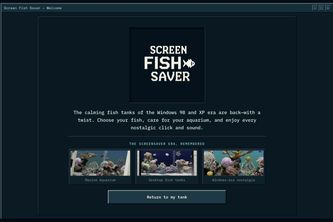
Screen Fish Saver is a browser-based freshwater aquarium simulator built as a personal project by one developer (Torrance Build Tai). It presents an interactive, nostalgic screensaver-style experience where users can choose a theme and community mix, then care for a virtual tank through simple actions like feeding, testing water, changing water, and cleaning glass. The simulation is deterministic and runs in the browser with no external dependencies.
What changed
The project was submitted to the OpenAI 2026 hackathon on Devpost. It is described as a self-contained React/Vite application using browser-only persistence and Web Audio API for ambient sound cues. The author states that it includes a deterministic ecosystem model, photorealistic visuals, and retro-inspired UI elements.
Single most important open question
Is there any evidence of user engagement or adoption beyond the developer’s own use? The description does not indicate whether anyone else has used or interacted with the product.
What The Product Actually Is
The description states that Screen Fish Saver is a browser-based freshwater aquarium simulator for beginners and casual players. It allows users to select an indoor aquarium theme and one of three community mixes, then perform four care actions: feed, test water, change some water, and clean the glass.
It includes:
- A deterministic simulation model covering temperature, water quality, filter health, plant health, algae, and fish stress.
- Fish with distinct motion signatures, including energy levels, depth, turning behavior, and species-specific movement.
- Visual system combining photorealistic planted aquarium assets with a late-1990s-inspired cabinet UI (bevels, inset controls, monospaced labels, status LEDs).
- Ambient mode that turns the tank into a full-screen screensaver-style display.
- Browser-only persistence, meaning data is saved locally in the browser and returns on revisit.
- Web Audio API integration for retro-inspired UI cues and quiet aquarium ambience.
The project was built using:
- React 19
- Vite
- CSS, HTML, JavaScript
- Phosphor Icons
- Raster assets for fish, plants, shrimp, snail
It is deployed via Vercel and tested with automated tests covering simulation logic, persistence, behavior, atmosphere, audio, accessibility, and release contracts.
Positioning & Claim Evolution
The author states that the goal was to bring back the calm, slightly magical fish-tank screensavers from the 90s to early 2000s, but with more interactivity through a simulator where users care for the tank. The tagline reads:
“Remember fish tank screensavers in the 90s to early 2000s? I wanted to bring that back but with more interactivity through a simulator where you care for the tank. Vibe-coding and chilling, thats all.”
This positioning suggests a nostalgic, calming, and low-stakes digital experience aimed at users seeking relaxation or ambient background content.
There is no indication of any evolution in product positioning beyond this core idea — it remains focused on recreating a nostalgic screensaver with interactive elements. No mention of expansion into monetization, community features, or broader use cases.
Target Customer & ICP
The description states that Screen Fish Saver targets:
- Beginners and curious casual players
- Users who want to watch and gently care for an aquarium
- People looking for a calming, ambient digital experience
It is described as suitable for those stepping away from their desktop and wanting something to "watch" while they are gone.
No specific demographic or segment data is provided. The ICP appears to be:
- Casual users of screensavers or digital relaxation tools
- Nostalgic audiences interested in retro computing aesthetics
- Individuals seeking low-effort, non-intrusive digital entertainment
There is no evidence of segmentation beyond general user types (beginners, casual players).
Business Model & Pricing Evidence
The description does not provide any information about:
- Revenue streams
- Pricing models
- Monetization strategies
- Paid features or subscriptions
It is presented as a personal project, built for the OpenAI 2026 hackathon, with no indication of commercial intent or business structure.
Technical & Delivery Signals
The author states that the application was built using:
- React 19
- Vite
- Browser-only persistence
- Web Audio API
- Deterministic simulation model
Key technical details include:
- A single lightweight animation loop drives fish, feeding interactions, plants, bubbles, and surface flow.
- No per-fish timers or per-frame React renders.
- Use of existing raster assets for aquarium elements.
- Automated tests covering simulation logic, persistence, behavior, atmosphere, audio, accessibility, and release contracts.
Deployment is via Vercel, structured as a Vite app. The project uses Phosphor Icons for interface controls.
There is no evidence of scalability beyond the single developer’s environment or any indication of infrastructure beyond browser-based execution.
Traction & Maturity Signals
The description provides no evidence of:
- User engagement
- Customer adoption
- Revenue
- Growth metrics
- Product usage data
It is described as a personal project submitted to a hackathon, with no mention of external users or feedback. The author notes that the experience feels like a complete product but does not describe any real-world testing or user interaction beyond their own.
The project has:
- No public-facing metrics
- No evidence of customer acquisition or retention
- No indication of product maturity beyond initial development
Competitive Context
There is no mention in the description of:
- Competing products
- Market analysis
- Direct competitors
- Industry positioning
The author does not reference any existing aquarium simulators, screensaver tools, or ambient digital experiences. The project appears to be self-contained and without known competition.
Open Questions & Risks
- No evidence of traction or user engagement: The product is described as a personal hackathon submission with no indication of real-world adoption.
- Single-person development: With only one team member, there is limited capacity for scaling or iterating beyond the current scope.
- Limited commercial viability: No pricing, monetization, or business model discussed — raises questions about long-term sustainability.
- Niche appeal: The focus on nostalgia and ambient experience may limit its broader market relevance.
- No external validation: No third-party reviews, user feedback, or performance data are provided.
Questions the description leaves open
- What inspired the decision to build this as a browser-based simulator rather than a native app or mobile application?
- How did you approach balancing realism and simplicity in the simulation model?
- Have you received any feedback from users beyond yourself?
- Is there any plan to expand beyond the current scope (e.g., adding more customization, multiplayer, or monetization)?
- What are your thoughts on how this could evolve into a commercial product or service?
Overall Assessment
The description indicates that Screen Fish Saver is a personal hackathon project with no evidence of traction, revenue, or business model. It is presented as a nostalgic, interactive screensaver-style experience built using modern web technologies.
There is no indication of commercial intent, user engagement, or scalability beyond the single developer’s environment.
Given the lack of external validation, user data, or product-market fit signals, this project does not appear to be ready for investment or partnership consideration at this time. It remains a conceptual prototype with no demonstrated market or financial viability.
User Stories BotA demo video on every pull request
Get a demo video on every new feature
GitHub App that watches your pull requests and records a narrated, captioned demo.
Save time on demo prep and make informed decisions faster with a video walkthrough of every new feature.
Source
Submitted to the OpenAI 2026 hackathon on Devpost. Project home on Devpost. Back to the full gallery on Devpost.
This competitive analysis was produced by top-founders.com (opens in a new tab)
Generated by a language model from this project's public Devpost page — its tagline, the author's own write-up and any built-with tags listed there — as captured in August 2026. Short quotations are the author's words. It is an opinion on the idea as a business, not on the people behind it, and it reflects the description as published then. If the project has moved on, request a correction below. The analysis is not independent research and contains no verified traction, revenue or customer data.
An independent guide by KFG International LLC — not affiliated with, endorsed by, or connected to Devpost or OpenAI.