

Archive position — measured, not model output
1 like on Devpost
505 of the 7,850 archived projects have more likes, and 1,758 share exactly 1 — so this project's #816 place in the like-ranked listing is a tie-break inside that group, not a ranking.
Projects (log scale)
Likes on Devpost. ▲ marks this project's group.
Show the figures
| Likes | Projects | Share of archive |
|---|---|---|
| 0 | 5,587 | 71.2% |
| 1 | 1,758 | 22.4% |
| 2 | 284 | 3.6% |
| 3–4 | 132 | 1.7% |
| 5–9 | 75 | 1.0% |
| 10+ | 14 | 0.2% |
 User Stories BotA demo video on every pull request
Get a demo video on every new feature
GitHub App that watches your pull requests and records a narrated, captioned demo.
Save time on demo prep and make informed decisions faster with a video walkthrough of every new feature.
Executive Summary
What the company appears to be
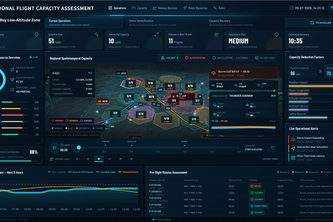
CloudThreshold is a self-reported project focused on aviation safety for low-altitude flights, using digital twin and GIS technologies. It claims to enable computable, predictable, and decision-supportable safety capacity management in airspace.
What changed
The project was submitted to the OpenAI 2026 hackathon, indicating an early-stage development effort, likely prototyping or proof-of-concept work.
Single most important open question
Is there evidence of any real-world application, customer feedback, or traction beyond a hackathon submission?
What The Product Actually Is
The description states that CloudThreshold is a system designed to ensure low-altitude flight safety through computable, predictable, and decision-supportable capacity management. It uses technologies such as digital twins, GIS, Docker, FastAPI, PostgreSQL, Python, real-time calculation, and UAV-related tools.
Evidence The author declares the use of specific tech stack (e.g., "digitaltwins", "gis", "fastapi") and describes a focus on airspace capacity and safety for low-altitude flights. However, there is no description of how the product functions or what it actually does beyond this high-level claim.
Inference Based on the tech stack and tagline, it appears to be a software platform that models airspace conditions in real time to support flight decisions, possibly for UAVs or other low-altitude aircraft.
Positioning & Claim Evolution
The tagline states: “Ensure every low-altitude flight stays within computable, predictable, decision-supportable safety capacity.”
Evidence This is the only positioning statement provided. It implies a focus on safety and capacity management in low-altitude airspace, particularly for UAVs or similar aircraft.
Inference The project positions itself as a tool to manage airspace capacity dynamically, likely for regulatory or operational purposes in emerging low-altitude economies.
Target Customer & ICP
The description does not state who the target customer is. It only mentions that it is for "low-altitude flight".
Evidence Not evidenced.
Inference Based on the tech stack and context (UAV, airspace capacity), potential customers may include drone operators, aviation regulators, or air traffic control systems managing low-altitude airspace.
Business Model & Pricing Evidence
There is no information in the description about pricing, monetization, or business model.
Evidence Not evidenced.
Inference If this is a prototype or hackathon project, it likely has no revenue model yet. If it were to evolve into a product, it might be sold as SaaS or embedded in air traffic management systems.
Technical & Delivery Signals
The author states that the system was built with:
- Technologies: airspacecapacity, aviationsafety, digitaltwins, docker, fastapi, gis, lowaltitudeeconomy, postgresql, python, realtimecalculation, uav
- Context: submitted to OpenAI 2026 hackathon
Evidence The author declares the tech stack and context of development.
Inference The use of Docker, FastAPI, PostgreSQL, GIS, and Python suggests a backend system with real-time data processing capabilities. The inclusion of digital twins implies simulation or modeling components.
Traction & Maturity Signals
The project was submitted to a hackathon — no further evidence of traction or adoption is provided.
Evidence Not evidenced.
Inference This is likely an early-stage prototype or proof-of-concept, with no known users, customers, or revenue.
Competitive Context
No information is provided about competitors or market context.
Evidence Not evidenced.
Inference The project appears to be in a niche area of airspace management and UAV safety. It may compete with or complement existing air traffic control systems or digital twin platforms for aviation.
Open Questions & Risks
- No evidence of traction, customers, or revenue: The project is only described as a hackathon submission.
- Unverified claims: All descriptions are self-reported and unverified.
- Limited team size: Only one member listed (weining liao), which may indicate limited development capacity.
- No product demo or documentation: No evidence of working software or user-facing materials.
Questions the description leaves open
- What is the exact problem you are solving, and how does this system address it?
- Have you tested the system in any real-world or simulated environment?
- Are there any early adopters or partners interested in using this solution?
- How do you plan to scale beyond a hackathon prototype?
- What is your roadmap for monetization or commercialization?
Overall Assessment
Not evidenced.
The project is described as a hackathon submission with no evidence of traction, revenue, customers, or even a working product. It is not clear whether this represents a viable business opportunity or just an idea in early development.
Confidence Low. The description provides only a self-reported, unverified overview of a concept, with no data to support commercial viability or market readiness.
User Stories BotA demo video on every pull request
Get a demo video on every new feature
GitHub App that watches your pull requests and records a narrated, captioned demo.
Save time on demo prep and make informed decisions faster with a video walkthrough of every new feature.
Source
Submitted to the OpenAI 2026 hackathon on Devpost. Project home on Devpost. Back to the full gallery on Devpost.
This competitive analysis was produced by top-founders.com (opens in a new tab)
Generated by a language model from this project's public Devpost page — its tagline and any built-with tags listed there, since the author published no write-up — as captured in August 2026. Short quotations are the author's words. It is an opinion on the idea as a business, not on the people behind it, and it reflects the description as published then. If the project has moved on, request a correction below. The analysis is not independent research and contains no verified traction, revenue or customer data.
An independent guide by KFG International LLC — not affiliated with, endorsed by, or connected to Devpost or OpenAI.