

Archive position — measured, not model output
0 likes on Devpost
2,263 of the 7,850 archived projects have more likes, and 5,587 share exactly 0 — so this project's #5,975 place in the like-ranked listing is a tie-break inside that group, not a ranking.
Projects (log scale)
Likes on Devpost. ▲ marks this project's group.
Show the figures
| Likes | Projects | Share of archive |
|---|---|---|
| 0 | 5,587 | 71.2% |
| 1 | 1,758 | 22.4% |
| 2 | 284 | 3.6% |
| 3–4 | 132 | 1.7% |
| 5–9 | 75 | 1.0% |
| 10+ | 14 | 0.2% |
 User Stories BotA demo video on every pull request
Get a demo video on every new feature
GitHub App that watches your pull requests and records a narrated, captioned demo.
Save time on demo prep and make informed decisions faster with a video walkthrough of every new feature.
Executive Summary
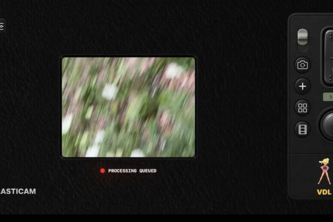
Plasticam is a self-reported project from the OpenAI 2026 hackathon, submitted by Kevin Chaves. The description states it is “a shelf of fictional video cameras, each with its own tactile rules.” This appears to be a conceptual or experimental software tool, possibly related to video processing or simulation, built using technologies such as AVFoundation, SwiftUI, and GPT-5.6. No evidence exists regarding revenue, customers, traction, or commercial viability. The single most important open question is: what is the intended use case or application of Plasticam, and how does it differ from existing tools in its domain?
What The Product Actually Is
The description states that Plasticam is “a shelf of fictional video cameras, each with its own tactile rules.” This suggests a software interface or simulation environment where users interact with multiple virtual camera models, each governed by distinct interaction or rendering logic. However, no further detail is provided on the functionality or output of these cameras.
- The description states Plasticam is “a shelf of fictional video cameras, each with its own tactile rules.”
- No evidence of actual product functionality, interface, or output beyond this conceptual framing.
- Not evidenced: what the software actually does, how it works, or whether it produces tangible results.
Positioning & Claim Evolution
The author describes Plasticam as a conceptual or experimental project. The tagline implies an artistic or exploratory approach to video camera simulation, possibly with an emphasis on user interaction or rule-based behavior. There is no evidence of prior positioning, evolution, or market strategy.
- The description states Plasticam is “a shelf of fictional video cameras, each with its own tactile rules.”
- No evidence of prior claims, branding, or strategic evolution.
- Not evidenced: how the project was positioned before, whether it has evolved from an earlier version, or what its intended market role is.
Target Customer & ICP
The description does not identify a specific customer base or ideal customer profile (ICP). The project appears to be experimental and self-reported, with no evidence of target users or personas.
- Not evidenced: who the customers are, their needs, or how they would use Plasticam.
- No evidence of segmentation, user research, or targeting strategy.
Business Model & Pricing Evidence
There is no evidence in the description regarding a business model or pricing structure. The project is described as a hackathon submission with no indication of monetization or commercial intent.
- Not evidenced: how the product would be sold, who pays, or what revenue model is envisioned.
- No evidence of pricing, licensing, or subscription details.
Technical & Delivery Signals
The author reports that Plasticam was built using technologies such as AVFoundation, SwiftUI, Xcode, GPT-5.6, Rust, and Metal. These tools suggest a focus on macOS or iOS development with AI integration.
- The description states Plasticam was built with: AVFoundation, Codex, Core Image, GPT-5.6, Metal, Rust, Swift, SwiftUI, Xcode.
- Not evidenced: delivery timeline, architecture, scalability, or performance metrics.
- Not evidenced: whether the project is production-ready or intended for deployment.
Traction & Maturity Signals
There is no evidence of traction, adoption, or maturity in the description. The project was submitted to a hackathon and lacks any indication of user engagement, usage data, or product development beyond its initial creation.
- Not evidenced: customer acquisition, retention, or usage metrics.
- Not evidenced: product iteration history, roadmap, or post-hackathon development.
Competitive Context
The description does not provide information on competitive landscape or comparable products. No evidence exists of market analysis, competitor identification, or differentiation strategy.
- Not evidenced: who the competitors are, what they do, or how Plasticam would compete.
- No evidence of market positioning or competitive advantage.
Open Questions & Risks
The project is described as a hackathon submission with no commercial traction. The lack of detail raises concerns about whether it is a functional product or just an idea. Without further information, the risk of misalignment between stated goals and actual delivery is high.
- Not evidenced: whether Plasticam has been tested or validated.
- Risk: lack of clarity on functionality, purpose, and viability.
- Open question: no evidence of product-market fit, revenue model, or user feedback.
Questions the description leaves open
- What is the core problem Plasticam solves, and how does it do so?
- How does the “tactile rules” concept translate into user experience or output?
- Is this a prototype, or are you planning to develop it further?
- What is your intended use case for Plasticam, and who would benefit from it?
- Are there any existing tools or platforms that already do what Plasticam aims to do?
Overall Assessment
There is insufficient evidence to assess the commercial viability of Plasticam. The project is described as a hackathon submission with no indication of traction, revenue, or customer validation. It remains unclear whether this is an experimental idea or a product in development.
- Not evidenced: any commercial metrics, financials, or strategic direction.
- Not evidenced: whether the project has potential for growth or partnership.
- Assessment: Insufficient evidence to evaluate. This requires further information on functionality, use case, and development plans.
User Stories BotA demo video on every pull request
Get a demo video on every new feature
GitHub App that watches your pull requests and records a narrated, captioned demo.
Save time on demo prep and make informed decisions faster with a video walkthrough of every new feature.
Source
Submitted to the OpenAI 2026 hackathon on Devpost. Project home on Devpost. Back to the full gallery on Devpost.
This competitive analysis was produced by top-founders.com (opens in a new tab)
Generated by a language model from this project's public Devpost page — its tagline and any built-with tags listed there, since the author published no write-up — as captured in August 2026. Short quotations are the author's words. It is an opinion on the idea as a business, not on the people behind it, and it reflects the description as published then. If the project has moved on, request a correction below. The analysis is not independent research and contains no verified traction, revenue or customer data.
An independent guide by KFG International LLC — not affiliated with, endorsed by, or connected to Devpost or OpenAI.