

Archive position — measured, not model output
0 likes on Devpost
2,263 of the 7,850 archived projects have more likes, and 5,587 share exactly 0 — so this project's #5,477 place in the like-ranked listing is a tie-break inside that group, not a ranking.
Projects (log scale)
Likes on Devpost. ▲ marks this project's group.
Show the figures
| Likes | Projects | Share of archive |
|---|---|---|
| 0 | 5,587 | 71.2% |
| 1 | 1,758 | 22.4% |
| 2 | 284 | 3.6% |
| 3–4 | 132 | 1.7% |
| 5–9 | 75 | 1.0% |
| 10+ | 14 | 0.2% |
 User Stories BotA demo video on every pull request
Get a demo video on every new feature
GitHub App that watches your pull requests and records a narrated, captioned demo.
Save time on demo prep and make informed decisions faster with a video walkthrough of every new feature.
Executive Summary
The company appears to be a solo-developer project submitted as a hackathon entry. The author describes it as a "role-based hospital management platform" intended to modernize patient access to healthcare services and streamline internal operations for doctors and administrators. It is built using common web technologies (React, Node.js, MongoDB) and includes features like appointment booking, real-time updates, and role-based access control.
What changed
The project was submitted to the OpenAI 2026 hackathon, indicating a transition from concept to prototype. No evidence of prior development or product-market fit exists beyond this submission.
Single most important open question
Is there any evidence that this platform has moved beyond the prototype stage, or that it has been adopted by any real hospital or user base?
Analysis basis
Self-reported and unverified description provided by the author. No external corroboration, revenue, customer data, or traction metrics are available.
What The Product Actually Is
The description states:
- National Police Hospital is a "role-based hospital management platform."
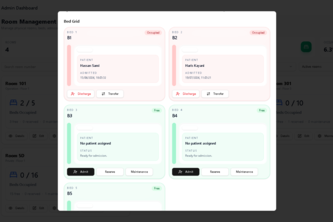
- It allows patients to find doctors, book appointments, receive updates, and view consultation details.
- Doctors can manage appointments and patient records.
- Administrators can oversee users, departments, rooms, and daily hospital operations.
Inference The system appears to be a web-based application with distinct user roles (patient, doctor, admin) and core hospital management functions such as appointment scheduling and record keeping.
Evidence Author's own write-up. No independent verification or demonstration of functionality.
Positioning & Claim Evolution
The author claims:
- The platform aims to "change the experience" of hospital websites.
- It is intended to be a modern, user-friendly alternative to outdated systems.
- It addresses issues like "boxy layouts", "overloaded pages", and "basic CRUD forms".
- It seeks to improve patient access and engagement with healthcare services.
Inference The positioning is that of a digital transformation tool for public or private hospitals aiming to enhance the patient journey and internal workflows through a modern interface.
Evidence Author's own write-up. No evidence of market research, customer feedback, or competitive positioning beyond self-description.
Target Customer & ICP
The description states:
- Patients can book appointments, find doctors, and access information.
- Doctors manage appointments and patient records.
- Administrators oversee users, departments, rooms, and operations.
Inference The platform targets three main user groups: patients, healthcare providers (doctors), and hospital administrators. These are the likely personas for the intended ICP.
Evidence Author's own write-up. No evidence of customer segmentation or persona development beyond stated roles.
Business Model & Pricing Evidence
The description does not state:
- Whether the platform is sold as a SaaS product.
- If there are any pricing tiers or monetization strategies.
- Whether it is intended for public hospitals, private clinics, or both.
Inference The business model is unclear. It may be a prototype or proof-of-concept, with no evidence of commercial intent or pricing structure.
Evidence Not evidenced. No mention of revenue, pricing, or monetization in the description.
Technical & Delivery Signals
The description states:
- Built using React, Vite, Shadcn, TailwindCSS (frontend).
- Node.js, Express, MongoDB (backend).
- Socket.IO for real-time updates.
- Secure authentication and role-based access control.
- Dashboard for each user type.
Inference The platform uses a modern full-stack architecture with a focus on UI/UX and real-time communication. It is built by one developer using open-source tools.
Evidence Author's own write-up. No evidence of scalability, performance metrics, or production deployment.
Traction & Maturity Signals
The description states:
- The project was submitted to the OpenAI 2026 hackathon.
- The author is the sole team member.
- It is described as a "complete, role-based platform" with "appointments, doctor profiles, patient records, real-time updates, and hospital management tools."
Inference There is no evidence of traction or adoption beyond the prototype stage. No customers, users, or live deployments are mentioned.
Evidence Not evidenced. No data on usage, customers, or product-market fit.
Competitive Context
The description does not state:
- Whether similar platforms exist.
- Who the competitors are.
- How this platform differentiates from existing solutions.
Inference The author does not provide any competitive analysis or awareness of existing systems in the hospital management space.
Evidence Not evidenced. No mention of competitors, market positioning, or differentiation strategy.
Open Questions & Risks
Key risks and open questions based on the description:
- Solo development implies limited scalability and support.
- No evidence of real-world usage or adoption.
- No pricing model or monetization strategy described.
- The platform is presented as a hackathon submission — not a commercial product.
- No mention of compliance, security, or healthcare-specific regulations.
Inference The project lacks commercial viability, traction, and scalability. It appears to be an experimental prototype with no clear path to market adoption.
Questions the description leaves open
- What is the intended target hospital or healthcare system for this platform?
- Has there been any user testing or feedback from actual patients, doctors, or administrators?
- Is there a plan to monetize this platform? If so, how?
- How does the platform address healthcare data privacy and compliance (e.g., HIPAA)?
- What is the roadmap for expanding beyond the current features (e.g., lab/pharmacy modules)?
- Are there any partnerships or pilot programs with hospitals or health systems?
Note
These questions are based on the self-reported description and are intended to probe for evidence that may not be present.
Overall Assessment
Not evidenced.
The project is described as a solo-developer hackathon submission, with no evidence of:
- Revenue
- Customers
- Product-market fit
- Commercial strategy
- Scalability or deployment
Inference The platform is not yet a viable investment or partnership opportunity based on the self-reported description alone. It remains an experimental prototype.
User Stories BotA demo video on every pull request
Get a demo video on every new feature
GitHub App that watches your pull requests and records a narrated, captioned demo.
Save time on demo prep and make informed decisions faster with a video walkthrough of every new feature.
Source
Submitted to the OpenAI 2026 hackathon on Devpost. Project home on Devpost. Back to the full gallery on Devpost.
This competitive analysis was produced by top-founders.com (opens in a new tab)
Generated by a language model from this project's public Devpost page — its tagline, the author's own write-up and any built-with tags listed there — as captured in August 2026. Short quotations are the author's words. It is an opinion on the idea as a business, not on the people behind it, and it reflects the description as published then. If the project has moved on, request a correction below. The analysis is not independent research and contains no verified traction, revenue or customer data.
An independent guide by KFG International LLC — not affiliated with, endorsed by, or connected to Devpost or OpenAI.