

Archive position — measured, not model output
0 likes on Devpost
2,263 of the 7,850 archived projects have more likes, and 5,587 share exactly 0 — so this project's #5,467 place in the like-ranked listing is a tie-break inside that group, not a ranking.
Projects (log scale)
Likes on Devpost. ▲ marks this project's group.
Show the figures
| Likes | Projects | Share of archive |
|---|---|---|
| 0 | 5,587 | 71.2% |
| 1 | 1,758 | 22.4% |
| 2 | 284 | 3.6% |
| 3–4 | 132 | 1.7% |
| 5–9 | 75 | 1.0% |
| 10+ | 14 | 0.2% |
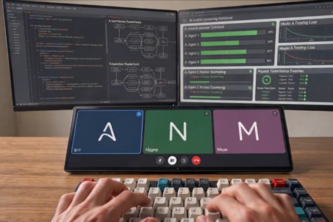
 User Stories BotA demo video on every pull request
Get a demo video on every new feature
GitHub App that watches your pull requests and records a narrated, captioned demo.
Save time on demo prep and make informed decisions faster with a video walkthrough of every new feature.
Executive Summary
What the company appears to be
Nagara is a browser-based real-time meeting companion designed to help participants stay engaged during shared audio meetings. The app listens to shared tab audio, transcribes conversations in real time, detects when questions are directed at the user, and prepares structured catch-up content (question, evidence, response options) so users can respond with context rather than pretending to have heard everything.
What changed
This is a self-reported project submitted for the OpenAI 2026 hackathon. It represents an early-stage prototype built by one developer (Yasuhiro Hashimoto), using a full-stack web application architecture and AI tools like OpenAI’s language models. There is no evidence of prior traction, revenue, or customer adoption.
Single most important open question
Is there a viable market need for this type of real-time meeting assistant, and does the product concept align with user behavior around attention, multitasking, and participation in virtual meetings?
What The Product Actually Is
The description states that Nagara is a real-time meeting companion for browser-based calls. It operates using shared tab audio only — video is never sent to the app.
Key technical elements:
- Built with Next.js, TypeScript, Python, and Clean Architecture
- Uses browser media APIs to capture shared-tab audio
- Implements real-time transcript processing, question detection, and structured catch-up generation
- Leverages OpenAI models for transcription, question identification, and response suggestion
- Runs on Docker Compose with a local reproducible environment
The app is described as a full-stack web application with a browser-first interaction model, designed to be unobtrusive and fullscreen-friendly.
Inference: The product appears to be an experimental prototype built for demonstration purposes, likely in a hackathon context. It does not appear to have launched publicly or gained users beyond its creator.
Positioning & Claim Evolution
The project’s positioning is rooted in the idea that meeting participation should not require disengagement from other work. The tagline suggests a challenge to norms: “It’s generally considered inappropriate to work while in a meeting. But what if you could create the conditions to fully participate in the meeting?”
Claims:
- The app allows users to listen actively without pretending to follow along
- It prepares responses based on context from the conversation
- It supports real-time interaction with minimal interruption
The author frames this as a solution to a common problem: the tension between being present in a meeting and managing other tasks.
Inference: The positioning reflects a desire to improve meeting efficiency and reduce cognitive load, but there is no evidence of market research or user feedback validating this need.
Target Customer & ICP
The description does not name specific customer segments or personas. However, it implies the app targets individuals who:
- Participate in browser-based shared audio meetings
- Are often interrupted by questions during meetings
- Want to respond thoughtfully without losing focus on other work
It is implied that the audience includes professionals working in remote or hybrid environments, where such interruptions are frequent.
Inference: The ICP likely centers around knowledge workers in collaborative settings, but no explicit segmentation or targeting data is provided.
Business Model & Pricing Evidence
There is no evidence of a business model or pricing strategy. The project is described as a hackathon submission with no mention of monetization plans, subscriptions, or paid features.
Not evidenced
Technical & Delivery Signals
The technical stack includes:
- Frontend: Next.js, TypeScript, React
- Backend: Python, FastAPI, PostgreSQL
- Tools: OpenAI, WebRTC, Docker Compose, pnpm
- Features: real-time audio capture, transcript processing, question detection, response generation
The app is built with a browser-first approach and uses realtime APIs to process audio and generate content.
Inference: The architecture suggests a scalable, modular system suitable for further development. However, no production deployment or scalability data is available.
Traction & Maturity Signals
The project is described as a hackathon submission, built by one person (Yasuhiro Hashimoto). There is no evidence of:
- Revenue
- Customers
- Users
- Product adoption
- Market traction
It includes scripted meeting fixtures for evaluation and testing, but these are not indicative of real-world usage.
Not evidenced
Competitive Context
The description does not mention competitors or existing solutions in the space. It is unclear whether similar tools already exist — such as:
- Meeting transcription services (e.g., Otter.ai)
- AI-powered meeting assistants
- Real-time collaboration platforms
No competitive analysis or differentiation strategy is provided.
Not evidenced
Open Questions & Risks
- Unproven market need: No evidence of user demand or validation.
- Single-person development: The entire product was built by one individual, raising questions about scalability and long-term maintenance.
- No commercial traction: No revenue, customers, or adoption metrics are reported.
- Privacy concerns: Though the app avoids sending video, real-time audio processing raises data privacy issues that are not addressed in the description.
- Prototype nature: The project is described as a hackathon submission — not a product ready for market.
Inference: The risk of misalignment with actual user needs or commercial viability is high due to lack of evidence.
Questions the description leaves open
- What specific problem are you solving, and how did you validate that it exists?
- Have you conducted any user research or interviews to inform the product design?
- How do you plan to handle privacy concerns around real-time audio capture?
- Are there any existing tools in this space? How does Nagara differ from them?
- What is your roadmap for moving beyond the prototype stage?
- Do you have a plan for monetization or customer acquisition?
Overall Assessment
This project is described as an early-stage hackathon prototype with no evidence of traction, revenue, or commercial viability. It represents a concept that may address a real need — but the description provides no proof of that.
Assessment: Not ready for investment or partnership at this stage. The idea has potential, but lacks validation and market readiness. Further development and user testing are required before any strategic move can be considered.
User Stories BotA demo video on every pull request
Get a demo video on every new feature
GitHub App that watches your pull requests and records a narrated, captioned demo.
Save time on demo prep and make informed decisions faster with a video walkthrough of every new feature.
Source
Submitted to the OpenAI 2026 hackathon on Devpost. Project home on Devpost. Back to the full gallery on Devpost.
This competitive analysis was produced by top-founders.com (opens in a new tab)
Generated by a language model from this project's public Devpost page — its tagline, the author's own write-up and any built-with tags listed there — as captured in August 2026. Short quotations are the author's words. It is an opinion on the idea as a business, not on the people behind it, and it reflects the description as published then. If the project has moved on, request a correction below. The analysis is not independent research and contains no verified traction, revenue or customer data.
An independent guide by KFG International LLC — not affiliated with, endorsed by, or connected to Devpost or OpenAI.