

Archive position — measured, not model output
0 likes on Devpost
2,263 of the 7,850 archived projects have more likes, and 5,587 share exactly 0 — so this project's #5,354 place in the like-ranked listing is a tie-break inside that group, not a ranking.
Projects (log scale)
Likes on Devpost. ▲ marks this project's group.
Show the figures
| Likes | Projects | Share of archive |
|---|---|---|
| 0 | 5,587 | 71.2% |
| 1 | 1,758 | 22.4% |
| 2 | 284 | 3.6% |
| 3–4 | 132 | 1.7% |
| 5–9 | 75 | 1.0% |
| 10+ | 14 | 0.2% |
 User Stories BotA demo video on every pull request
Get a demo video on every new feature
GitHub App that watches your pull requests and records a narrated, captioned demo.
Save time on demo prep and make informed decisions faster with a video walkthrough of every new feature.
Executive Summary
What the company appears to be
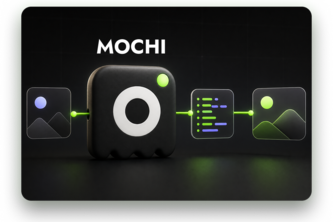
Mochi is a macOS utility tool described by its author as a small, local application that connects AI design workflows by keeping images and text ready to move between tools. It does not contain AI of its own, nor does it require an account or cloud service.
What changed
The project was submitted to the OpenAI 2026 hackathon on Devpost. The author describes building a native macOS app with Swift and SwiftUI that monitors the Downloads folder and clipboard for new content, displaying it in a floating panel for easy access and drag-and-drop use.
Single most important open question
Is there evidence of any user adoption or feedback beyond the author’s own experience? The description states no revenue, customers, or traction data are available.
Note: This analysis is based entirely on the self-reported, unverified project description provided by the caller. All claims are attributed to that description and labeled as such.
What The Product Actually Is
The description states:
- Mochi is a macOS utility built with SwiftUI and AppKit.
- It watches the Downloads folder and system clipboard for new images and text.
- It displays these items in a floating panel that stays visible across macOS Spaces.
- Users can drag images directly into Figma or other apps.
- Text snippets are saved separately and can be copied with one click.
- It does not create content, nor does it automate workflows.
- Everything remains local—no account, no cloud service, no tokens spent just organizing files.
Inference: Mochi is a lightweight, local-first tool designed to reduce friction in creative workflows by centralizing access to reference materials.
Positioning & Claim Evolution
The description states:
- Mochi is positioned as a macOS utility that connects AI design workflows.
- It aims to solve the problem of “the space between collecting creative context and actually using it.”
- The tool is described as small, local, and ready when needed—without turning a simple problem into another complicated system.
Inference: The positioning evolved from solving a personal pain point (workflow friction) to a broader category of tools that support AI-assisted design by reducing setup complexity.
Target Customer & ICP
The description states:
- Mochi is intended for designers who work with AI tools.
- It addresses users who spend time managing reference images and text across multiple sources like browser tabs, chat messages, and folders.
- The author identifies a gap in workflows where “agents and MCP are powerful, but setting up that kind of workflow just to manage a few images and notes feels like overkill.”
Inference: The primary ICP appears to be individual designers or creative professionals who use AI tools and want to streamline access to context without complex automation.
Business Model & Pricing Evidence
The description states:
- No account is required.
- No cloud service is used.
- No tokens are spent just organizing files.
- There is no mention of pricing, subscriptions, or monetization models.
Inference: The business model is not evident from the description. It appears to be a free, local utility with no commercial layer described.
Technical & Delivery Signals
The description states:
- Built natively for macOS using SwiftUI and AppKit.
- Uses Core Graphics, Clipboard API, Drag-and-Drop API, File System Monitoring, and native macOS development practices.
- Watches Downloads folder and clipboard for new content.
- Uses NSPanel to create a floating window that follows users across macOS Spaces.
- Handles edge cases such as preventing duplicate snippets or capturing text copied from Mochi again.
Inference: The technical implementation is focused on local execution with minimal dependencies, suggesting a lightweight, efficient delivery mechanism.
Traction & Maturity Signals
The description states:
- The project was submitted to the OpenAI 2026 hackathon.
- It has one team member: MOSA JHU.
- No revenue, customer base, or adoption data are mentioned.
- The author notes that Mochi reduces time spent digging through folders and chat histories.
Inference: There is no evidence of traction or user feedback beyond the author’s own experience. The project appears to be in early development or prototype stage.
Competitive Context
The description states:
- Mochi aims to bridge the gap between collecting creative context and using it.
- It contrasts with tools like agents and MCP, which are described as “powerful but overkill” for simple tasks.
- It is not positioned against other AI design tools directly but rather as a utility that supports them.
Inference: Mochi operates in a niche space—local workflow helpers for creative professionals using AI tools. It does not appear to compete with established platforms like Figma or Midjourney, but instead complements them.
Open Questions & Risks
The description states:
- The tool is built by one person (MOSA JHU).
- No mention of funding, team expansion, or long-term roadmap.
- It is a hackathon submission, suggesting early-stage development.
- There is no evidence of user testing, feedback loops, or product-market fit.
Inference: Key risks include lack of scalability, limited team capacity, and absence of validated user demand. The project may be more of an experiment than a scalable product.
Questions the description leaves open
- What is the actual usage frequency of Mochi among users beyond the author?
- Has there been any external feedback or testing from designers who use AI tools?
- Are there plans to expand beyond macOS or integrate with other platforms?
- How does Mochi handle privacy and data retention, especially in a local-first model?
- What are the long-term goals for the product beyond its current functionality?
Overall Assessment
The description states:
- The project is a hackathon submission.
- It has no revenue, customers, or traction data.
- It is a single-person effort with no funding or team expansion noted.
Inference: At this stage, there is insufficient evidence to support investment or partnership interest. The tool shows potential as a local utility but lacks commercial validation and scalability indicators. Any future interest would depend on demonstrating user adoption and product-market fit beyond the author’s own use case.
User Stories BotA demo video on every pull request
Get a demo video on every new feature
GitHub App that watches your pull requests and records a narrated, captioned demo.
Save time on demo prep and make informed decisions faster with a video walkthrough of every new feature.
Source
Submitted to the OpenAI 2026 hackathon on Devpost. Project home on Devpost. Back to the full gallery on Devpost.
This competitive analysis was produced by top-founders.com (opens in a new tab)
Generated by a language model from this project's public Devpost page — its tagline, the author's own write-up and any built-with tags listed there — as captured in August 2026. Short quotations are the author's words. It is an opinion on the idea as a business, not on the people behind it, and it reflects the description as published then. If the project has moved on, request a correction below. The analysis is not independent research and contains no verified traction, revenue or customer data.
An independent guide by KFG International LLC — not affiliated with, endorsed by, or connected to Devpost or OpenAI.