

Archive position — measured, not model output
0 likes on Devpost
2,263 of the 7,850 archived projects have more likes, and 5,587 share exactly 0 — so this project's #5,343 place in the like-ranked listing is a tie-break inside that group, not a ranking.
Projects (log scale)
Likes on Devpost. ▲ marks this project's group.
Show the figures
| Likes | Projects | Share of archive |
|---|---|---|
| 0 | 5,587 | 71.2% |
| 1 | 1,758 | 22.4% |
| 2 | 284 | 3.6% |
| 3–4 | 132 | 1.7% |
| 5–9 | 75 | 1.0% |
| 10+ | 14 | 0.2% |
 User Stories BotA demo video on every pull request
Get a demo video on every new feature
GitHub App that watches your pull requests and records a narrated, captioned demo.
Save time on demo prep and make informed decisions faster with a video walkthrough of every new feature.
Executive Summary
Company: Mistik Tarot
Self-reported basis: The analysis is based entirely on the project description provided by the caller — its name, tagline, the author's own write-up, and any technology tags. No archived history, third-party data or independent verification is available. All claims are self-reported and unverified.
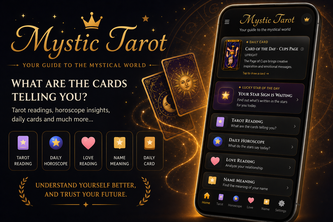
What it appears to be: A spiritual guidance app built as a multilingual (Turkish/English) PWA and native mobile application with tarot, horoscope, love compatibility, and Yıldızname-style personal reflection features. The app emphasizes local-first privacy and is built using React and modern web/mobile tooling.
What changed: The project was submitted to the OpenAI 2026 hackathon as a proof-of-concept. It includes a working PWA and native-ready build, with support for mobile packaging via Capacitor and integration with AdMob and RevenueCat.
Single most important open question: Is there evidence of any traction, revenue or user adoption beyond the hackathon submission?
Commercial due-diligence read: The project is in early development. It has no evidenced commercial activity, customers, or monetization. The description states that it was built during a hackathon and includes no data on usage, retention, or monetization.
What The Product Actually Is
The description states that Mistik Tarot is:
- A multilingual (Turkish and English) spiritual guidance app
- Supports tarot, horoscopes, love compatibility, and Yıldızname-style personal reflection
- Includes features such as onboarding, card drawing, spreads (single-card, Celtic Cross), daily/weekly/monthly horoscope sections, and personalized readings
- Built with React, TypeScript, Vite, Tailwind CSS, shadcn/Radix UI, Framer Motion, React Router, Vite PWA, and Capacitor for Android/iOS packaging
- Includes local notifications, AdMob hooks, RevenueCat premium wiring, and Vitest coverage
Inference: The app is a consumer-facing spiritual guidance tool with a privacy-first approach. It appears to be built as a progressive web app (PWA) with native mobile support.
Positioning & Claim Evolution
The description states:
- The app was inspired by the idea that spiritual apps can feel personal, beautiful, and calm without requiring an account or sending intimate profile details to a server
- It is described as a multilingual tarot, horoscope, and love compatibility app with animated readings, local-first personalization, PWA support, and native mobile packaging
Inference: The positioning emphasizes privacy, local-first design, and spiritual guidance. The claim evolution appears to be from a hackathon prototype to a potentially scalable product with monetization pathways.
Target Customer & ICP
The description states:
- The app supports Turkish and English languages
- It includes features for tarot, horoscopes, love compatibility, and Yıldızname-style personal reflection
Inference: The target customer appears to be users interested in spiritual guidance, particularly those who value privacy and local-first data handling. The ICP likely includes users of tarot, horoscope, or similar spiritual apps, with a focus on Turkish and English speakers.
Business Model & Pricing Evidence
The description states:
- The app integrates RevenueCat for premium wiring
- It includes AdMob hooks
- It is described as a consumer app with support for native mobile packaging
Inference: There is no explicit statement about pricing or monetization strategy. The presence of AdMob and RevenueCat suggests potential for in-app advertising and subscription-based premium features, but no evidence of actual revenue or pricing models.
Technical & Delivery Signals
The description states:
- Built with React, TypeScript, Vite, Tailwind CSS, shadcn/Radix UI, Framer Motion, React Router, Vite PWA, and Capacitor for Android/iOS packaging
- Includes local notifications, AdMob hooks, RevenueCat premium wiring, and Vitest coverage for key reading logic
- During Build Week, Codex with GPT-5.6 acted as a pair programmer and submission copilot
Inference: The technical stack is modern and includes tools for PWA support, mobile packaging, and testing. The use of Codex suggests an automated development approach, but no evidence of production deployment or scalability.
Traction & Maturity Signals
The description states:
- The app was built during a hackathon
- It includes a working PWA and native-ready consumer app
- It has tarot spreads, horoscope pages, love compatibility, Yıldızname readings, Turkish and English support, themes, tests, and a judge-ready README
- Next steps include polishing the Android and iOS release pipeline, expanding beta testing, improving performance for lower-end devices, and adding richer personalized reading flows
Inference: The project is in early development. There is no evidence of user adoption, retention, or revenue. No traction data (e.g., downloads, active users, engagement) is provided.
Competitive Context
The description does not provide any information about competitors or the broader market landscape for spiritual guidance apps.
Inference: The competitive context is unknown. The app may compete with other tarot, horoscope, or spiritual guidance apps, but no evidence of existing players or market positioning is available.
Open Questions & Risks
- No revenue or monetization data: There is no evidence of any revenue, pricing, or monetization strategy.
- No user traction or adoption: The app was built for a hackathon and has no evidence of real-world usage or retention.
- Unverified claims: All features and functionality are self-reported and unverified.
- Limited team size: Only one team member is listed, which may limit development capacity.
- Unclear path to market: No evidence of marketing, distribution, or go-to-market strategy.
Questions the description leaves open
- What is the current status of the app beyond the hackathon submission?
- Are there any users or beta testers currently using the app?
- What is the monetization strategy, and how are you planning to generate revenue?
- How do you plan to scale beyond the current development phase?
- What is your roadmap for expanding into new markets or languages?
- Have you considered privacy compliance (e.g., GDPR, CCPA) in your local-first approach?
Overall Assessment
Not evidenced: There is no evidence of revenue, customers, or traction beyond the hackathon submission. The project is described as a prototype with no commercial activity.
Confidence level: Low — based on self-reported information only, with no third-party validation or data on adoption, monetization, or scalability.
Assessment: This is an early-stage prototype with no demonstrated commercial viability. It may be of interest for strategic partnerships or early-stage investment if further development and traction are demonstrated.
User Stories BotA demo video on every pull request
Get a demo video on every new feature
GitHub App that watches your pull requests and records a narrated, captioned demo.
Save time on demo prep and make informed decisions faster with a video walkthrough of every new feature.
Source
Submitted to the OpenAI 2026 hackathon on Devpost. Project home on Devpost. Back to the full gallery on Devpost.
This competitive analysis was produced by top-founders.com (opens in a new tab)
Generated by a language model from this project's public Devpost page — its tagline, the author's own write-up and any built-with tags listed there — as captured in August 2026. Short quotations are the author's words. It is an opinion on the idea as a business, not on the people behind it, and it reflects the description as published then. If the project has moved on, request a correction below. The analysis is not independent research and contains no verified traction, revenue or customer data.
An independent guide by KFG International LLC — not affiliated with, endorsed by, or connected to Devpost or OpenAI.