

Archive position — measured, not model output
1 like on Devpost
505 of the 7,850 archived projects have more likes, and 1,758 share exactly 1 — so this project's #1,425 place in the like-ranked listing is a tie-break inside that group, not a ranking.
Projects (log scale)
Likes on Devpost. ▲ marks this project's group.
Show the figures
| Likes | Projects | Share of archive |
|---|---|---|
| 0 | 5,587 | 71.2% |
| 1 | 1,758 | 22.4% |
| 2 | 284 | 3.6% |
| 3–4 | 132 | 1.7% |
| 5–9 | 75 | 1.0% |
| 10+ | 14 | 0.2% |
 User Stories BotA demo video on every pull request
Get a demo video on every new feature
GitHub App that watches your pull requests and records a narrated, captioned demo.
Save time on demo prep and make informed decisions faster with a video walkthrough of every new feature.
Executive Summary
What the company appears to be
Mecklink is a self-reported mobile application project designed to address roadside assistance challenges in Ghana, particularly for drivers who are stranded without access to reliable mechanics or towing services.
What changed
The author reports evolving from an initial web-based idea to a Flutter-based mobile app, incorporating AI tools like GPT and Codex to improve functionality and stability. The project has undergone iterative development focused on user flows, security, navigation, and provider verification.
Single most important open question
Is there evidence of real-world usage or testing with drivers, mechanics, or towing providers in Ghana? The description states the app is not yet in production and that next steps include “real-world testing,” but no such testing has occurred according to the self-reported account.
What The Product Actually Is
The description states that Mecklink is a mobile application built using Flutter, React, Node.js, and Dart. It was originally conceived as a web app but evolved into a mobile-first solution due to its reliance on maps, live location tracking, and roadside request handling.
Key features mentioned include:
- SOS requests
- Booking flows
- Navigation behavior
- Provider flows (mechanics and towing)
- Phone/authentication screens
- Security-related concerns
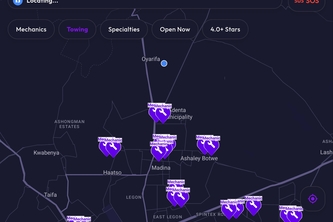
The author notes that the app was improved through AI-assisted coding tools such as GPT and Codex. However, no specific product screenshots, UI elements, or functional prototypes are included in the description.
Confidence Low — this is a self-reported account without independent verification of functionality or design.
Positioning & Claim Evolution
The author positions Mecklink as an app that solves a real local problem: drivers getting stranded with no reliable mechanic nearby. This framing suggests a local, community-focused solution, aimed at addressing infrastructure gaps in Ghana's roadside support ecosystem.
There is no indication of broader positioning beyond this core use case. The project does not claim to be scalable or adaptable to other markets outside of Ghana at this stage.
Inference The evolution from web to mobile indicates a shift toward solving real-time, location-dependent needs — which aligns with the stated goal of helping drivers in distress.
Target Customer & ICP
The description states that Mecklink is built around drivers in Ghana who face challenges finding roadside assistance. It also mentions targeting mechanics and towing providers, suggesting a multi-stakeholder platform.
However, there is no evidence of:
- Specific customer personas
- Segmentation criteria
- Market research or user interviews
- Customer acquisition strategy
The author describes the app as being developed for “real-world testing” but does not confirm whether any actual users have participated in that process.
Confidence Low — claims are based on self-reporting, with no external validation of target audience or ICP.
Business Model & Pricing Evidence
There is no evidence provided about:
- Revenue streams
- Pricing models
- Monetization strategy
- Subscription plans or transaction fees
The description focuses entirely on development progress and user experience improvements, not business viability or financial structure.
Confidence Not evidenced — the business model remains undefined.
Technical & Delivery Signals
The author reports using:
- Flutter for mobile app development
- React (initially)
- Node.js
- Dart
They also mention leveraging AI tools like GPT and Codex to assist in debugging, improving flows, and enhancing security logic.
Notable technical improvements include:
- SOS request flow
- Provider acceptance and job handoff
- Navigation behavior post-provider acceptance
- Authentication and recovery screens
- App stability
The author emphasizes that they are a solo developer without traditional software engineering background, relying on AI to help build and iterate.
Confidence Medium — some technical details are reported, but no independent validation of architecture or scalability.
Traction & Maturity Signals
The description states:
- The app is not yet in production
- Next steps include “real-world testing” with drivers, mechanics, and towing providers
- The goal is to prepare for a pilot launch
No evidence of:
- Actual users
- Customer feedback loops
- Revenue or usage metrics
- Beta testing results
- Product-market fit validation
The author describes the app as more stable than before but does not provide data on adoption, retention, or performance.
Confidence Very low — no traction signals are evident beyond development milestones.
Competitive Context
There is no mention of competitors, nor any indication of competitive landscape analysis. The project appears to be a first-of-its-kind local initiative, with no reference to similar platforms in Ghana or elsewhere.
The author does not discuss:
- Existing roadside assistance apps
- Market saturation
- Differentiation strategy
Confidence Not evidenced — no competitive positioning or market context provided.
Open Questions & Risks
- No real-world testing: The app is described as not yet in production, and the next step is to test with users — indicating a lack of current traction.
- Solo developer model: The author is a single individual without a team or engineering background, which raises questions about scalability and long-term maintenance.
- AI dependency: Heavy reliance on AI tools for development may pose risks related to consistency, quality control, and future sustainability if those tools change or become unavailable.
- Unproven market demand: While the author claims to solve a real problem, there is no evidence of user validation or demand confirmation.
- Lack of business model clarity: No information on how the platform will generate revenue or sustain itself.
Confidence Medium — these are inferred risks from the lack of evidence around traction, team, and monetization.
Questions the description leaves open
- Have you conducted any interviews or surveys with drivers in Ghana to validate the need for this service?
- What specific feedback have you received from potential mechanics or towing providers about the proposed workflows?
- How do you plan to verify the credentials of mechanics and towing providers?
- Are there any partnerships or collaborations already in place with local roadside assistance organizations?
- What are your plans for monetization, and how do you intend to scale beyond Ghana?
- Can you share examples of how GPT/Codex was used to improve specific parts of the app? Was this done manually or automated?
- Do you have a timeline for when the pilot launch will begin?
Overall Assessment
At this stage, Mecklink is an early-stage prototype with no demonstrated traction, revenue, or customer base. The author reports significant development work and iterative improvements using AI tools, but there is no evidence of real-world usage or validation.
The project appears to be a solo developer initiative focused on solving a local problem in Ghana. While the idea has potential, it lacks:
- Market validation
- Product-market fit
- Business model clarity
- Team structure
- Traction signals
Assessment Not ready for investment or partnership at this time. The project is in early development and requires further validation before any strategic move can be considered.
User Stories BotA demo video on every pull request
Get a demo video on every new feature
GitHub App that watches your pull requests and records a narrated, captioned demo.
Save time on demo prep and make informed decisions faster with a video walkthrough of every new feature.
Source
Submitted to the OpenAI 2026 hackathon on Devpost. Project home on Devpost. Back to the full gallery on Devpost.
This competitive analysis was produced by top-founders.com (opens in a new tab)
Generated by a language model from this project's public Devpost page — its tagline, the author's own write-up and any built-with tags listed there — as captured in August 2026. Short quotations are the author's words. It is an opinion on the idea as a business, not on the people behind it, and it reflects the description as published then. If the project has moved on, request a correction below. The analysis is not independent research and contains no verified traction, revenue or customer data.
An independent guide by KFG International LLC — not affiliated with, endorsed by, or connected to Devpost or OpenAI.