

Archive position — measured, not model output
0 likes on Devpost
2,263 of the 7,850 archived projects have more likes, and 5,587 share exactly 0 — so this project's #5,092 place in the like-ranked listing is a tie-break inside that group, not a ranking.
Projects (log scale)
Likes on Devpost. ▲ marks this project's group.
Show the figures
| Likes | Projects | Share of archive |
|---|---|---|
| 0 | 5,587 | 71.2% |
| 1 | 1,758 | 22.4% |
| 2 | 284 | 3.6% |
| 3–4 | 132 | 1.7% |
| 5–9 | 75 | 1.0% |
| 10+ | 14 | 0.2% |
 User Stories BotA demo video on every pull request
Get a demo video on every new feature
GitHub App that watches your pull requests and records a narrated, captioned demo.
Save time on demo prep and make informed decisions faster with a video walkthrough of every new feature.
Executive Summary
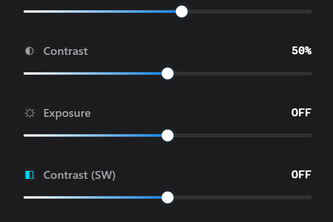
The company appears to be a solo developer project named Lumma Overlay, self-described as an application that allows users to apply screen overlays for filters, brightness, and contrast adjustments using keyboard or controller inputs. The author states it works universally — not just in games but also while watching movies — with fully customizable keybindings. It is built using Electron, GPT5.5, Codex, and Antigravity technologies.
What changed: The project was submitted to the OpenAI 2026 hackathon on Devpost by a single developer, Douglas Leandro. There is no evidence of prior development history or traction beyond this submission.
The single most important open question: Is there any indication that this tool has gained adoption or usage beyond the author’s personal use?
What The Product Actually Is
- The description states that Lumma Overlay is an application for screen overlays, allowing users to adjust brightness, contrast, and filters.
- It operates via a keyboard or controller, using fully customizable keybindings.
- The app works outside of games, enabling control over display settings even while watching movies.
- It uses an overlay system that does not require being inside a game to function.
- Built with technologies including Electron, GPT5.5, Codex, and Antigravity.
Note: The description provides no clarity on the actual UI or UX of the app, nor how it interacts with other software or hardware.
Positioning & Claim Evolution
- The author describes Lumma Overlay as a tool for modifying screen appearance, particularly useful for gamers and media consumers.
- It is positioned as an alternative to in-game settings, allowing users to make adjustments without exiting the application.
- The app is framed as a hobby project that evolved from personal need, not commercial intent.
- There is no evidence of branding, messaging, or positioning beyond the author’s own description.
Inference: The app seems to be a niche utility tool for users who want fine-grained control over their display settings without switching contexts. However, this is based on self-reporting only.
Target Customer & ICP
- The author states that the app is useful for both gamers and people watching movies.
- It supports keyboard or controller input, suggesting a target audience with specific interaction preferences (e.g., gamers or those using gamepads).
- No explicit customer segmentation beyond general use cases was provided.
Not evidenced: There is no indication of defined personas, market research, or user interviews. The ICP remains undefined.
Business Model & Pricing Evidence
- No pricing information, monetization strategy, or business model is described.
- The app is presented as a personal hobby project, not a commercial offering.
- No mention of subscriptions, freemium tiers, or paid features.
Not evidenced: No evidence of any revenue streams or pricing structure.
Technical & Delivery Signals
- Built using Electron, suggesting cross-platform compatibility.
- Uses GPT5.5, Codex, and Antigravity — these are not standard tools; their inclusion may reflect the author's use of AI-assisted development or experimental tech stacks.
- The app supports customizable keybindings, implying a level of configurability.
- The author mentions UI/Acessibility challenges and token limits, indicating technical complexity in implementation.
Inference: The project likely involves some degree of automation or AI integration, but the nature and extent are unclear without further details.
Traction & Maturity Signals
- The app is described as “totally functional” and “extremely useful.”
- The author claims to have “produced them [features] aos poucos”, suggesting iterative development.
- There is no evidence of:
- Users or customers
- Downloads or installs
- Feedback or reviews
- Market traction or growth metrics
Not evidenced: No signs of adoption, usage data, or product maturity beyond the author’s personal experience.
Competitive Context
- The description does not mention any competitors.
- There is no indication of existing tools in this space (e.g., screen filters, overlay utilities).
- The app is positioned as a universal solution, working outside of games — which may differentiate it from some niche tools.
Not evidenced: No competitive analysis or market positioning relative to similar products.
Open Questions & Risks
- The project is a solo effort (1 person team), raising concerns about scalability and long-term maintenance.
- The app is described as a hobby project, not a commercial venture, which may limit investment appeal.
- Use of non-standard tech stack components (e.g., GPT5.5, Codex, Antigravity) raises questions about feasibility or sustainability.
- Lack of any user feedback, reviews, or traction suggests low market validation.
Inference: The lack of external validation and limited team capacity could hinder product growth or commercial viability.
Questions the description leaves open
- What is the actual scope of functionality in terms of supported applications or platforms?
- How many users are currently using the app, if any?
- Are there any plans to monetize the tool or expand beyond personal use?
- What are the technical limitations or bottlenecks you’ve encountered during development?
- How do you plan to scale the project beyond a single developer?
Overall Assessment
- Not evidenced: No evidence of revenue, traction, or market demand.
- The app is described as a personal hobby project, with no indication of commercial intent or scalability.
- It lacks any formal business model, pricing structure, or user base.
- The author’s statement that he “can’t imagine living without it” suggests personal utility but not broader appeal.
Assessment: Based on the self-reported description alone, there is insufficient evidence to support a commercial due-diligence read. This appears to be an early-stage prototype or proof-of-concept with no demonstrated market traction or business viability.
User Stories BotA demo video on every pull request
Get a demo video on every new feature
GitHub App that watches your pull requests and records a narrated, captioned demo.
Save time on demo prep and make informed decisions faster with a video walkthrough of every new feature.
Source
Submitted to the OpenAI 2026 hackathon on Devpost. Project home on Devpost. Back to the full gallery on Devpost.
This competitive analysis was produced by top-founders.com (opens in a new tab)
Generated by a language model from this project's public Devpost page — its tagline, the author's own write-up and any built-with tags listed there — as captured in August 2026. Short quotations are the author's words. It is an opinion on the idea as a business, not on the people behind it, and it reflects the description as published then. If the project has moved on, request a correction below. The analysis is not independent research and contains no verified traction, revenue or customer data.
An independent guide by KFG International LLC — not affiliated with, endorsed by, or connected to Devpost or OpenAI.