

Archive position — measured, not model output
0 likes on Devpost
2,263 of the 7,850 archived projects have more likes, and 5,587 share exactly 0 — so this project's #5,018 place in the like-ranked listing is a tie-break inside that group, not a ranking.
Projects (log scale)
Likes on Devpost. ▲ marks this project's group.
Show the figures
| Likes | Projects | Share of archive |
|---|---|---|
| 0 | 5,587 | 71.2% |
| 1 | 1,758 | 22.4% |
| 2 | 284 | 3.6% |
| 3–4 | 132 | 1.7% |
| 5–9 | 75 | 1.0% |
| 10+ | 14 | 0.2% |
 User Stories BotA demo video on every pull request
Get a demo video on every new feature
GitHub App that watches your pull requests and records a narrated, captioned demo.
Save time on demo prep and make informed decisions faster with a video walkthrough of every new feature.
Executive Summary
What the company appears to be
Little English is a self-reported scene-based language-learning app for young children, designed to teach English through vivid visuals, simple sentences, and tap-to-hear pronunciation. It supports Chinese, English, and Japanese and is built for web and mobile platforms.
What changed
The project was developed over a hackathon period (Devpost submission context) using AI tools like GPT-5.6 as an engineering partner. The author reports building a working prototype with trilingual support, offline capabilities, and a content review workflow.
Single most important open question
Is there any evidence of user testing or adoption by children or families? The description states no revenue, customers, or traction data beyond the developer's own account.
What The Product Actually Is
The description states that Little English is a scene-based language playground for young learners. It includes:
- Vivid visuals
- Target words
- Age-appropriate sentences
- Tap-to-hear pronunciation
It supports Chinese, English, and Japanese, works on the web, and is packaged for iOS and Android.
The app is described as designed for safe, low-friction use, with no child accounts required, offline fallbacks, and sync capabilities when online.
Evidence
- The author states: “Little English is a scene-based language playground for young learners.”
- It includes visual, audio, and sentence components.
- It supports three languages.
- It works across web and mobile platforms.
- It has offline functionality and content syncing.
Inference The app appears to be a child-friendly educational tool, not a commercial product or platform with monetization features.
Positioning & Claim Evolution
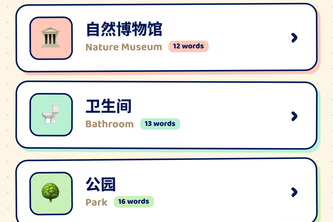
The author states that the app is designed to help children learn English by connecting sounds and meaning to the world around them, using familiar scenes like kitchen, zoo, playground, and museum.
It positions itself as:
- Playful and immediate
- For families who speak Chinese at home
- Focused on visual and auditory learning
The author also notes that AI tools were used to assist in building the app, including reasoning across systems, debugging, and workflow automation.
Evidence
- “Young children do not learn language from word lists—they learn by connecting sounds and meaning to the world around them.”
- “I wanted to make that experience feel playful and immediate for families who speak Chinese at home.”
- “I used Codex with GPT-5.6 as an engineering partner throughout the Build Week iteration.”
Inference The positioning is rooted in child-centered, immersive language learning, not a commercial or enterprise-grade solution.
Target Customer & ICP
The description states that Little English is designed for:
- Young children
- Families who speak Chinese at home
It is described as a safe, low-friction experience with no child accounts required and offline support.
Evidence
- “Young learners”
- “Families who speak Chinese at home”
- “No child account is required”
Inference The ICP appears to be parents or caregivers of young children, particularly those in multilingual households, though no explicit segmentation or targeting data is provided.
Business Model & Pricing Evidence
There is no evidence of a business model or pricing structure in the description. The app is described as a prototype built during a hackathon and not yet monetized.
Evidence
- No mention of revenue streams
- No pricing information
- No indication of commercialization plans
Inference The project is currently non-commercial, with no evidence of monetization or business model in place.
Technical & Delivery Signals
The app was built using:
- HTML, CSS, JavaScript
- Capacitor for mobile packaging
- Vercel API for content delivery
- Cloudflare R2 for asset storage
It includes:
- A content-review workflow
- Offline fallbacks
- Multi-language support
- Syncing of new lessons when online
Evidence
- “The learner experience is a lightweight HTML, CSS, and JavaScript app wrapped with Capacitor for mobile.”
- “A content-review workflow separates drafts from published lessons”
- “Cloudflare R2 stores the visual and audio assets with canonical, cache-safe URLs.”
Inference The technical stack suggests a lightweight, cross-platform prototype, not a scalable or enterprise-grade system.
Traction & Maturity Signals
There is no evidence of traction or adoption. The project was built during a hackathon and described as a working prototype.
Evidence
- “A working, responsive product children can use immediately”
- “Next I want to add adaptive review, parent-visible progress, more real-world scenes…”
Inference No data on user engagement, retention, or usage is provided. The project is at an early stage of development and lacks any measurable traction.
Competitive Context
There is no evidence of competitors mentioned in the description. No market analysis or competitive positioning is provided.
Evidence
- No mention of existing language-learning apps
- No comparison to other tools or platforms
Inference The competitive landscape is unknown, as there is no indication of awareness or analysis of similar products.
Open Questions & Risks
Key risks and open questions based on the description:
- No user testing or adoption data — The app is described only as a prototype.
- No commercialization strategy — No pricing, monetization, or go-to-market plan.
- Limited scope — Only one developer, no team or funding mentioned.
- Unverified claims — All information is self-reported and unverified.
- AI dependency — Heavy reliance on AI tools for development may not scale or be replicable.
Evidence
- “No revenue, customer or traction data is available beyond what they state.”
- “Team size: 1”
- “This project was submitted to the OpenAI 2026 hackathon”
Questions the description leaves open
- What specific user feedback have you received from children or parents?
- How do you plan to monetize this product, if at all?
- Have you tested the app with actual children in real-world settings?
- What is your long-term roadmap beyond the current prototype?
- Are there any technical challenges that remain unresolved for production use?
- How do you intend to scale content creation and updates?
Overall Assessment
Not evidenced.
The description provides no information on:
- Revenue
- Customers
- Traction
- Valuation
- Funding
- Commercial viability
This is a self-reported prototype, built during a hackathon, with no evidence of market traction or commercial readiness.
Confidence Low
Risk level
High (no verified product-market fit or business model)
User Stories BotA demo video on every pull request
Get a demo video on every new feature
GitHub App that watches your pull requests and records a narrated, captioned demo.
Save time on demo prep and make informed decisions faster with a video walkthrough of every new feature.
Source
Submitted to the OpenAI 2026 hackathon on Devpost. Project home on Devpost. Back to the full gallery on Devpost.
This competitive analysis was produced by top-founders.com (opens in a new tab)
Generated by a language model from this project's public Devpost page — its tagline, the author's own write-up and any built-with tags listed there — as captured in August 2026. Short quotations are the author's words. It is an opinion on the idea as a business, not on the people behind it, and it reflects the description as published then. If the project has moved on, request a correction below. The analysis is not independent research and contains no verified traction, revenue or customer data.
An independent guide by KFG International LLC — not affiliated with, endorsed by, or connected to Devpost or OpenAI.