

Archive position — measured, not model output
0 likes on Devpost
2,263 of the 7,850 archived projects have more likes, and 5,587 share exactly 0 — so this project's #4,966 place in the like-ranked listing is a tie-break inside that group, not a ranking.
Projects (log scale)
Likes on Devpost. ▲ marks this project's group.
Show the figures
| Likes | Projects | Share of archive |
|---|---|---|
| 0 | 5,587 | 71.2% |
| 1 | 1,758 | 22.4% |
| 2 | 284 | 3.6% |
| 3–4 | 132 | 1.7% |
| 5–9 | 75 | 1.0% |
| 10+ | 14 | 0.2% |
 User Stories BotA demo video on every pull request
Get a demo video on every new feature
GitHub App that watches your pull requests and records a narrated, captioned demo.
Save time on demo prep and make informed decisions faster with a video walkthrough of every new feature.
Executive Summary
What the company appears to be
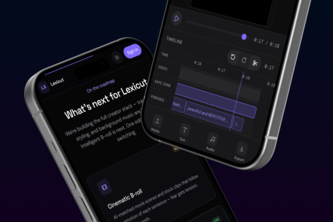
Lexicut is a self-reported AI-native SaaS video editing tool that allows users to generate agency-quality video clips by editing text. The platform uses an AI transcription pipeline to drive editing layouts and applies visual themes with dynamic typography, cinematic effects, and smart safe zones.
What changed
The project description indicates a transition from a standalone tool to a scalable SaaS platform, with architectural refactoring to support multi-tenancy, dynamic theme handling, and improved synchronization between audio and visuals.
The single most important open question
Is there evidence of actual user adoption or revenue generation beyond the author's self-reported claims?
What The Product Actually Is
The description states that Lexicut is a "multi-tenant SaaS application and AI-native video editor." It allows users to upload videos and uses an "AI transcription pipeline" to drive editing layouts. The system automatically applies visual themes such as "kinetic, centered editorial-collage" or "dual-font, Jay Shetty-style mixed-collage," including micro-pop physics, SFX synchronization, and baseline-aligned text layouts.
The technical stack includes Next.js for frontend/API, PostgreSQL with Prisma, Remotion for rendering, and a custom registry-driven theme engine. The platform is described as using React, Tailwind CSS, TypeScript, and ffmpeg.
Evidence Self-reported by the author.
Confidence Low — no independent verification of functionality or performance.
Positioning & Claim Evolution
The description states that Lexicut was built to automate the workflow of managing digital podcast brands and Instagram content platforms. It positions itself as an engine that "doesn't just act as a timeline scrubber, but actually understands the context and language of a video to automatically generate cinematic, agency-level edits—literally 'Editing by Words.'"
The author claims it enables users to "generate agency-quality clips in seconds" with dynamic typography and smart safe zones.
Evidence Self-reported.
Confidence Low — this is a positioning claim, not proof of traction or adoption.
Target Customer & ICP
The description states that Lexicut was inspired by the need to manage digital podcast brands and Instagram content platforms. It targets users who require "a relentless output of high-quality clips" to maintain audience engagement.
Evidence Self-reported.
Confidence Low — no evidence of actual customer segments or personas.
Business Model & Pricing Evidence
The description states that Lexicut is a "multi-tenant SaaS application," implying a subscription-based model. However, there is no mention of pricing tiers, monetization strategy, or revenue streams beyond the self-reported nature of the product.
Evidence Self-reported.
Confidence Very low — no pricing or business model details provided.
Technical & Delivery Signals
The author describes building a "modern, highly modular full-stack architecture" using:
- Frontend/API: Next.js (App Router)
- Database: PostgreSQL with Prisma
- Rendering Engine: Remotion for hardware-accelerated video composition
- Theme Engine: Custom registry-driven engine to isolate frontend styles from backend compilers
They also mention challenges in theme-aware chunking, audio/visual synchronization, and UI/UX architecture.
Evidence Self-reported.
Confidence Medium — technical details are provided but unverified.
Traction & Maturity Signals
The description states that Lexicut is "actively underway" in Phase 3, focusing on expanding SaaS dashboard capabilities. It mentions finalizing a "Create Project" flow and preparing to support multi-language transcription beyond English.
However, there is no evidence of user adoption, revenue, customer base, or product-market fit.
Evidence Self-reported.
Confidence Very low — no traction data provided.
Competitive Context
The description does not mention any competitors. It only describes Lexicut's own features and architecture without placing itself in the context of existing video editing tools or AI content generation platforms.
Evidence Self-reported.
Confidence Low — no competitive analysis or positioning relative to other tools.
Open Questions & Risks
- Unverified claims: All descriptions are self-reported, with no independent verification.
- No traction evidence: No users, customers, revenue, or adoption metrics provided.
- Single founder team: The project is described as being built by one person (Moein Salari).
- Early-stage product: The author states it's in Phase 3 of development and not yet fully launched.
- Unproven business model: No pricing or monetization strategy detailed.
Evidence Self-reported.
Confidence Medium — risks are inferred from lack of evidence rather than explicit data.
Questions the description leaves open
- What is the current stage of product development and when is it expected to be available for public use?
- Have you conducted any user testing or gathered feedback from potential customers?
- What is your go-to-market strategy and how do you plan to acquire users?
- How do you intend to monetize this platform, and what pricing model are you considering?
- Can you provide evidence of any early adopters or pilot programs?
- What are the key technical challenges that remain unresolved before launch?
Overall Assessment
The description indicates a self-reported AI-native video editing tool with a modular architecture built using modern technologies like Next.js, Remotion, and PostgreSQL. It is positioned as an automated solution for generating cinematic clips from text input.
However, there is no evidence of revenue, customers, user traction, or business model implementation beyond the author's own claims. The project appears to be in early development (Phase 3), with no public launch or product-market fit demonstrated.
Assessment Not evidenced — no commercial due-diligence signal can be drawn from this self-reported description alone.
Confidence Very low — the entire analysis is based on unverified, self-reported claims.
User Stories BotA demo video on every pull request
Get a demo video on every new feature
GitHub App that watches your pull requests and records a narrated, captioned demo.
Save time on demo prep and make informed decisions faster with a video walkthrough of every new feature.
Source
Submitted to the OpenAI 2026 hackathon on Devpost. Project home on Devpost. Back to the full gallery on Devpost.
This competitive analysis was produced by top-founders.com (opens in a new tab)
Generated by a language model from this project's public Devpost page — its tagline, the author's own write-up and any built-with tags listed there — as captured in August 2026. Short quotations are the author's words. It is an opinion on the idea as a business, not on the people behind it, and it reflects the description as published then. If the project has moved on, request a correction below. The analysis is not independent research and contains no verified traction, revenue or customer data.
An independent guide by KFG International LLC — not affiliated with, endorsed by, or connected to Devpost or OpenAI.