

Archive position — measured, not model output
1 like on Devpost
505 of the 7,850 archived projects have more likes, and 1,758 share exactly 1 — so this project's #1,320 place in the like-ranked listing is a tie-break inside that group, not a ranking.
Projects (log scale)
Likes on Devpost. ▲ marks this project's group.
Show the figures
| Likes | Projects | Share of archive |
|---|---|---|
| 0 | 5,587 | 71.2% |
| 1 | 1,758 | 22.4% |
| 2 | 284 | 3.6% |
| 3–4 | 132 | 1.7% |
| 5–9 | 75 | 1.0% |
| 10+ | 14 | 0.2% |
 User Stories BotA demo video on every pull request
Get a demo video on every new feature
GitHub App that watches your pull requests and records a narrated, captioned demo.
Save time on demo prep and make informed decisions faster with a video walkthrough of every new feature.
Executive Summary
What the company appears to be
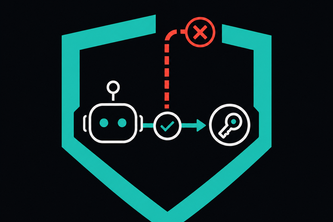
LatchLine is a self-reported security system designed to protect AI agents from malicious inputs by enforcing authority boundaries between trusted goals and untrusted data. It operates as an intermediary layer that evaluates agent actions in real time, using a combination of deterministic logic and GPT-5.6 Sentinel for semantic judgment.
What changed
The author states they identified a gap in existing guardrails — which treat malicious inputs as content problems — and instead focus on the moment when untrusted data asserts authority through an action. This shift leads to a new architecture involving “Counterfactual Intent Diff” and “Authority Conservation.”
Single most important open question
Is there evidence of real-world application or testing beyond the hackathon demo? The description does not indicate any production use, customer feedback, or integration with actual AI agents.
What The Product Actually Is
The description states that LatchLine is a system that sits between an AI agent and its tools. It evaluates each action attempt using multiple criteria including:
- Agent identity
- Approved scope
- Core business goal vs. untrusted context (e.g., emails, tickets, docs)
- Semantic judgment from GPT-5.6 Sentinel
- Tool call arguments
- Prior session history
- Stake involved
It then takes one of four paths:
- Allows the action by minting a 90-second, single-use lease.
- Sends it to review requiring human sign-off.
- Blocks the action and opens an incident report.
- Compiles a Safe Twin — strips malicious context and builds a narrower, safe action.
The system includes two core mechanics:
- Counterfactual Intent Diff: isolates suspicious text, reruns decision in sandbox, compares tool calls to detect attack-driven behavior.
- Authority Conservation: ensures untrusted content cannot grant new power; calculates excess authority (Δ = R - D) and strips it before execution.
The author also mentions a command center with:
- Live graph of active events
- Authority accounting across five axes
- Action passports
- Demo scenarios and offline test cases
Evidence Self-reported by the author. No external validation or demonstration beyond the hackathon submission.
Positioning & Claim Evolution
The author claims LatchLine addresses a specific and under-served problem in AI agent security — not just detecting bad prompts but preventing malicious inputs from asserting authority during execution. They describe this as a “narrower and weirder” problem than general prompt injection detection.
They position their solution as:
- A guardrail system that enforces boundaries between information and authority.
- A systemic fix, not a patch or classifier-based approach.
- An end-to-end enforcement mechanism, not just flagging bad content.
The claim evolves from:
- Observing failures in AI agent demos due to hostile inputs
- Identifying the root issue as transformation of untrusted data into real actions
- Building a system that actively enforces authority boundaries
Evidence All claims are self-reported and not independently verified.
Target Customer & ICP
The description does not clearly define target customers or ideal customer profiles (ICP). However, the author implies the product is aimed at:
- Organizations using AI agents in high-risk environments
- Teams managing sensitive workflows like finance, HR, CRM, identity, network, and production systems
They suggest LatchLine could be used by enterprises integrating AI agents into their operations where unauthorized actions could lead to significant damage.
Evidence Only inferred from the use cases mentioned (finance, HR, CRM, etc.) and the author’s stated intent. No explicit customer segmentation or buyer personas.
Business Model & Pricing Evidence
There is no evidence in the description of a business model or pricing structure. The project was submitted as part of a hackathon and lacks any indication of monetization plans, subscriptions, licensing models, or revenue streams.
Evidence Not evidenced.
Technical & Delivery Signals
The system uses:
- Next.js, TypeScript, React, Zod
- OpenAI Agents SDK
- Responses API
- GPT-5.6 Sentinel for semantic judgment
- Deterministic logic for action evaluation and enforcement
Key technical features include:
- Function-based model responses (no freeform text)
- Replay logic in sandboxed environments
- Server-side reconstruction of scenarios
- Fixed recipes for post-block recovery
- Hourly API call ceilings to manage costs
The author notes that the system avoids self-grading logic by having GPT-5.6 act as a sensor, not a judge.
Evidence Self-reported implementation details; no third-party verification or performance metrics.
Traction & Maturity Signals
There is no evidence of traction, adoption, or usage beyond the hackathon submission. The author mentions:
- Ten working Safe Twin scenarios
- A passport system validating six criteria
- Demo-ready components
- Offline test cases
But none of these indicate real-world deployment, user feedback, or product maturity.
Evidence Not evidenced.
Competitive Context
The description does not mention competitors or existing solutions in the AI agent security space. The author states they couldn’t find anyone building directly for this problem — the moment when untrusted data asserts authority.
This suggests a potential niche market with limited direct competition, but also implies that LatchLine may be addressing an emerging or underserved area rather than competing against established players.
Evidence Not evidenced.
Open Questions & Risks
- Unproven in production: The system exists only as a hackathon prototype.
- No revenue or customer data: No indication of monetization, users, or traction.
- Highly technical and abstract: The architecture is complex and may be difficult to validate without access to actual systems.
- Over-reliance on GPT-5.6: While the model acts as a sensor, its role in decision-making raises questions about consistency and scalability.
- Limited testing scope: Only offline demos and fixed scenarios are described; no real-world integration or adversarial testing.
Evidence All inferred from lack of evidence and self-reported claims.
Questions the description leaves open
- Has LatchLine been tested in any real AI agent workflows?
- What are the actual performance implications of running GPT-5.6 for each action check?
- How does the system handle edge cases or unexpected inputs not covered in the demo scenarios?
- Are there plans to integrate with specific AI agent platforms (e.g., LangChain, AutoGen)?
- Can you provide more details on how the “Safe Twin” generation works in practice?
- What is the expected latency for action evaluations and how does it impact agent responsiveness?
- How would LatchLine scale across multiple agents or large enterprise environments?
Overall Assessment
The author describes a novel approach to AI agent security, focusing on authority boundaries rather than content detection. However, there is no evidence of traction, revenue, or real-world application beyond the hackathon submission.
Given the self-reported nature of the description and lack of external validation, this represents a highly speculative opportunity with significant uncertainty around commercial viability and scalability.
Confidence Level Low
Next Steps
If pursuing further diligence, seek evidence of early adopters, pilot programs, or integration with actual AI agents.
User Stories BotA demo video on every pull request
Get a demo video on every new feature
GitHub App that watches your pull requests and records a narrated, captioned demo.
Save time on demo prep and make informed decisions faster with a video walkthrough of every new feature.
Source
Submitted to the OpenAI 2026 hackathon on Devpost. Project home on Devpost. Back to the full gallery on Devpost.
This competitive analysis was produced by top-founders.com (opens in a new tab)
Generated by a language model from this project's public Devpost page — its tagline, the author's own write-up and any built-with tags listed there — as captured in August 2026. Short quotations are the author's words. It is an opinion on the idea as a business, not on the people behind it, and it reflects the description as published then. If the project has moved on, request a correction below. The analysis is not independent research and contains no verified traction, revenue or customer data.
An independent guide by KFG International LLC — not affiliated with, endorsed by, or connected to Devpost or OpenAI.