

Archive position — measured, not model output
1 like on Devpost
505 of the 7,850 archived projects have more likes, and 1,758 share exactly 1 — so this project's #1,271 place in the like-ranked listing is a tie-break inside that group, not a ranking.
Projects (log scale)
Likes on Devpost. ▲ marks this project's group.
Show the figures
| Likes | Projects | Share of archive |
|---|---|---|
| 0 | 5,587 | 71.2% |
| 1 | 1,758 | 22.4% |
| 2 | 284 | 3.6% |
| 3–4 | 132 | 1.7% |
| 5–9 | 75 | 1.0% |
| 10+ | 14 | 0.2% |
 User Stories BotA demo video on every pull request
Get a demo video on every new feature
GitHub App that watches your pull requests and records a narrated, captioned demo.
Save time on demo prep and make informed decisions faster with a video walkthrough of every new feature.
Executive Summary
What the company appears to be
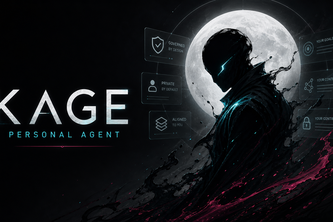
Kage, as described by its author, is a personal AI agent system built around the idea of citizen development — enabling non-technical users to create apps, websites, agents, and tasks through an interface that adapts to their natural way of thinking. It is self-described as a bridge between user intent and code execution, using tools like Codex and ChatGPT, with a focus on task automation, remote access, and memory management.
What changed
The project evolved from solving personal problems (email cleanup, job search) into a broader system for managing tasks, learning, and memory using a "shadow" model. It grew organically through the author’s own needs, without a formal roadmap or technical plan.
Single most important open question — the commercial due-diligence read
Is there evidence that Kage has moved beyond personal experimentation into a scalable product or platform with potential for adoption by others? The description is entirely self-reported and lacks any demonstration of traction, revenue, customers, or even a clear definition of how it would be used outside of the author’s own workflow.
What The Product Actually Is
The description states that Kage is a personal AI agent system designed to help users create apps, websites, agents, or tasks without coding experience. It uses tools such as Codex, ChatGPT, and others to translate user intent into executable code. Key features include:
- A mobile web interface for remote access.
- Task automation with guardrails and approval points.
- A memory model based on “shadows” — temporary agents that perform tasks and return only relevant information.
- An adaptive interface that adjusts to how the user naturally thinks (e.g., music, art, writing, etc.).
It is not clear whether Kage is a standalone tool or an infrastructure layer that integrates with other systems.
Inference: Based on the author's narrative, Kage appears to be a hybrid of personal automation, task orchestration, and AI-powered development assistance. However, it is unclear if this is a product or a prototype built for one person’s use case.
Positioning & Claim Evolution
The description states that Kage started as a way to solve the author's own problems — cleaning up email and searching for jobs — but evolved into something more ambitious: a system that allows anyone to build software using their own mental models. The positioning shifts from:
- Personal assistant (email cleanup, job search)
- To remote access tool (bridge to home computer)
- To task automation platform (with memory and safety controls)
- To citizen development framework (adapting code to human thinking styles)
The author claims Kage is about enabling “citizen development,” where the user’s natural way of understanding concepts becomes the basis for building software.
Claim: The product aims to democratize coding by adapting tools to how people think, rather than expecting them to learn programming languages.
Inference: This represents a shift from traditional AI assistant tools toward a more conceptual and personalized development environment. However, no evidence is provided that this approach has been tested or validated beyond the author’s own experience.
Target Customer & ICP
The description states that Kage is intended for anyone with no coding experience who wants to create apps, websites, agents, or tasks. The author envisions different types of users (musicians, artists, writers, teachers, etc.) each having a unique interface tailored to their thinking style.
However, the description does not identify specific personas, segments, or use cases beyond the author’s own needs and hypothetical future users.
Claim: Kage targets non-technical individuals who want to build useful projects but lack coding skills.
Not evidenced: No clear identification of target customer profiles, market size, or early adopters. The ICP is implied rather than defined.
Business Model & Pricing Evidence
There is no mention in the description of a business model, pricing strategy, monetization plan, or revenue streams. The author focuses entirely on personal use cases and conceptual development.
Not evidenced: No indication of how Kage would generate value for users or scale commercially.
Technical & Delivery Signals
The project was built using:
- ChatGPT
- Codex
- Cloudflare
- Google Drive
- Grit
- OpenAI API
- Tailscale
It includes:
- A mobile web interface
- Remote access capabilities
- Task execution and memory management via a “shadow” system
- Integration with local systems (e.g., home computer)
Inference: The technical stack suggests a lightweight, cloud-based solution using existing AI APIs and infrastructure. However, no details are given about scalability, performance, or architecture beyond what the author built personally.
Traction & Maturity Signals
The description is entirely self-reported and does not contain any evidence of traction, customers, revenue, or adoption. The project is described as having grown organically from personal needs, with no indication that it has been tested or used by others.
Not evidenced: No data on user engagement, retention, usage metrics, or product-market fit.
Competitive Context
The author does not reference competitors directly, nor does the description provide any context about similar tools in the marketplace. The focus is on Kage’s unique approach to citizen development and task automation.
Inference: Kage may compete with AI-powered low-code/no-code platforms or personal assistant tools, but no comparison or competitive analysis is made.
Open Questions & Risks
- Lack of external validation: Everything described is based on the author’s own experience; there is no evidence of third-party feedback, testing, or adoption.
- Unclear scalability: The system appears to be built for one person’s workflow and lacks evidence of how it would scale beyond that.
- No commercial viability: No mention of monetization, pricing, or business model.
- Highly personal narrative: The entire description reads like a personal journal, not a product roadmap or strategy document.
- Unproven concept: Citizen development as described is an untested idea in practice.
Open question: The absence of any evidence of traction, customers, or commercialization raises serious questions about whether Kage has moved beyond the prototype stage.
Questions the description leaves open
- What specific problems have you solved for yourself that led to building Kage?
- Have you tested Kage with other people outside your own workflow? If so, what were their experiences?
- How do you plan to transition from a personal tool to a scalable product or platform?
- What are the key assumptions underlying your vision of citizen development?
- Do you have any early adopters or users who have provided feedback on how they would use Kage?
- How do you intend to monetize or commercialize Kage?
- What are the main technical challenges in scaling Kage beyond a single user?
Overall Assessment
The description is entirely self-reported and lacks any evidence of traction, revenue, customers, or even a clear definition of how Kage would be used outside of the author’s own workflow.
Assessment: Not ready for investment or partnership. The project remains in the experimental phase, with no demonstrated product-market fit, commercial viability, or external validation.
Confidence level: Low — based on thin evidence and lack of any measurable outcomes.
User Stories BotA demo video on every pull request
Get a demo video on every new feature
GitHub App that watches your pull requests and records a narrated, captioned demo.
Save time on demo prep and make informed decisions faster with a video walkthrough of every new feature.
Source
Submitted to the OpenAI 2026 hackathon on Devpost. Project home on Devpost. Back to the full gallery on Devpost.
This competitive analysis was produced by top-founders.com (opens in a new tab)
Generated by a language model from this project's public Devpost page — its tagline, the author's own write-up and any built-with tags listed there — as captured in August 2026. Short quotations are the author's words. It is an opinion on the idea as a business, not on the people behind it, and it reflects the description as published then. If the project has moved on, request a correction below. The analysis is not independent research and contains no verified traction, revenue or customer data.
An independent guide by KFG International LLC — not affiliated with, endorsed by, or connected to Devpost or OpenAI.