

Archive position — measured, not model output
0 likes on Devpost
2,263 of the 7,850 archived projects have more likes, and 5,587 share exactly 0 — so this project's #4,646 place in the like-ranked listing is a tie-break inside that group, not a ranking.
Projects (log scale)
Likes on Devpost. ▲ marks this project's group.
Show the figures
| Likes | Projects | Share of archive |
|---|---|---|
| 0 | 5,587 | 71.2% |
| 1 | 1,758 | 22.4% |
| 2 | 284 | 3.6% |
| 3–4 | 132 | 1.7% |
| 5–9 | 75 | 1.0% |
| 10+ | 14 | 0.2% |
 User Stories BotA demo video on every pull request
Get a demo video on every new feature
GitHub App that watches your pull requests and records a narrated, captioned demo.
Save time on demo prep and make informed decisions faster with a video walkthrough of every new feature.
Executive Summary
What the company appears to be
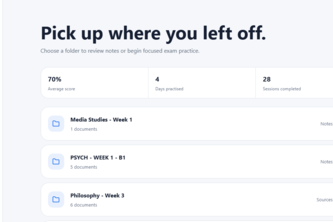
Insight is a self-reported AI-powered academic platform designed to support students from assignment drafting to exam preparation. The author states it enables students to upload course materials and receive AI-generated feedback, study notes, practice questions, and marking. It includes two main features: Assignment Review (where multiple AI models review an essay draft) and Insight Study (which turns uploaded materials into personalized learning content).
What changed
The project evolved from an earlier idea called StudyPath, which aimed to create a Duolingo-style learning path from personal academic material. That concept was simplified into Insight Study, focusing on turning uploaded content into grounded study support without fixed curricula or gamification mechanics.
Single most important open question
Is there evidence of actual student adoption or usage beyond the author’s own development and testing? The description contains no data about users, revenue, or traction — only self-reported claims about functionality and design decisions.
What The Product Actually Is
The description states that Insight is an AI-powered academic platform with two core components:
- Assignment Review: A system where students submit an assignment brief and draft essay. Multiple AI models review the work from different angles (structure, reasoning, factual accuracy, etc.) and their feedback is consolidated into a clearer response.
- Insight Study: A feature that allows students to upload course materials (PDFs, DOCX, TXT, PPTX), which are then processed to generate:
- Study notes
- Practice questions (Multiple Choice, True/False, Match the Columns, Short Answer, Essay)
- AI marking and feedback
- Saved sessions and History
The platform uses a shared application shell but separates workflows for Assignment Review and Insight Study. It supports multi-provider AI integration and includes background jobs for processing tasks like generating content or marking answers.
Inference: The product is built as a cloud-based web application using modern tech stack including Next.js, React, Supabase, PostgreSQL, Vercel, and various AI APIs (OpenAI, Anthropic, Gemini, etc.). It supports authenticated user workspaces with private document storage and versioned source material.
Positioning & Claim Evolution
The author claims Insight was initially inspired by a desire for better academic support before submitting assignments. The first version focused on multi-model review of essays to give students multiple perspectives.
As the project grew, the name "Insight" expanded beyond just one feature to encompass the entire platform — giving students insight into their own course material rather than just one assignment.
The idea evolved from a more ambitious concept called StudyPath, which involved creating a Duolingo-style learning path. However, that was simplified into Insight Study, which focuses on helping students learn directly from their own uploaded materials instead of applying gamification or fixed curricula.
Claim: The platform positions itself as an AI-powered academic support system that personalizes learning and feedback based on student-provided content.
Target Customer & ICP
The description states the primary users are students, particularly those engaged in university-level coursework. These students upload their own course materials (e.g., lecture notes, readings) to be processed into study aids and assignment feedback.
Inference: The platform targets self-directed learners who want to improve writing quality, prepare for exams, or understand how to better structure academic work using AI assistance.
There is no evidence of segmentation beyond student type. No mention of institutional use cases (e.g., professors, schools), nor any indication of whether the product is aimed at specific academic levels (undergraduate vs. graduate).
Business Model & Pricing Evidence
Not evidenced.
The description does not contain any information about pricing models, monetization strategies, or business structure. It only describes how the platform works technically and functionally.
Technical & Delivery Signals
The author reports building Insight as a cloud-based web application using:
- Frontend: Next.js, React, JavaScript
- Backend: Supabase, PostgreSQL, serverless API routes
- Deployment: Vercel
- AI Integration: OpenAI, Anthropic, Google Gemini, Grok, XAI
- Authentication and security features: Row-level security, protected data access
Key technical aspects include:
- Multi-provider AI integration with role-based assignment of models
- Persistent job records for background processing (e.g., marking)
- Versioned document storage
- Support for multiple file types (PDF, DOCX, TXT, PPTX)
- Resumable sessions and saved history
- Automated testing suite (436 tests)
- Preview and Production environments with separate databases
The author also mentions overcoming challenges such as:
- PDF extraction issues
- Database constraint errors in Match the Columns feature
- Ensuring reliable state management across asynchronous operations
- Preventing regressions through testing and deployment checks
Inference: The platform is technically robust for a solo developer build, with attention to reliability, security, and scalability.
Traction & Maturity Signals
Not evidenced.
There is no mention of actual users, customer base, or usage metrics. The description focuses entirely on the author’s development process and internal testing rather than external adoption or product performance in real-world settings.
Competitive Context
Not evidenced.
No information is provided about competitors, market positioning, or how Insight compares to existing tools for academic writing or study support (e.g., Grammarly, Quizlet, Notion, etc.).
Open Questions & Risks
- No traction evidence: The platform is described as a solo developer project with no external validation or user data.
- Self-reported only: All claims are from the author; there is no independent verification of functionality, performance, or impact.
- Unproven commercial viability: No pricing model, revenue streams, or monetization strategy are mentioned.
- Technical complexity without team support: The project was built by one person (Nyiko Khosa), raising questions about long-term maintenance and scalability.
- Limited product scope: While the author simplifies the original StudyPath idea, there is no indication of whether this approach will scale or meet broader market needs.
Questions the description leaves open
- What specific problems are you solving for students that current tools don’t address?
- How do you plan to validate demand and user engagement beyond personal testing?
- Are there any early adopters or pilot users who have tested the platform?
- What is your go-to-market strategy, if any?
- Have you considered how to handle model failures, data privacy, or compliance issues in academic settings?
- How do you intend to monetize the product, and what are your assumptions around pricing?
- What are the biggest technical challenges you expect as you scale beyond a single developer?
Overall Assessment
Not evidenced.
There is no evidence of funding rounds, valuation, or investment interest. The project appears to be a personal development effort submitted for a hackathon, with no indication of commercial traction or strategic partnerships.
Confidence Level: Low — this analysis is based entirely on self-reported claims and lacks any external validation or performance data. Any commercial due-diligence conclusions must remain speculative until further evidence is provided.
User Stories BotA demo video on every pull request
Get a demo video on every new feature
GitHub App that watches your pull requests and records a narrated, captioned demo.
Save time on demo prep and make informed decisions faster with a video walkthrough of every new feature.
Source
Submitted to the OpenAI 2026 hackathon on Devpost. Project home on Devpost. Back to the full gallery on Devpost.
This competitive analysis was produced by top-founders.com (opens in a new tab)
Generated by a language model from this project's public Devpost page — its tagline, the author's own write-up and any built-with tags listed there — as captured in August 2026. Short quotations are the author's words. It is an opinion on the idea as a business, not on the people behind it, and it reflects the description as published then. If the project has moved on, request a correction below. The analysis is not independent research and contains no verified traction, revenue or customer data.
An independent guide by KFG International LLC — not affiliated with, endorsed by, or connected to Devpost or OpenAI.