

Archive position — measured, not model output
0 likes on Devpost
2,263 of the 7,850 archived projects have more likes, and 5,587 share exactly 0 — so this project's #4,599 place in the like-ranked listing is a tie-break inside that group, not a ranking.
Projects (log scale)
Likes on Devpost. ▲ marks this project's group.
Show the figures
| Likes | Projects | Share of archive |
|---|---|---|
| 0 | 5,587 | 71.2% |
| 1 | 1,758 | 22.4% |
| 2 | 284 | 3.6% |
| 3–4 | 132 | 1.7% |
| 5–9 | 75 | 1.0% |
| 10+ | 14 | 0.2% |
 User Stories BotA demo video on every pull request
Get a demo video on every new feature
GitHub App that watches your pull requests and records a narrated, captioned demo.
Save time on demo prep and make informed decisions faster with a video walkthrough of every new feature.
Executive Summary
What the company appears to be
Ignition is a self-reported developer tool built for runtime validation of application dependencies before startup or deployment. The author describes it as a Codex-built tool that checks if configured services (e.g., Redis, databases) are actually reachable and available, not just present in configuration.
What changed
The project was submitted to the OpenAI 2026 hackathon on Devpost. It is described as a prototype or proof-of-concept built with Node.js, using AI tools like Codex and GPT-5.6. The author states it includes CLI, JSON/CI, MCP, and IDE integrations (VS Code and IntelliJ), though no production deployment or marketplace presence is evidenced.
Single most important open question
Is there any evidence of real-world usage, adoption, or traction from developers beyond the hackathon submission?
What The Product Actually Is
The description states that Ignition is a runtime validation tool for developers, designed to check whether application dependencies are not only configured but also actually reachable and available. It performs checks such as:
- Validating Docker Compose container state
- Testing database connectivity using client drivers (PostgreSQL, MySQL, Oracle, SQL Server, Redis)
- Performing harmless authenticated operations like
SELECT 1orRedis PING - Supporting configuration via CLI, JSON/CI, MCP server, and IDE plugins
It is described as a Node.js runtime-validation engine with multiple interfaces.
Inference The tool appears to be aimed at reducing developer friction in local development environments by identifying dependency issues early — before code fails during startup or deployment.
Positioning & Claim Evolution
The author positions Ignition as a developer productivity tool, intended to speed up the developer journey by helping them avoid waiting for failure messages from down services. The tagline “Know what will fail before it starts” reflects this intent.
Claims made
- It helps developers avoid long waits during local development.
- It distinguishes between configured and actually available dependencies.
- It avoids printing secret values in logs or reports.
- It supports multiple interfaces (CLI, IDE plugins, CI/JSON).
Inference The positioning implies a focus on developer experience, particularly around local environment setup and debugging, rather than enterprise-wide deployment orchestration.
Target Customer & ICP
The description states that Ignition is built for developers working with legacy codebases, especially those using microservices, Docker Compose, or complex dependency chains. It targets developers who face issues when services are down or misconfigured during local development.
Inference The primary customer segment appears to be software engineers and developers, particularly in enterprise environments where legacy systems and containerized deployments are common.
Business Model & Pricing Evidence
Not evidenced.
Technical & Delivery Signals
The description states that Ignition was built with:
- Node.js
- AI tools (Codex, GPT-5.6)
- JSON, MCP, Docker Compose integration
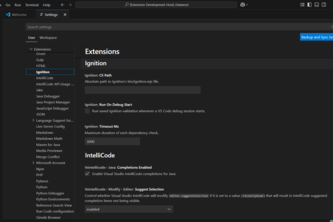
- CLI, batch launcher, VS Code and IntelliJ plugins
It supports:
- Guided CLI
- JSON/CI command
- MCP server
- Local IDE integrations
Inference The tool is described as modular with a core engine supporting multiple interfaces. The author notes that IDE integrations are maintained by calling the same structured core, suggesting a clean architecture.
Traction & Maturity Signals
Not evidenced.
Competitive Context
Not evidenced.
Open Questions & Risks
- No evidence of traction or adoption beyond hackathon submission
- Self-reported only: No third-party validation, no revenue, no customers
- Single-person team: No indication of scaling or operational capacity
- Limited interfaces mentioned: Only VS Code and IntelliJ plugins are described as available; no marketplace presence or public distribution channels
- No mention of security, performance, or scalability testing
- Unverified claims about AI integration: The use of Codex and GPT-5.6 is not substantiated with data or examples
Questions the description leaves open
- What specific problems in local development environments are you solving, and how do you know?
- Have any developers actually used this beyond the hackathon prototype?
- How does Ignition handle edge cases like intermittent network issues or misconfigured timeouts?
- Are there plans to support more complex dependency types (e.g., Kafka, S3)?
- What is the current status of the VS Code and IntelliJ plugin availability?
Overall Assessment
Not evidenced.
User Stories BotA demo video on every pull request
Get a demo video on every new feature
GitHub App that watches your pull requests and records a narrated, captioned demo.
Save time on demo prep and make informed decisions faster with a video walkthrough of every new feature.
Source
Submitted to the OpenAI 2026 hackathon on Devpost. Project home on Devpost. Back to the full gallery on Devpost.
This competitive analysis was produced by top-founders.com (opens in a new tab)
Generated by a language model from this project's public Devpost page — its tagline, the author's own write-up and any built-with tags listed there — as captured in August 2026. Short quotations are the author's words. It is an opinion on the idea as a business, not on the people behind it, and it reflects the description as published then. If the project has moved on, request a correction below. The analysis is not independent research and contains no verified traction, revenue or customer data.
An independent guide by KFG International LLC — not affiliated with, endorsed by, or connected to Devpost or OpenAI.