

Archive position — measured, not model output
0 likes on Devpost
2,263 of the 7,850 archived projects have more likes, and 5,587 share exactly 0 — so this project's #4,565 place in the like-ranked listing is a tie-break inside that group, not a ranking.
Projects (log scale)
Likes on Devpost. ▲ marks this project's group.
Show the figures
| Likes | Projects | Share of archive |
|---|---|---|
| 0 | 5,587 | 71.2% |
| 1 | 1,758 | 22.4% |
| 2 | 284 | 3.6% |
| 3–4 | 132 | 1.7% |
| 5–9 | 75 | 1.0% |
| 10+ | 14 | 0.2% |
 User Stories BotA demo video on every pull request
Get a demo video on every new feature
GitHub App that watches your pull requests and records a narrated, captioned demo.
Save time on demo prep and make informed decisions faster with a video walkthrough of every new feature.
Executive Summary
What the company appears to be
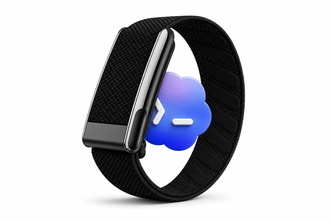
The project described by the caller is "Human in the Whoop", a macOS application that integrates with the WHOOP fitness tracker API via OAuth 2.0 and uses Codex (a GPT-based tool) for development. It introduces a "Charge" system where users spend one charge per prompt submitted to Codex, with a zero-charge escape hatch when the user's WHOOP score is low.
What changed
The author states that this project evolved from an original idea to jailbreak a Kindle and turn it into a Codex-only device. That plan failed due to scheduling conflicts, but the core concept of AI modifying real-world behavior was retained in "Human in the Whoop".
Single most important open question
Is there any evidence of user adoption or commercial traction beyond the author’s own use case?
What The Product Actually Is
The description states that "Human in the Whoop" is a macOS companion app that:
- Connects to the WHOOP API through OAuth 2.0.
- Stores a local Charge ledger in SQLite.
- Reconciles scored workouts once and refreshes from WHOOP on launch, wake, every 15 minutes, or upon manual refresh.
- Implements a Codex UserPromptSubmit hook that spends exactly one Charge per human prompt.
- Includes a "pet" component for visual feedback, which reads the ledger but does not write to WHOOP data or Charge.
- Uses GPT-5.6 and Codex for development.
This is a local macOS application built with Swift, SwiftUI, Electron, Node.js, and SQLite, integrating with WHOOP via its API and using Codex as a development tool.
Positioning & Claim Evolution
The author states that the project was submitted to the OpenAI 2026 hackathon, indicating it is a hackathon submission. The tagline — "Your WHOOP score controls how much Codex you can use" — positions the product as a behavioral control mechanism for AI usage, linking AI access to physical activity levels.
The original idea was to jailbreak a Kindle and make it a Codex-only device, but that evolved into this macOS app. The evolution shows an attempt to apply AI automation to real-world constraints, such as physical activity, to regulate digital behavior.
Inference The project may be attempting to explore the intersection of physical health and AI usage, but no evidence suggests it has moved beyond a personal prototype or hackathon submission.
Target Customer & ICP
The description does not state any target customer or ideal customer profile (ICP). It only describes the author’s own use case — a single user who wants to regulate Codex usage based on their WHOOP score.
Inference The product appears to be built for a single-user, personal use case, possibly with early-stage interest in AI behavior regulation or gamification of productivity tools. No evidence suggests it targets businesses or broader markets.
Business Model & Pricing Evidence
The description states that:
- A Codex UserPromptSubmit hook spends exactly 1 Charge per human prompt.
- At zero Charges, the system adds a “go move” context and still allows one escape prompt.
- Tool calls and background agent work do not spend Charge.
There is no mention of pricing, monetization, or any commercial model beyond the author’s own usage. The system appears to be self-contained, with no evidence of external billing or subscription mechanisms.
Inference No business model or pricing structure is evidenced. It seems to be a personal prototype or proof-of-concept.
Technical & Delivery Signals
The project was built using:
- Codex and GPT-5.6
- Electron, Node.js, Swift, SwiftUI
- macOS platform
- SQLite for local data storage
- WHOOP API via OAuth 2.0
It uses a loopback-only local bridge to read the Charge ledger, and does not write to WHOOP or Charge directly from the pet component.
Inference The technical stack is consistent with a personal macOS app, built using modern development tools and AI-assisted coding. It shows some integration capability but lacks evidence of scalability or enterprise-grade delivery.
Traction & Maturity Signals
The description states:
- The project was submitted to the OpenAI 2026 hackathon.
- It is a single-person effort (team size: 1).
- The author built it using Codex and GPT-5.6, with no external help or third-party contributions.
There is no evidence of user adoption, revenue, customers, or any traction beyond the author’s own use case.
Inference This is a pre-product prototype or hackathon submission. No signs of market traction or product maturity are evident.
Competitive Context
The description does not mention any competitors or existing products in this space. It is unclear whether there are similar tools that regulate AI usage based on physical activity or health metrics.
Inference No competitive landscape is evidenced. The project appears to be unique in its approach, but without market context, it’s hard to assess its potential for differentiation or relevance.
Open Questions & Risks
- No commercial traction or revenue: The product is described as a personal prototype.
- Single-person development: No evidence of team or external support.
- Unproven business model: No monetization strategy or pricing structure.
- Limited scope: Built for one user, with no indication of scalability.
- Hackathon submission: Likely not a mature product or market-ready offering.
Inference The project is in an early stage and lacks commercial viability or scalability. It may be a proof-of-concept, not a product ready for investment or partnership.
Questions the description leaves open
- What is the intended user base beyond the author?
- Is there any plan to monetize this tool or scale it beyond personal use?
- How does the system handle edge cases, such as WHOOP API outages or sync failures?
- Are there plans to expand beyond macOS or integrate with other platforms?
- What is the long-term vision for this product — is it a hobby project or a commercial idea?
Overall Assessment
The description states that "Human in the Whoop" was submitted to the OpenAI 2026 hackathon, and is a single-person project. There is no evidence of revenue, customers, traction, or any business model beyond the author’s own use case.
Inference This is not a product ready for investment or partnership. It is a personal prototype or hackathon submission, with no signs of commercial viability or scalability.
User Stories BotA demo video on every pull request
Get a demo video on every new feature
GitHub App that watches your pull requests and records a narrated, captioned demo.
Save time on demo prep and make informed decisions faster with a video walkthrough of every new feature.
Source
Submitted to the OpenAI 2026 hackathon on Devpost. Project home on Devpost. Back to the full gallery on Devpost.
This competitive analysis was produced by top-founders.com (opens in a new tab)
Generated by a language model from this project's public Devpost page — its tagline, the author's own write-up and any built-with tags listed there — as captured in August 2026. Short quotations are the author's words. It is an opinion on the idea as a business, not on the people behind it, and it reflects the description as published then. If the project has moved on, request a correction below. The analysis is not independent research and contains no verified traction, revenue or customer data.
An independent guide by KFG International LLC — not affiliated with, endorsed by, or connected to Devpost or OpenAI.