

Archive position — measured, not model output
0 likes on Devpost
2,263 of the 7,850 archived projects have more likes, and 5,587 share exactly 0 — so this project's #4,407 place in the like-ranked listing is a tie-break inside that group, not a ranking.
Projects (log scale)
Likes on Devpost. ▲ marks this project's group.
Show the figures
| Likes | Projects | Share of archive |
|---|---|---|
| 0 | 5,587 | 71.2% |
| 1 | 1,758 | 22.4% |
| 2 | 284 | 3.6% |
| 3–4 | 132 | 1.7% |
| 5–9 | 75 | 1.0% |
| 10+ | 14 | 0.2% |
 User Stories BotA demo video on every pull request
Get a demo video on every new feature
GitHub App that watches your pull requests and records a narrated, captioned demo.
Save time on demo prep and make informed decisions faster with a video walkthrough of every new feature.
Executive Summary
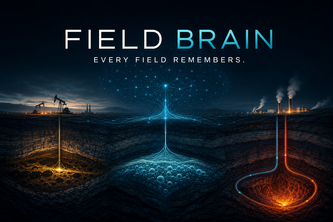
GroundTruth is a self-reported project that claims to transform fragmented subsurface technical data into a structured, decision-ready knowledge system using AI. The author states it reads scattered reports, models, and datasets from geothermal, carbon storage, oil & gas projects and generates dashboards with natural-language answers and cited expert insights.
The description indicates the team built this for a hackathon (OpenAI 2026) and used publicly available data (Equinor's Volve dataset). No revenue, customers or traction are evidenced. The system is said to use GPT-5.6, Codex, DuckDB, Playwright, Python, React, Node.js, and others.
Key commercial due-diligence question: Is there evidence of real-world demand for this type of solution in the subsurface engineering space, or is this a proof-of-concept that has not yet reached market traction?
What The Product Actually Is
The description states that GroundTruth reads technical reports, well logs, reservoir models, simulations, presentations, and 2D/3D datasets from subsurface projects (oil & gas, geothermal, carbon storage) and converts them into a structured dashboard with natural-language answers.
It claims to:
- Interpret data across formats and disciplines
- Generate a structured field dashboard
- Answer technical questions in natural language
- Link insights back to source files for provenance
Inference: The product appears to be an AI-powered knowledge management system for complex engineering domains, built as a proof-of-concept or prototype.
Not evidenced: No details on how the data is ingested, processed, or stored beyond general claims. No information on whether it supports real-time updates or integrates with existing tools.
Positioning & Claim Evolution
The author states that GroundTruth aims to solve the problem of fragmented technical knowledge in subsurface engineering — where data is scattered across proprietary formats and requires expensive software and domain specialists to access.
It positions itself as a way for engineers and decision-makers to "simply tell you what it knows" without needing to master multiple tools or purchase specialized applications.
The project also claims that AI should not replace engineers but should instead make their expertise more accessible, connected, verifiable, and reusable.
Inference: The positioning is that of an AI-powered data integration and knowledge synthesis tool for engineering teams working in subsurface environments. It seeks to democratize access to technical information by automating interpretation and cross-referencing.
Not evidenced: No mention of competitors or how this differs from existing tools (e.g., data visualization platforms, enterprise knowledge bases, or domain-specific software). No indication of whether the team has iterated on prior versions or tested with real users.
Target Customer & ICP
The description states that GroundTruth targets engineers and decision-makers working in subsurface projects such as:
- Oil and gas fields
- CO₂ storage sites
- Geothermal projects
These users are said to generate large volumes of technical knowledge stored in proprietary formats, requiring expensive tools or specialists to analyze.
Inference: The primary customer segment is technical professionals in energy and environmental engineering who work with complex, multi-format data sets. The ICP likely includes engineers, geoscientists, project managers, and analysts in oil & gas, carbon storage, and related industries.
Not evidenced: No information on customer personas, use cases beyond the hackathon demo, or whether the team has engaged with actual users or institutions in these fields.
Business Model & Pricing Evidence
The description does not state anything about a business model or pricing structure. It only describes the product's functionality and how it was built.
Inference: There is no evidence of monetization strategy, licensing, SaaS model, or any commercial framework beyond the hackathon submission.
Not evidenced: No mention of revenue streams, customer acquisition plans, or pricing tiers. The project appears to be a prototype with no indication of commercial viability.
Technical & Delivery Signals
The author states that GroundTruth was built using:
- GPT-5.6
- Codex (for engineering support)
- DuckDB, Playwright, Python, React, Node.js, Express.js, TypeScript, Pandas, Zod, YAML, SQL, Parquet
It was tested on Equinor’s public Volve dataset and uses a provenance layer to reduce hallucination risk.
Inference: The system is built with modern AI/ML stack and integrates data extraction, natural language processing, and visualization. It includes mechanisms to trace answers back to source documents.
Not evidenced: No details on scalability, performance metrics, or how it handles large volumes of data. No mention of deployment architecture or infrastructure used beyond the tools listed.
Traction & Maturity Signals
The project was submitted to a hackathon (OpenAI 2026) and tested on a publicly available dataset (Volve). The team consists of two members.
Inference: This is a prototype or proof-of-concept, not a product in the market. It has no evidence of real-world adoption, revenue, or customer feedback.
Not evidenced: No information on:
- Number of users
- Customer engagement
- Product usage metrics
- Iteration history or feedback loops
- Commercial traction or pilot programs
Competitive Context
The description does not mention any competitors or existing solutions in the market for managing subsurface engineering data.
Inference: There is no evidence of competitive landscape analysis. The team may not have done a deep dive into what already exists in this space, such as:
- Domain-specific software (e.g., Petrel, CMG, Eclipse)
- Enterprise knowledge management systems
- Data visualization or AI tools tailored for engineering workflows
Not evidenced: No comparison to existing tools or platforms. No indication of whether the team has considered how their solution would compete with established players.
Open Questions & Risks
- Unverified claims: All descriptions are self-reported and unverified.
- No traction or revenue: The project is a hackathon submission with no evidence of real-world use.
- Unclear commercial viability: No business model, pricing, or monetization strategy is evident.
- Limited team size: Only two members, which may limit execution capability.
- High technical risk: Subsurface engineering data is complex and domain-specific; AI hallucinations could be costly in this field.
- No customer validation: No evidence of engagement with target users or institutions.
Inference: This project appears to be a prototype that has not yet proven its value in real-world settings. It lacks any commercial foundation, user feedback, or market traction.
Questions the description leaves open
- What specific engineering challenges are you solving for your target customers?
- Have you validated the solution with actual users from oil & gas, geothermal, or carbon storage sectors?
- How do you plan to handle data privacy and security in sensitive engineering environments?
- What is your roadmap for scaling beyond the hackathon prototype?
- Are there any existing partnerships or pilot programs with industry players?
- How do you intend to monetize this product, and what pricing model are you considering?
- What are the key technical limitations of the current system that would need to be addressed before market readiness?
Overall Assessment
The description indicates that GroundTruth is a hackathon submission with no evidence of commercial traction or real-world adoption.
It is not evidenced whether:
- The team has built anything beyond a prototype
- There is demand for this type of solution in the industry
- The product can scale or integrate into existing workflows
- The founders have experience in enterprise software or engineering domains
Inference: This is a speculative idea with no demonstrated market need, revenue, or customer base. It may be a promising concept but lacks any evidence of viability or progress toward commercialization.
Assessment: Not ready for investment or partnership at this stage. Requires further validation through user testing, pilot programs, and proof of traction before serious consideration.
User Stories BotA demo video on every pull request
Get a demo video on every new feature
GitHub App that watches your pull requests and records a narrated, captioned demo.
Save time on demo prep and make informed decisions faster with a video walkthrough of every new feature.
Source
Submitted to the OpenAI 2026 hackathon on Devpost. Project home on Devpost. Back to the full gallery on Devpost.
This competitive analysis was produced by top-founders.com (opens in a new tab)
Generated by a language model from this project's public Devpost page — its tagline, the author's own write-up and any built-with tags listed there — as captured in August 2026. Short quotations are the author's words. It is an opinion on the idea as a business, not on the people behind it, and it reflects the description as published then. If the project has moved on, request a correction below. The analysis is not independent research and contains no verified traction, revenue or customer data.
An independent guide by KFG International LLC — not affiliated with, endorsed by, or connected to Devpost or OpenAI.