

Archive position — measured, not model output
0 likes on Devpost
2,263 of the 7,850 archived projects have more likes, and 5,587 share exactly 0 — so this project's #4,385 place in the like-ranked listing is a tie-break inside that group, not a ranking.
Projects (log scale)
Likes on Devpost. ▲ marks this project's group.
Show the figures
| Likes | Projects | Share of archive |
|---|---|---|
| 0 | 5,587 | 71.2% |
| 1 | 1,758 | 22.4% |
| 2 | 284 | 3.6% |
| 3–4 | 132 | 1.7% |
| 5–9 | 75 | 1.0% |
| 10+ | 14 | 0.2% |
 User Stories BotA demo video on every pull request
Get a demo video on every new feature
GitHub App that watches your pull requests and records a narrated, captioned demo.
Save time on demo prep and make informed decisions faster with a video walkthrough of every new feature.
Executive Summary
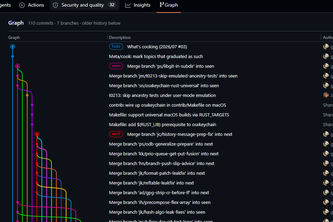
The description states that "Graph Tab for GitHub" is a browser extension that adds a Git Graph tab to GitHub repositories. The author claims it provides zero permissions, fresh data, and was built using AI tools like GPT 5.6 and Codex. It is presented as solving problems with existing extensions that either request access to user accounts or display stale data.
The project appears to be a single-person hackathon submission, published for the OpenAI 2026 hackathon. There is no evidence of revenue, customers, traction, or commercialization beyond its publication on Devpost and the claim that it's "already published".
Key open question
What is the actual commercial viability of this tool? The description does not indicate whether there are any users, monetization plans, or a path to scaling beyond a hackathon prototype.
What The Product Actually Is
The description states that Graph Tab for GitHub is a browser extension that adds a new "Graph" tab to GitHub repository pages. It renders Git history visually.
It was built using:
- AI tools: GPT 5.6 (specifically versions 5.6-luna, 5.6-sol, 5.6-terra), Codex
- Technologies: JavaScript, shell, Playwright, gh API, git smart protocol
The author claims it overcomes issues with authentication and stale data by using undocumented GitHub endpoints and fetching fresh data via the git smart protocol.
Positioning & Claim Evolution
The description states that the product positions itself as:
- An alternative to existing Git Graph extensions
- Solving problems of those extensions (requiring permissions, showing stale data)
- Providing "zero permissions" and "fresh data"
- A solution for users who "missed anything at GitHub"
The author's own write-up indicates this is a hackathon project submitted to the OpenAI 2026 hackathon. The positioning appears to be that it solves a gap in GitHub's native functionality, but there is no evidence of market validation or adoption.
Target Customer & ICP
The description states that the target customer is likely GitHub users who want to see Git history visually and are dissatisfied with existing extensions.
It is implied that the extension would appeal to developers or teams using GitHub repositories who want better visualization of their Git history.
However, no specific customer segments or personas are defined. The author only mentions "GitHub users" as a general audience.
Business Model & Pricing Evidence
Not evidenced.
The description does not contain any information about pricing, monetization, or business model. There is no indication of whether the extension will be free, paid, or supported through other means.
Technical & Delivery Signals
The description states:
- Built with AI tools (GPT 5.6 variants, Codex)
- Uses Playwright, gh API, git smart protocol
- Overcame challenges around authentication and stale data
- Published for Chrome, with plans to publish for Edge and Firefox
The author claims the extension works by leveraging undocumented GitHub endpoints and fetching fresh data via git smart protocol.
Traction & Maturity Signals
Not evidenced.
The description states that the project is "already published" but provides no information about:
- Number of downloads or users
- Adoption metrics
- Customer feedback or engagement
- Revenue or monetization
- Product maturity beyond initial release
The author only claims it was submitted to a hackathon and is "already published".
Competitive Context
Not evidenced.
The description does not mention any existing Git Graph tools, competitors, or market landscape. It only states that other extensions either ask for permissions or show stale data.
Open Questions & Risks
- Single-person project: The team size is listed as 1 person (Andrey Dodonov), suggesting limited resources and potential sustainability concerns.
- Hackathon origin: This appears to be a hackathon submission, not a commercial product, raising questions about long-term viability or intent to scale.
- Unverified claims: The description makes several claims (e.g., "zero permissions", "fresh data") without evidence of testing or validation.
- AI dependency: Heavy reliance on AI tools like GPT 5.6 and Codex may not be sustainable or scalable in the long term.
- Limited scope: The extension only works for Chrome, with plans to publish for Edge and Firefox, but no indication of broader platform support.
Questions the description leaves open
- What specific problems are you solving that existing tools don't?
- How do you plan to monetize this extension?
- Have you conducted any user research or testing?
- What is your roadmap for expanding beyond the initial release?
- How do you intend to maintain and update the extension over time?
- Are there any technical limitations or dependencies that could affect scalability?
Overall Assessment
Not evidenced.
The description does not contain sufficient information to assess commercial viability, traction, or investment potential. It is unclear whether this represents a viable business opportunity or merely a hackathon prototype with no clear path to monetization or growth. The lack of revenue data, customer base, or detailed business model makes any investment or partnership decision impossible to evaluate based on the provided evidence.
User Stories BotA demo video on every pull request
Get a demo video on every new feature
GitHub App that watches your pull requests and records a narrated, captioned demo.
Save time on demo prep and make informed decisions faster with a video walkthrough of every new feature.
Source
Submitted to the OpenAI 2026 hackathon on Devpost. Project home on Devpost. Back to the full gallery on Devpost.
This competitive analysis was produced by top-founders.com (opens in a new tab)
Generated by a language model from this project's public Devpost page — its tagline, the author's own write-up and any built-with tags listed there — as captured in August 2026. Short quotations are the author's words. It is an opinion on the idea as a business, not on the people behind it, and it reflects the description as published then. If the project has moved on, request a correction below. The analysis is not independent research and contains no verified traction, revenue or customer data.
An independent guide by KFG International LLC — not affiliated with, endorsed by, or connected to Devpost or OpenAI.