

Archive position — measured, not model output
0 likes on Devpost
2,263 of the 7,850 archived projects have more likes, and 5,587 share exactly 0 — so this project's #4,071 place in the like-ranked listing is a tie-break inside that group, not a ranking.
Projects (log scale)
Likes on Devpost. ▲ marks this project's group.
Show the figures
| Likes | Projects | Share of archive |
|---|---|---|
| 0 | 5,587 | 71.2% |
| 1 | 1,758 | 22.4% |
| 2 | 284 | 3.6% |
| 3–4 | 132 | 1.7% |
| 5–9 | 75 | 1.0% |
| 10+ | 14 | 0.2% |
 User Stories BotA demo video on every pull request
Get a demo video on every new feature
GitHub App that watches your pull requests and records a narrated, captioned demo.
Save time on demo prep and make informed decisions faster with a video walkthrough of every new feature.
Executive Summary
What the company appears to be
FDCOS — AI Incident Commander is a self-reported autonomous security platform designed to connect isolated security tools (cameras, sensors, drones, etc.) into a coordinated intelligence network. It includes an AI Incident Commander that reconstructs backend context and produces structured advisory briefs for operators without physical authority.
What changed
The author submitted this project as part of the OpenAI Build Week hackathon, focusing on demonstrating one component: the AI Incident Commander. This represents a focused development effort within a larger platform architecture.
Single most important open question
Is there evidence that FDCOS has moved beyond prototype or experimental status, and whether it has begun to attract users or partners who might validate its commercial potential?
What The Product Actually Is
The description states that FDCOS is an autonomous security platform integrating cameras, sensors, drones, robots, maps, AI, communications, and human operators under one core. It includes:
- A system for connecting existing or future infrastructure (IP cameras, NVR/DVR systems, RTSP/ONVIF feeds, access-control systems, panic buttons, PIR sensors, infrared barriers, vibration sensors, drones, robots, docks, communication channels).
- An event correlation engine using time, space, movement, object identity, zones, historical patterns, and active rules.
- A Risk Assessment Engine evaluating detection meaning in context.
- Mission creation capabilities including verification, tracking, searching, investigation, adaptive patrols, observation maintenance, return/abort due to safety conditions, escalation workflows.
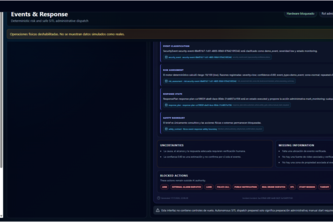
- An AI Incident Commander that produces structured advisory briefs containing executive summaries, risk/severity/confidence, priorities, safe recommendations, facts with provenance, uncertainties, missing information, and blocked actions.
- A platform architecture supporting deterministic autonomous dispatch governed by battery, route, connectivity, obstacles, geofences, weather, dock state, resource availability, and abort rules.
The AI Incident Commander is deliberately separated from physical authority. It does not arm drones, initiate takeoffs, start missions, dispatch hardware, contact police, trigger alarms, or publish notifications.
Evidence
- The author's own write-up.
- Technology tags: api, ardupilot, codex, fastapi, gpt-5.6, javascript, mavlink, openai, outputs, playwright, pydantic, pytest, python, react, responses, sitl, structured, vite.
Inference The system appears to be a cyber-physical integration of security tools with AI advisory capabilities, built around a modular architecture that separates decision-making from action execution.
Positioning & Claim Evolution
The author positions FDCOS as:
- A security operating system capable of connecting isolated resources into one coordinated intelligence network.
- An autonomous security platform that perceives events, correlates evidence, understands context, evaluates risk, creates missions, selects resources, preserves evidence, and learns from results.
- A platform for transparency, discipline, and safety, designed to be developed with these principles from the beginning.
The author claims FDCOS is not just a drone controller, surveillance dashboard, alarm system, or isolated AI application. Instead, it aims to be an integrated architecture that can function autonomously under defined rules while maintaining human oversight through advisory layers like the AI Incident Commander.
Evidence
- The author's own write-up.
- Tagline: “FDCOS unifies mapping, spatial intelligence, real-time risk analysis, and AI incident command to help security teams understand threats sooner, coordinate decisions, and respond safely.”
Inference The positioning suggests a long-term vision of an integrated, autonomous, and safe security infrastructure. The current submission focuses on one part of that vision — the AI Incident Commander.
Target Customer & ICP
The description states that FDCOS targets security teams who need to understand threats sooner, coordinate decisions, and respond safely.
It is designed for environments where:
- Cameras, alarms, sensors, drones, maps, monitoring centers operate independently.
- Operators receive multiple signals and must manually reconstruct situations while losing time.
- There is a need for coordination between disconnected tools.
- The goal is to reduce response time and improve situational awareness.
Evidence
- “Today, cameras, alarms, sensors, drones, maps, and monitoring centers often operate as disconnected tools.”
- “Security teams understand threats sooner, coordinate decisions, and respond safely.”
Inference The target customer likely includes organizations managing physical security for properties, infrastructure, or facilities. Potential use cases may include industrial sites, campuses, critical infrastructure, or urban environments requiring real-time situational awareness.
Business Model & Pricing Evidence
No explicit business model or pricing information is provided in the description.
Evidence
- None.
Inference There is no indication of how FDCOS intends to monetize its platform. Whether it will be sold as a SaaS product, embedded software, or part of a larger security ecosystem remains unknown.
Technical & Delivery Signals
The author reports:
- FDCOS existed before the Build Week competition and was built using:
- MAVLink and ArduPilot simulation
- Telemetry, drone control, Property Mapper, digital twins, visual correlation, depth processing, SLAM, World Model, fleet management, operator interfaces
- During Build Week, they extended the foundation with:
- Operational event-response workflow
- AI Incident Commander
- The system uses GPT-5.6 Sol and Codex for integration.
- It implements:
- Versioned structured advisory contract
- Trusted backend context reconstruction
- Sensitive-data redaction
- Deterministic fallback behavior
- Secure endpoints with authentication, RBAC, ownership, and isolation
- Append-only persistence, idempotency, sanitized audit records
- A complete Incident Commander workspace
- Demonstrated through:
- Backend, frontend, persistence, adversarial, safety, and end-to-end evaluations
- Reproducible demonstration environment with isolated data and no physical effects
Evidence
- The author's own write-up.
- Technology tags: api, ardupilot, codex, fastapi, gpt-5.6, javascript, mavlink, openai, outputs, playwright, pydantic, pytest, python, react, responses, sitl, structured, vite.
Inference The technical stack shows a mature engineering approach with strong emphasis on safety, reproducibility, and separation of concerns. The use of Codex and GPT-5.6 indicates an integration of generative AI within strict architectural boundaries.
Traction & Maturity Signals
There is no evidence of traction or maturity beyond the prototype stage.
Evidence
- No revenue data.
- No customer names, logos, testimonials, or adoption metrics.
- The project was submitted to a hackathon and described as a demonstration.
- The author states that winning would validate years of thinking, experimentation, and determination but does not mention any real-world deployments or pilots.
Inference FDCOS appears to be in early development, possibly pre-product-market fit. It has not yet demonstrated commercial viability or user engagement.
Competitive Context
The description does not provide information about competitors or the competitive landscape.
Evidence
- None.
Inference Without explicit mention of competitors, it is unclear whether FDCOS operates in a crowded market or addresses an underserved niche. The author’s focus on safety and transparency may differentiate it from other AI-driven security platforms, but this is speculative without comparative data.
Open Questions & Risks
Key risks and open questions include:
- Lack of traction or commercial validation: No evidence of revenue, customers, or real-world use.
- Prototype-only status: The entire submission appears to be a demonstration, not a functioning product.
- Single-founder team: Only one member listed (EZEQUIELfiguereo).
- Unproven AI integration: While GPT-5.6 is used, the system uses deterministic fallbacks and does not integrate live API calls in the demo.
- Limited scalability assumptions: The architecture seems designed for controlled environments; no indication of how it scales to large deployments.
- No pricing or monetization strategy: No business model described.
Evidence
- Author’s own write-up.
- Team size: 1.
- Tagline and description imply a vision, not a realized product.
- The demo is isolated and does not involve physical action or API usage.
Inference The project lacks commercial proof-of-concept. It may be a visionary idea rather than an actionable business.
Questions the description leaves open
- What specific security environments have you tested FDCOS in, if any?
- How does the system handle data privacy and compliance with regulations like GDPR or local laws?
- What are your plans for integrating with existing enterprise security infrastructures?
- Have you conducted any adversarial testing or simulations of potential failures?
- What is your roadmap for transitioning from prototype to production-ready software?
- Are there any partnerships or pilot programs currently underway?
- How do you plan to scale the system beyond the current demonstration environment?
- What are the key performance indicators (KPIs) you track for operational effectiveness?
Overall Assessment
Not evidenced
There is insufficient evidence to assess whether FDCOS warrants investment or partnership interest.
The project is presented as a prototype with strong technical execution and clear architectural intent, but lacks any demonstration of traction, revenue, or user engagement. The author’s vision is ambitious and technically sound, yet the current state remains experimental.
Evidence
- No financials.
- No customers.
- No commercial activity.
- No third-party validation.
Inference While FDCOS shows promise in terms of engineering rigor and safety design, it has not yet demonstrated a viable business model or market demand. It may be suitable for early-stage funding to develop further prototypes or pilot programs, but not for immediate investment or partnership consideration without additional evidence of progress.
User Stories BotA demo video on every pull request
Get a demo video on every new feature
GitHub App that watches your pull requests and records a narrated, captioned demo.
Save time on demo prep and make informed decisions faster with a video walkthrough of every new feature.
Source
Submitted to the OpenAI 2026 hackathon on Devpost. Project home on Devpost. Back to the full gallery on Devpost.
This competitive analysis was produced by top-founders.com (opens in a new tab)
Generated by a language model from this project's public Devpost page — its tagline, the author's own write-up and any built-with tags listed there — as captured in August 2026. Short quotations are the author's words. It is an opinion on the idea as a business, not on the people behind it, and it reflects the description as published then. If the project has moved on, request a correction below. The analysis is not independent research and contains no verified traction, revenue or customer data.
An independent guide by KFG International LLC — not affiliated with, endorsed by, or connected to Devpost or OpenAI.