

Archive position — measured, not model output
1 like on Devpost
505 of the 7,850 archived projects have more likes, and 1,758 share exactly 1 — so this project's #1,020 place in the like-ranked listing is a tie-break inside that group, not a ranking.
Projects (log scale)
Likes on Devpost. ▲ marks this project's group.
Show the figures
| Likes | Projects | Share of archive |
|---|---|---|
| 0 | 5,587 | 71.2% |
| 1 | 1,758 | 22.4% |
| 2 | 284 | 3.6% |
| 3–4 | 132 | 1.7% |
| 5–9 | 75 | 1.0% |
| 10+ | 14 | 0.2% |
 User Stories BotA demo video on every pull request
Get a demo video on every new feature
GitHub App that watches your pull requests and records a narrated, captioned demo.
Save time on demo prep and make informed decisions faster with a video walkthrough of every new feature.
Executive Summary
What the company appears to be
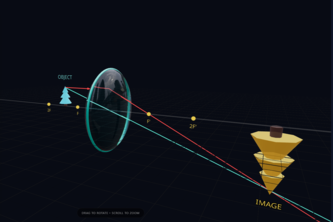
Esbiko is a self-reported interactive virtual science laboratory built as a browser-based platform for students and teachers. It uses real-time simulations in physics, astronomy, optics, and other STEM topics, with an emphasis on making science accessible through visual and interactive learning.
What changed
The project was submitted to the OpenAI 2026 hackathon by a single founder (Amin Nazari), indicating it is early-stage. The description shows a focus on using modern web technologies and AI tools like GPT-5.6 and Codex to accelerate development, but no evidence of product-market fit or commercial traction.
Single most important open question
Is there any evidence that Esbiko has achieved adoption among students or teachers, or whether it is being used in real educational settings?
What The Product Actually Is
The description states that Esbiko is an interactive browser-based platform for science education. It allows users to explore scientific concepts through simulations in areas such as:
- Physics
- Optics
- Gravity
- Electricity
- Waves
- Astronomy
- Solar System
- Orbital Mechanics
It is described as a real-time simulation environment, where students can modify parameters and observe outcomes, rather than passively watching static content or reading textbooks.
The platform is designed to be accessible from any modern web browser without installation.
Inference The product appears to be an educational tool built for K–12 or early higher education use, with a focus on STEM learning through interactive visualization.
Positioning & Claim Evolution
The author positions Esbiko as:
- A platform that transforms science education by enabling exploration instead of memorization.
- An interactive virtual lab that helps students "explore, experiment, and discover" scientific concepts directly in their browser.
- A tool that makes science engaging, visual, and accessible, especially for those with limited access to physical lab equipment.
The description also mentions:
- The use of AI-assisted development tools (GPT-5.6, Codex) to speed up implementation.
- A vision to evolve into a collaborative platform where educators can create and share simulations.
- Plans for teacher dashboards, progress tracking, and classroom management tools.
Inference The positioning has evolved from a simple simulation tool to a potential full-fledged educational platform with community-building features, though no evidence supports current adoption or usage of these future features.
Target Customer & ICP
The description states that Esbiko is intended for:
- Students, who can explore science through simulations.
- Teachers, who can create engaging STEM learning experiences and manage classrooms.
It also mentions a goal to enable teachers and students to create their own simulations without needing advanced programming knowledge.
Inference The primary ICP appears to be K–12 educators and learners, with a secondary focus on teacher tools and classroom management. However, no evidence of actual customer base or user data is provided.
Business Model & Pricing Evidence
There is no evidence in the description of:
- A business model
- Pricing strategy
- Revenue streams
- Monetization approach
The author only describes a vision for future features like teacher dashboards and classroom tools, but does not indicate how these would be monetized.
Inference No commercial or pricing information is available. The project appears to be in an early development stage with no clear path to revenue generation.
Technical & Delivery Signals
The platform is built using:
- Frontend: React, TypeScript, Three.js, React Three Fiber, Material UI, Framer Motion
- Backend: Firebase (Firestore)
- Development Tools: GPT-5.6, OpenAI Codex
- Hosting/Deployment: Web-based via browser
The description notes that the team used AI tools to accelerate development and improve software quality.
Inference The technical stack is modern and web-focused, suitable for browser-based simulations. However, no evidence of performance metrics, scalability, or delivery history beyond a hackathon project exists.
Traction & Maturity Signals
The description states:
- Esbiko was built during the OpenAI 2026 hackathon
- It includes a live demo and GitHub repository
- The author mentions “a growing collection of interactive science simulations”
- There is a vision for expanding to more content, mobile experience, and user-generated simulations
However, there is no evidence of:
- Active users or student engagement
- Teacher adoption or classroom usage
- Revenue or monetization
- Customer feedback or retention metrics
- Product maturity beyond prototype stage
Inference The product is at a very early stage. It may have some functional simulations but lacks any demonstrated traction or commercial viability.
Competitive Context
The description does not mention competitors, nor does it provide information about:
- Existing platforms in the virtual science lab space
- Market size or competitive positioning
- Differentiation from similar tools
Inference No competitive analysis is evident. The project appears to be self-contained and unanchored in a known market context.
Open Questions & Risks
- No evidence of traction or adoption: The platform exists only as a demo and prototype.
- Single-founder team: Only one member listed (Amin Nazari).
- Unproven business model: No indication of how the product will generate revenue.
- Early-stage development: Built for a hackathon, not yet scaled for real-world use.
- AI dependency: Heavy reliance on GPT-5.6 and Codex may be unsustainable or unverifiable in long-term execution.
- Lack of customer data: No evidence of real users, feedback, or usage patterns.
Inference The project is highly speculative at this stage, with no commercial or educational validation.
Questions the description leaves open
- What specific educational institutions or teachers are currently using Esbiko?
- How many students or teachers have engaged with the platform so far?
- What is your plan for monetization and scaling beyond a hackathon prototype?
- Have you conducted any user testing or feedback sessions with educators or students?
- What are the key challenges in transitioning from simulations to a full educational platform with teacher tools?
- How do you intend to differentiate Esbiko from existing virtual science lab platforms?
Overall Assessment
Not evidenced.
There is no evidence of revenue, customers, or traction to support an investment or partnership decision.
The project is described as a hackathon prototype, built by a single founder using modern web and AI tools. It has a clear vision for future expansion but lacks any indication of current adoption or commercial viability.
Confidence Level: Low
This analysis is based entirely on self-reported information, with no external validation or data points to assess product-market fit, user engagement, or business sustainability.
User Stories BotA demo video on every pull request
Get a demo video on every new feature
GitHub App that watches your pull requests and records a narrated, captioned demo.
Save time on demo prep and make informed decisions faster with a video walkthrough of every new feature.
Source
Submitted to the OpenAI 2026 hackathon on Devpost. Project home on Devpost. Back to the full gallery on Devpost.
This competitive analysis was produced by top-founders.com (opens in a new tab)
Generated by a language model from this project's public Devpost page — its tagline, the author's own write-up and any built-with tags listed there — as captured in August 2026. Short quotations are the author's words. It is an opinion on the idea as a business, not on the people behind it, and it reflects the description as published then. If the project has moved on, request a correction below. The analysis is not independent research and contains no verified traction, revenue or customer data.
An independent guide by KFG International LLC — not affiliated with, endorsed by, or connected to Devpost or OpenAI.