

Archive position — measured, not model output
0 likes on Devpost
2,263 of the 7,850 archived projects have more likes, and 5,587 share exactly 0 — so this project's #3,920 place in the like-ranked listing is a tie-break inside that group, not a ranking.
Projects (log scale)
Likes on Devpost. ▲ marks this project's group.
Show the figures
| Likes | Projects | Share of archive |
|---|---|---|
| 0 | 5,587 | 71.2% |
| 1 | 1,758 | 22.4% |
| 2 | 284 | 3.6% |
| 3–4 | 132 | 1.7% |
| 5–9 | 75 | 1.0% |
| 10+ | 14 | 0.2% |
 User Stories BotA demo video on every pull request
Get a demo video on every new feature
GitHub App that watches your pull requests and records a narrated, captioned demo.
Save time on demo prep and make informed decisions faster with a video walkthrough of every new feature.
Executive Summary
What the company appears to be
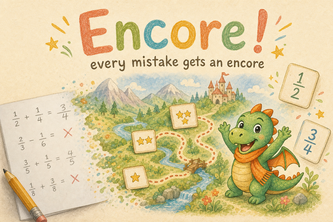
The project described by the author is a tool that uses GPT-5.6 and related AI technologies to analyze student test papers, identify concept gaps, and generate personalized, hand-drawn storybook-style educational games based on those mistakes. The system aims to make learning more engaging by turning incorrect answers into interactive review quests.
What changed
The author describes a shift from general-purpose AI-generated games (which are “toys”) to a targeted solution that leverages real student errors as the core content for personalized learning experiences.
Single most important open question
Is there evidence of any actual use or adoption beyond the single developer's prototype? The description contains no data on users, revenue, traction or customer feedback — only self-reported claims about functionality and design decisions.
What The Product Actually Is
The description states that the product:
- Takes a photo of a student’s test paper.
- Uses GPT-5.6 to analyze each question and answer.
- Identifies concept gaps (e.g., misunderstanding of common denominators vs. careless mistake).
- Generates a hand-drawn storybook-style game based on the wrong answers.
- Includes seven game types, such as cutting pizza for fractions or arranging train cars.
- Features a character named Momo who encourages retrying mistakes with an “Encore” message instead of red Xs.
- Supports four languages (English, Traditional Chinese, Japanese, Korean).
- Is built using Codex, Next.js, Node.js, OpenAI APIs, Playwright, and other tools.
Inference The system appears to be a prototype or proof-of-concept rather than a commercial product. It is not evident whether it has been scaled beyond one developer’s environment or deployed for real students.
Positioning & Claim Evolution
The author claims:
- The idea emerged from trying open-source gamedev skills with Codex.
- The inspiration was that “wrong answers are the most valuable game content in the world, but only for this kid.”
- The product turns mistakes into “hand-drawn storybook adventures”.
- It is designed to help tired adults (teachers/tutors/parents) avoid having to manually analyze test papers.
- It supports multiple languages and offers a non-shaming approach to learning.
Inference The positioning seems to be focused on personalized, low-stakes educational gaming for children, using AI to automate the creation of tailored content from student errors. However, there is no evidence of market testing or customer validation beyond the author’s own experience.
Target Customer & ICP
The description states:
- The target users are teachers, tutors, and parents.
- The primary use case involves helping kids learn from their mistakes in math, science, history, and language arts.
- The tool is intended for individualized learning, where each child’s errors become the basis of a unique game.
Inference The ICP appears to be parents or educators who want to support children's learning through gamified feedback, especially when they lack time or expertise to manually assess test papers. However, no evidence exists regarding actual user personas, segmentation, or market research.
Business Model & Pricing Evidence
Not evidenced.
Inference There is no mention of pricing models, monetization strategies, or business structure in the description. The project appears to be a hackathon submission without any indication of how it would generate revenue.
Technical & Delivery Signals
The description states:
- Built with Codex, Next.js, Node.js, OpenAI APIs, Playwright, TailwindCSS, TypeScript, Vitest, Zod.
- Uses GPT-5.6 for content generation and image generation via Codex image gen.
- Implements a strict architecture where game templates are fixed and validated using Zod.
- Answer keys remain on the host side; only redacted content is passed to the iframe.
- AGENTS.md was used to maintain consistency across 39 sessions.
- Error messages are fed back into Codex to improve model output iteratively.
Inference The technical approach shows a deliberate effort toward robustness and modularity, especially in handling structured outputs and preventing leakage of answer keys. However, the system is described as a prototype built by one person over six days — no indication of scalability or production readiness.
Traction & Maturity Signals
Not evidenced.
Inference There is no evidence of any real-world deployment, user base, or performance metrics beyond the author’s own testing on five sample papers. No mention of pilot programs, beta users, or adoption rates.
Competitive Context
Not evidenced.
Inference No information is provided about competitors or existing solutions in the educational gaming space. The description does not reference similar tools or platforms that might offer comparable functionality.
Open Questions & Risks
- Single Developer Prototype: The entire project was built by one person over six days, suggesting limited scalability or long-term viability.
- No Traction or Revenue Data: There is no evidence of any users, customers, or monetization.
- Unverified Claims: All functionality and performance claims are self-reported without external validation.
- Limited Scope: The system only supports math, science, history, and language arts; no indication of expansion plans.
- Dependence on AI Models: Reliance on GPT-5.6 and Codex implies potential dependency risks if these services change or become unavailable.
Questions the description leaves open
- What specific test papers were used in the validation process, and how many real students have interacted with the prototype?
- Has there been any feedback from teachers, parents, or children using this tool?
- How does the system handle edge cases like handwriting recognition or ambiguous answers?
- Are there plans to expand beyond the current subject areas or languages?
- What is the intended business model and go-to-market strategy?
- Can you demonstrate how the AI-generated content differs from generic educational games?
- Is there any plan for integrating with existing LMS (Learning Management Systems) or school platforms?
Overall Assessment
Not evidenced.
Inference Given that this is a hackathon submission by a single developer, and no evidence of traction, revenue, or customer validation exists, it is premature to evaluate investment potential. The project shows promise in concept but lacks the commercial foundation required for due diligence at an M&A or growth-equity level. Any further evaluation would require deeper engagement with the founder and verification of claims.
User Stories BotA demo video on every pull request
Get a demo video on every new feature
GitHub App that watches your pull requests and records a narrated, captioned demo.
Save time on demo prep and make informed decisions faster with a video walkthrough of every new feature.
Source
Submitted to the OpenAI 2026 hackathon on Devpost. Project home on Devpost. Back to the full gallery on Devpost.
This competitive analysis was produced by top-founders.com (opens in a new tab)
Generated by a language model from this project's public Devpost page — its tagline, the author's own write-up and any built-with tags listed there — as captured in August 2026. Short quotations are the author's words. It is an opinion on the idea as a business, not on the people behind it, and it reflects the description as published then. If the project has moved on, request a correction below. The analysis is not independent research and contains no verified traction, revenue or customer data.
An independent guide by KFG International LLC — not affiliated with, endorsed by, or connected to Devpost or OpenAI.