

Archive position — measured, not model output
0 likes on Devpost
2,263 of the 7,850 archived projects have more likes, and 5,587 share exactly 0 — so this project's #3,604 place in the like-ranked listing is a tie-break inside that group, not a ranking.
Projects (log scale)
Likes on Devpost. ▲ marks this project's group.
Show the figures
| Likes | Projects | Share of archive |
|---|---|---|
| 0 | 5,587 | 71.2% |
| 1 | 1,758 | 22.4% |
| 2 | 284 | 3.6% |
| 3–4 | 132 | 1.7% |
| 5–9 | 75 | 1.0% |
| 10+ | 14 | 0.2% |
 User Stories BotA demo video on every pull request
Get a demo video on every new feature
GitHub App that watches your pull requests and records a narrated, captioned demo.
Save time on demo prep and make informed decisions faster with a video walkthrough of every new feature.
Executive Summary
Cursivis-Next is a self-reported Windows AI assistant that claims to understand context from within existing applications and provide intelligent responses without interrupting the user’s workflow. It integrates with OpenAI services and supports keyboard shortcuts, screen region selection, voice interaction (Live Mode), dictation, prompt optimization, and browser automation.
The project appears to be a proof-of-concept or early-stage prototype built by two individuals for a hackathon. No evidence of revenue, customers, traction, or commercial deployment is provided in the description.
The single most important open question
Is there any indication that Cursivis-Next has moved beyond a hackathon prototype into a product with real user feedback, usage data, or monetization strategy?
What The Product Actually Is
The description states that Cursivis Next is a context-aware Windows AI assistant. It works across applications people already use and uses a selection-trigger-understand-response-refine-or-act workflow.
Key features include:
- Selection + shortcut + context → understanding → action
- Smart Mode for fast, task-specific responses
- Guided Mode with dynamic options based on content
- Screen/image region selection for multimodal analysis
- Live Mode as a conversational voice assistant
- Smart Dictation that improves speech-to-text insertion
- Prompt Optimizer to refine instructions before sending to AI models
- Navigation Guidance for unfamiliar desktop tasks
- Take Action for structured browser workflows
It is described as a standalone Windows application built using C#, .NET 8, WinUI 3, and OpenAI APIs.
Inference The product appears to be an experimental tool focused on improving AI interaction within the user’s current workflow rather than replacing it.
Positioning & Claim Evolution
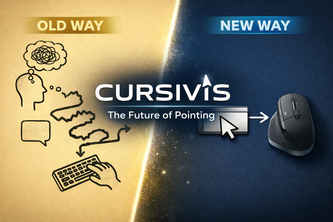
The author positions Cursivis Next as a context-aware assistant that lives inside the user's existing work environment, not in a separate chatbot interface. It aims to reduce friction by understanding what is already on screen and responding appropriately without requiring users to copy-paste or switch applications.
It explicitly states:
- “We were not trying to build another chatbot.”
- “Cursivis decides how to help without forcing the user to reconstruct their workflow inside another application.”
This suggests a shift from generic AI tools toward AI-as-a-service embedded within workflows.
Inference The positioning reflects an attempt to solve a perceived pain point in current AI usage patterns — namely, the disconnection between real work and AI interaction. However, no evidence of market validation or adoption exists.
Target Customer & ICP
The description does not name specific customer segments or personas. It implies that Cursivis Next targets users who:
- Work with text, code, images, forms, emails, etc.
- Are frustrated by the current AI workflow (copy-paste-switch-back)
- Need quick, context-aware assistance while staying in their current application
It is designed for Windows users, particularly those using productivity tools like browsers, editors, and desktop applications.
Inference The ICP likely includes professionals or power users who spend significant time working within Windows environments and want seamless AI integration. No evidence of segmentation or targeting beyond this general category.
Business Model & Pricing Evidence
There is no evidence in the description of a business model or pricing structure.
The project is presented as a hackathon submission, with no mention of monetization, subscriptions, licensing, or paid features.
Inference The product may be in an early development phase and not yet monetized. If commercialized, it would likely follow a freemium or SaaS model, but this remains speculative.
Technical & Delivery Signals
The project is built using:
- C#, .NET 8, WinUI 3
- OpenAI Responses API, Realtime API, audio transcription
- Windows UI Automation, Chromium extension APIs, native messaging
- Inno Setup for installation
It uses layered strategies for:
- Context capture (UI automation + clipboard fallback)
- Global keyboard shortcuts (thread-safe registration and conflict resolution)
- Transparent overlays (compositor handling, DPI-aware positioning)
- Browser integration (extension + native host bridge)
Inference The technical stack and architecture suggest a highly engineered prototype, especially around cross-application compatibility and UI overlay behavior. However, no evidence of scalability or production-grade delivery.
Traction & Maturity Signals
There is no evidence of traction, revenue, customer adoption, or product maturity beyond the hackathon submission.
The team size is listed as 2 people.
No data on:
- User engagement
- Feature usage
- Retention
- Customer feedback loops
- Product roadmap
Inference The project appears to be a pre-product prototype, likely not yet available for public use or testing outside of the hackathon context.
Competitive Context
The description does not reference direct competitors. However, it aligns with trends in:
- AI-powered productivity tools (e.g., ChatGPT, Claude, Cursor)
- Context-aware assistants (e.g., Notion AI, Obsidian, Copilot)
- Workflow automation and desktop integrations
It differs from typical chatbots by focusing on contextual interaction within the user’s current application, rather than requiring a separate interface.
Inference While not directly competitive with existing tools, Cursivis Next could potentially disrupt how users interact with AI in their daily workflows. No evidence of prior competition or market positioning is available.
Open Questions & Risks
- Unverified claims: All descriptions are self-reported and unverified.
- No traction or revenue: The project appears to be a hackathon submission without any commercialization or user base.
- Limited team size: Only two developers, which may limit scalability or feature development.
- High engineering complexity: The described technical challenges suggest a complex system that may not yet be stable or scalable.
- Unclear monetization strategy: No indication of how the product will generate value or revenue.
Inference Without evidence of traction, user feedback, or commercial viability, Cursivis Next remains a speculative idea rather than a viable business opportunity.
Questions the description leaves open
- What is the current stage of development? Is this a prototype, MVP, or something more?
- Have you conducted any user testing or gathered feedback from real users?
- How do you plan to monetize Cursivis Next? Are there any early adopters or pilot programs?
- Can you describe how the global keyboard shortcut system handles conflicts with other applications?
- What are your plans for expanding beyond Windows and into macOS or web platforms?
- How does Cursivis handle privacy and data retention, especially when interacting with sensitive content?
- Are there any partnerships or integrations planned with AI providers (e.g., OpenAI)?
- What is the expected lifecycle of the product? Is it intended to be a long-term solution or a short-term experiment?
Overall Assessment
Not evidenced
There is no evidence of revenue, customers, traction, or commercial viability beyond the hackathon submission.
The project shows strong technical execution and an interesting concept but lacks any indication that it has progressed beyond a prototype stage.
Confidence level: Low
This is a pre-product idea, not a product with demonstrated value. Any investment or partnership would be speculative at this point, based purely on the potential of the concept and the engineering effort described.
User Stories BotA demo video on every pull request
Get a demo video on every new feature
GitHub App that watches your pull requests and records a narrated, captioned demo.
Save time on demo prep and make informed decisions faster with a video walkthrough of every new feature.
Source
Submitted to the OpenAI 2026 hackathon on Devpost. Project home on Devpost. Back to the full gallery on Devpost.
This competitive analysis was produced by top-founders.com (opens in a new tab)
Generated by a language model from this project's public Devpost page — its tagline, the author's own write-up and any built-with tags listed there — as captured in August 2026. Short quotations are the author's words. It is an opinion on the idea as a business, not on the people behind it, and it reflects the description as published then. If the project has moved on, request a correction below. The analysis is not independent research and contains no verified traction, revenue or customer data.
An independent guide by KFG International LLC — not affiliated with, endorsed by, or connected to Devpost or OpenAI.