

Archive position — measured, not model output
1 like on Devpost
505 of the 7,850 archived projects have more likes, and 1,758 share exactly 1 — so this project's #913 place in the like-ranked listing is a tie-break inside that group, not a ranking.
Projects (log scale)
Likes on Devpost. ▲ marks this project's group.
Show the figures
| Likes | Projects | Share of archive |
|---|---|---|
| 0 | 5,587 | 71.2% |
| 1 | 1,758 | 22.4% |
| 2 | 284 | 3.6% |
| 3–4 | 132 | 1.7% |
| 5–9 | 75 | 1.0% |
| 10+ | 14 | 0.2% |
 User Stories BotA demo video on every pull request
Get a demo video on every new feature
GitHub App that watches your pull requests and records a narrated, captioned demo.
Save time on demo prep and make informed decisions faster with a video walkthrough of every new feature.
Executive Summary
What the company appears to be
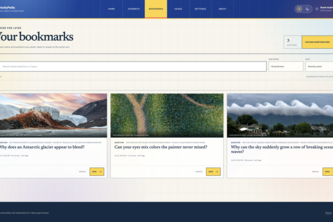
CuriosityPedia is a self-developed, on-demand mini-encyclopedia tool built as a hackathon project. The author describes it as a visual learning platform that generates 8–10 page encyclopedias with images for topics users explore. It includes interactive question prompts based on visuals and allows users to dive deeper into subtopics. The product is described as being built using OpenAI APIs, Codex, React, TypeScript, Vite, and Site.
What changed
This is a single-person project submitted to the OpenAI 2026 hackathon. No prior version or evolution is evidenced; it is presented as a new creation from scratch.
The single most important open question — the commercial due-diligence read
Is there evidence of a scalable, repeatable, or monetizable product beyond the author’s personal vision and one-week prototype?
What The Product Actually Is
- The description states that CuriosityPedia generates "8–10 pages of encyclopedia" for a given topic.
- It includes visual elements (images) and asks questions based on those visuals.
- Users can explore subtopics by answering questions, leading to further encyclopedias.
- The tool is described as being built with GPT 5.6 Sol Medium, image generation capabilities, and OpenAI APIs.
- It uses Codex for development, React for UI, TypeScript, Vite, and Site for deployment.
Inference The product appears to be a prototype that blends generative AI with visual storytelling for educational purposes. It is not a finished product but an experimental tool built in one week.
Positioning & Claim Evolution
- The author states: “Learn to be more curious. A beautiful on-demand mini-encyclopedia backed by reputed sources for exploring new rabbit holes.”
- The positioning is centered around visual learning, curiosity-driven exploration, and educational content.
- It is described as a tool that makes information consumption fun and exciting.
- The author emphasizes the lack of existing tools with similar visual communication capabilities.
Inference The product is positioned as an alternative to traditional chatbots or encyclopedias for visual learners. However, no evidence of market positioning or branding beyond the hackathon submission exists.
Target Customer & ICP
- The author identifies a personal learning style: “I am a very visual learner,” and “I love to observe an image deeply.”
- The product is described as being useful for “kids” and people who struggle with text-based learning.
- The author states, “I want to create an agentic-editorial staff for this product,” suggesting future expansion beyond personal use.
Inference The target audience appears to be visual learners or children. No evidence of a defined ICP beyond the author’s own experience is provided.
Business Model & Pricing Evidence
- No pricing model, monetization strategy, or business model is described.
- The project is presented as a prototype built in one week and submitted for a hackathon.
- There is no mention of revenue streams, subscriptions, or paid features.
Inference No evidence of a business model or pricing structure exists. The product is not positioned for commercial use at this time.
Technical & Delivery Signals
- Built using GPT 5.6 Sol Medium and Terra (OpenAI models), Codex, React, TypeScript, Vite, and Site.
- The author mentions challenges with token management and UI consistency across screens.
- Deployment was done via “sites,” suggesting a static or simple hosting approach.
Inference The technical stack is typical for a frontend-heavy AI prototype. The delivery signals suggest a minimal viable product (MVP) rather than a scalable solution.
Traction & Maturity Signals
- The project is described as a one-week hackathon effort by a single developer.
- No evidence of user adoption, customer base, or usage metrics.
- The author states: “I havent seen any product which makes the chatbot with great visual communication,” suggesting no prior competition or traction.
Inference No traction or maturity signals are evident. It is a prototype, not a product in use.
Competitive Context
- The author claims there is no existing product that combines visual learning and generative AI in this way.
- No mention of competitors or market analysis.
- The product is described as being built to address a gap they personally experienced.
Inference No competitive landscape is described. The author’s claim of uniqueness is unverified, and no evidence of prior products or market presence exists.
Open Questions & Risks
- The project is a one-person hackathon effort with no traction or commercialization.
- No evidence of scalability, monetization, or long-term vision beyond the author’s personal use.
- The author notes challenges with token management and UI consistency, suggesting technical limitations.
- No evidence of team, funding, or growth strategy.
Inference The project lacks commercial viability, scalability, and a clear path to market adoption. It is not a product in development but a prototype.
Questions the description leaves open
- What specific user problems are you solving beyond personal learning?
- How do you plan to scale this beyond a single developer’s vision?
- Are there any plans for monetization or revenue models?
- What is your long-term roadmap, and how will you validate product-market fit?
- Have you tested the product with actual users beyond yourself?
Overall Assessment
- The project is a one-week hackathon prototype by a single developer.
- No evidence of traction, revenue, or commercial viability.
- It is not a product in development but an experimental idea.
Assessment Not evidenced as a viable investment or partnership opportunity at this stage. The project lacks the foundation for due diligence beyond its self-reported nature.
User Stories BotA demo video on every pull request
Get a demo video on every new feature
GitHub App that watches your pull requests and records a narrated, captioned demo.
Save time on demo prep and make informed decisions faster with a video walkthrough of every new feature.
Source
Submitted to the OpenAI 2026 hackathon on Devpost. Project home on Devpost. Back to the full gallery on Devpost.
This competitive analysis was produced by top-founders.com (opens in a new tab)
Generated by a language model from this project's public Devpost page — its tagline, the author's own write-up and any built-with tags listed there — as captured in August 2026. Short quotations are the author's words. It is an opinion on the idea as a business, not on the people behind it, and it reflects the description as published then. If the project has moved on, request a correction below. The analysis is not independent research and contains no verified traction, revenue or customer data.
An independent guide by KFG International LLC — not affiliated with, endorsed by, or connected to Devpost or OpenAI.