

Archive position — measured, not model output
1 like on Devpost
505 of the 7,850 archived projects have more likes, and 1,758 share exactly 1 — so this project's #885 place in the like-ranked listing is a tie-break inside that group, not a ranking.
Projects (log scale)
Likes on Devpost. ▲ marks this project's group.
Show the figures
| Likes | Projects | Share of archive |
|---|---|---|
| 0 | 5,587 | 71.2% |
| 1 | 1,758 | 22.4% |
| 2 | 284 | 3.6% |
| 3–4 | 132 | 1.7% |
| 5–9 | 75 | 1.0% |
| 10+ | 14 | 0.2% |
 User Stories BotA demo video on every pull request
Get a demo video on every new feature
GitHub App that watches your pull requests and records a narrated, captioned demo.
Save time on demo prep and make informed decisions faster with a video walkthrough of every new feature.
Executive Summary
What the company appears to be
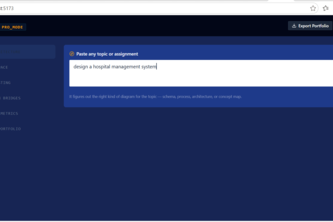
Cortex is a self-reported AI-powered study companion tool designed to help users learn across subjects by automatically generating diagrams, explanations, and adaptive practice questions based on any input topic. It was built as a hackathon project with a single developer.
What changed
The project evolved from a narrow database-schema helper into a multi-subject learning tool that can generate different types of visual representations (e.g., schemas, process diagrams, architecture maps, concept maps) and adaptive practice questions tailored to the subject matter. It also includes features for reviewing work, tracking study progress, and connecting concepts.
The single most important open question
Is there evidence of real user adoption or engagement beyond the hackathon demo? The description does not indicate any revenue, customers, or usage data — only a self-reported product vision and technical implementation.
What The Product Actually Is
The description states that Cortex is a tool that:
- Takes any topic or assignment from any subject
- Automatically decides the best way to represent it (e.g., data schema, process diagram, system architecture, concept map)
- Explains the reasoning behind that structure in plain language
- Generates real code where useful (runnable SQL for schemas, pseudocode for algorithms)
- Offers review functionality for user attempts
- Provides adaptive practice questions based on performance
- Includes features like connections between topics, dashboard tracking, and study logs
It is described as a Vite + React frontend with an Express.js backend that proxies requests to GPT-5.6, using Codex for scaffolding core logic. Study history persists in browser-local storage rather than requiring accounts or databases.
Inference The tool appears to be a prototype built for a hackathon, not yet a production-grade SaaS offering.
Positioning & Claim Evolution
The author claims that Cortex started as a database-schema helper but evolved into a broader study companion. The evolution reflects a shift from narrow functionality to multi-subject adaptability.
Claim
"What if one tool could look at any topic, figure out what kind of visual and practice format actually fits it, and remember what you've studied over time?"
This positioning suggests an intent to become a universal learning assistant rather than a single-purpose tool. However, the description does not indicate whether this vision has been tested with users or validated in real-world settings.
Inference The evolution from a specific use case (database schema) to a general-purpose learning companion is implied but unproven.
Target Customer & ICP
The description states that Cortex targets students studying across different classes who are constantly switching between tools — diagram apps, flashcards, text editors — none of which adapt to what they're actually learning.
Claim
The tool aims to serve users who study multiple subjects and want a single, adaptive tool.
However, no evidence is provided about:
- Who these users are (age, education level, academic discipline)
- How many such users exist
- Whether the tool has been tested with actual students
Inference The target customer profile is inferred from the stated problem but not substantiated.
Business Model & Pricing Evidence
There is no evidence in the description of:
- A pricing model
- Revenue streams
- Monetization strategy
- Customer acquisition costs
- Any commercial activity beyond the hackathon submission
Not evidenced.
Technical & Delivery Signals
The project was built using:
- Frontend: Vite + React, Tailwind CSS, Lucide React, Recharts
- Backend: Express.js
- AI: GPT-5.6 via OpenAI API
- Tools: Codex for scaffolding, localStorage for persistence
- Architecture: Shared diagram engine across multiple types of diagrams (schema, process, architecture, concept map)
- Security: Server-side proxy to avoid exposing API keys in browser
Inference The technical stack suggests a lightweight prototype built quickly for a hackathon, not a scalable enterprise solution.
Traction & Maturity Signals
The description makes no mention of:
- Users or customers
- Revenue or monetization
- Product usage metrics
- Customer feedback or iteration history
- Any form of product-market fit validation
Not evidenced.
Competitive Context
No information is provided about:
- Competitors in the AI-powered study tools space
- Market size or growth trends
- Existing solutions that Cortex might compete with
- Differentiation from current offerings
Not evidenced.
Open Questions & Risks
- Unvalidated market need: The description does not show evidence of user testing, feedback, or demand.
- Prototype-only status: Built for a hackathon; no indication of production readiness or scalability.
- Single-person team: A solo developer may limit execution speed and capability.
- No revenue or monetization strategy: No signs of commercial viability beyond the demo.
- Limited persistence model: Study logs stored in browser-local storage, not suitable for sharing or long-term use.
Inference These are risks based on the lack of evidence for traction, scalability, or business model.
Questions the description leaves open
- What specific user problems were you trying to solve, and how did you validate those needs?
- Have you tested Cortex with real students or educators? If so, what feedback did you get?
- How do you plan to scale beyond the current prototype and handle multi-user support?
- Are there any plans for monetization or revenue generation?
- What are your assumptions about how users will interact with the tool in practice?
Overall Assessment
The description indicates that Cortex is a hackathon project built by one developer, with no evidence of traction, customers, or commercial activity.
Assessment Not ready for investment or partnership at this stage. The idea has potential but lacks validation and product-market fit. Further due diligence would require evidence of user engagement, market testing, and business model development.
User Stories BotA demo video on every pull request
Get a demo video on every new feature
GitHub App that watches your pull requests and records a narrated, captioned demo.
Save time on demo prep and make informed decisions faster with a video walkthrough of every new feature.
Source
Submitted to the OpenAI 2026 hackathon on Devpost. Project home on Devpost. Back to the full gallery on Devpost.
This competitive analysis was produced by top-founders.com (opens in a new tab)
Generated by a language model from this project's public Devpost page — its tagline, the author's own write-up and any built-with tags listed there — as captured in August 2026. Short quotations are the author's words. It is an opinion on the idea as a business, not on the people behind it, and it reflects the description as published then. If the project has moved on, request a correction below. The analysis is not independent research and contains no verified traction, revenue or customer data.
An independent guide by KFG International LLC — not affiliated with, endorsed by, or connected to Devpost or OpenAI.