

Archive position — measured, not model output
0 likes on Devpost
2,263 of the 7,850 archived projects have more likes, and 5,587 share exactly 0 — so this project's #3,484 place in the like-ranked listing is a tie-break inside that group, not a ranking.
Projects (log scale)
Likes on Devpost. ▲ marks this project's group.
Show the figures
| Likes | Projects | Share of archive |
|---|---|---|
| 0 | 5,587 | 71.2% |
| 1 | 1,758 | 22.4% |
| 2 | 284 | 3.6% |
| 3–4 | 132 | 1.7% |
| 5–9 | 75 | 1.0% |
| 10+ | 14 | 0.2% |
 User Stories BotA demo video on every pull request
Get a demo video on every new feature
GitHub App that watches your pull requests and records a narrated, captioned demo.
Save time on demo prep and make informed decisions faster with a video walkthrough of every new feature.
Executive Summary
What the company appears to be
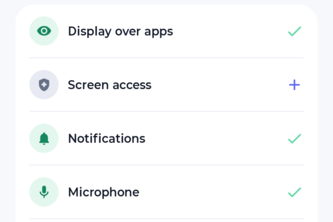
Context Bubble is a self-reported Android application that presents itself as a privacy-first AI assistant in the form of a persistent floating bubble. It claims to understand screen context, enable voice interaction, and synchronize approved memories across apps and ChatGPT, all while maintaining user control over data access.
What changed
The author describes building a native Android assistant that remains available within other applications without requiring users to leave their current task. The product is positioned as an edge-docked bubble with consent-based memory management and privacy controls.
Single most important open question — the commercial due-diligence read
Is there any evidence of user adoption, revenue, or traction beyond the author’s own description? The self-reported nature of this project means that claims about functionality, user behavior, and product-market fit are unverified.
What The Product Actually Is
The description states that Context Bubble is a native Android application built for Android 13 and newer. It uses Kotlin and Jetpack Compose for UI components, with lightweight classic Android Views for the persistent bubble overlay.
Key technical elements include:
- A foreground service using
TYPE_APPLICATION_OVERLAY - Use of Android window insets to position the bubble safely
- Accessibility pipeline that listens only to relevant events (not continuously traversing view trees)
- Room database for local metadata and Android Keystore for encryption
- Supabase backend with Edge Functions, PostgreSQL, pgvector-based semantic retrieval, and private object storage
- OpenAI integration via backend credentials only (no model keys in APK)
- A dedicated Context Bubble MCP server for approved shared AI memories
The product is described as a floating bubble that:
- Allows users to ask about screen content
- Supports voice input with transcription fallbacks
- Manages memory in three privacy lanes: ephemeral, local-only, and shared AI
- Provides quick fill, reminders, image generation, and clipboard integration
- Includes a health dashboard for system status
Inference The product is described as a lightweight, event-driven assistant that does not continuously monitor or record user activity unless explicitly triggered.
Positioning & Claim Evolution
The author states the inspiration behind Context Bubble was to remove friction in using AI assistants on mobile devices, especially around interruptions caused by switching between apps and copying context manually.
Positioning:
- The app is positioned as a privacy-first assistant.
- It emphasizes consent-driven intelligence.
- It claims to be a lightweight, persistent overlay that helps directly over the current application.
- It differentiates itself from “putting ChatGPT in a bubble” by focusing on user control and explicit action.
The claim evolution shows:
- From general AI assistant to a specifically designed Android edge-docked bubble
- From basic functionality to privacy controls, memory management, voice interaction, and integration with external tools like Supabase and OpenAI
Inference The positioning is clearly focused on user privacy, minimal interruption, and context-awareness, but there is no evidence of how this has evolved from an idea or whether it aligns with market demand.
Target Customer & ICP
The description does not explicitly define a target customer or ideal customer profile (ICP). It implies that the product is aimed at users who:
- Use Android phones regularly
- Want to interact with AI assistants without leaving their current app
- Value privacy and control over data access
- May be interested in voice interaction, memory management, and automation
Inference The ICP likely includes tech-savvy Android users, possibly developers or power users who are comfortable with advanced features like accessibility controls and local encryption.
Business Model & Pricing Evidence
There is no evidence of a business model or pricing structure in the description. The author does not mention:
- Revenue streams
- Subscription tiers
- Freemium offerings
- Monetization strategy
- Paid features or integrations
Inference No commercial model is evident from the self-reported content.
Technical & Delivery Signals
The project includes several technical signals:
- Built natively in Kotlin for Android 13+
- Uses Jetpack Compose, Room, WorkManager, Hilt, and other standard Android libraries
- Implements foreground services, overlays, and window insets handling
- Integrates with Supabase (Edge Functions, PostgreSQL, pgvector)
- Uses OpenAI capabilities via backend only
- Employs deterministic policy enforcement for actions
- Supports encrypted local storage and cloud sync
Inference The technical architecture appears well-thought-out and aligned with Android best practices. However, the lack of real-world usage data or performance metrics makes it difficult to assess scalability or stability.
Traction & Maturity Signals
There is no evidence of traction, including:
- No revenue figures
- No customer base
- No user engagement data
- No product adoption metrics
- No public reviews or testimonials
The project was submitted to the OpenAI 2026 hackathon, suggesting it may be a prototype or proof-of-concept rather than a mature product.
Inference The product is likely in early development or prototype stage. There is no indication of market traction or user feedback.
Competitive Context
The description does not provide any information about competitors or competitive landscape. It does not mention:
- Similar products
- Market positioning relative to existing AI assistants
- Differentiation from other floating bubbles or overlays
- Comparison with ChatGPT, Google Assistant, or other mobile AI tools
Inference No competitive context is evident in the provided description.
Open Questions & Risks
Key risks and open questions:
- Unverified claims: All features are self-reported; no independent validation.
- No traction or revenue: The project appears to be a prototype or hackathon submission with no evidence of adoption.
- Single-person team: Only one developer is listed, which may limit scalability or product development speed.
- Privacy vs. utility tension: While privacy is emphasized, the product’s utility depends on capturing context — a balance that could be difficult to maintain.
- Limited integration scope: No mention of third-party integrations beyond Supabase and OpenAI.
Inference The project lacks commercial viability indicators and may not yet be ready for market entry or investment.
Questions the description leaves open
- What is the current stage of development? Is this a prototype, MVP, or beta?
- Have you tested the app with real users? If so, what feedback have you received?
- How do you plan to monetize the product? Are there any revenue models in place?
- What are your plans for scaling beyond a single developer?
- How do you intend to manage privacy compliance and data governance at scale?
- Have you considered how this product will integrate with existing ecosystems (e.g., Android, OpenAI, Supabase)?
- What is the expected timeline for launching a full commercial version?
Overall Assessment
Not evidenced: There is no evidence of revenue, traction, or customer data to support an investment or partnership decision.
The project is described as a self-contained Android assistant, built by one developer, and submitted to a hackathon. It includes detailed technical descriptions but lacks any indication of real-world usage, market validation, or commercial readiness.
Confidence level: Low — based entirely on self-reported content with no external verification or data points.
Assessment: This is a conceptual prototype with strong technical execution and privacy focus, but it does not yet demonstrate commercial viability or traction. Further due diligence would require evidence of user engagement, revenue, or product-market fit.
User Stories BotA demo video on every pull request
Get a demo video on every new feature
GitHub App that watches your pull requests and records a narrated, captioned demo.
Save time on demo prep and make informed decisions faster with a video walkthrough of every new feature.
Source
Submitted to the OpenAI 2026 hackathon on Devpost. Project home on Devpost. Back to the full gallery on Devpost.
This competitive analysis was produced by top-founders.com (opens in a new tab)
Generated by a language model from this project's public Devpost page — its tagline, the author's own write-up and any built-with tags listed there — as captured in August 2026. Short quotations are the author's words. It is an opinion on the idea as a business, not on the people behind it, and it reflects the description as published then. If the project has moved on, request a correction below. The analysis is not independent research and contains no verified traction, revenue or customer data.
An independent guide by KFG International LLC — not affiliated with, endorsed by, or connected to Devpost or OpenAI.