

Archive position — measured, not model output
0 likes on Devpost
2,263 of the 7,850 archived projects have more likes, and 5,587 share exactly 0 — so this project's #2,899 place in the like-ranked listing is a tie-break inside that group, not a ranking.
Projects (log scale)
Likes on Devpost. ▲ marks this project's group.
Show the figures
| Likes | Projects | Share of archive |
|---|---|---|
| 0 | 5,587 | 71.2% |
| 1 | 1,758 | 22.4% |
| 2 | 284 | 3.6% |
| 3–4 | 132 | 1.7% |
| 5–9 | 75 | 1.0% |
| 10+ | 14 | 0.2% |
 User Stories BotA demo video on every pull request
Get a demo video on every new feature
GitHub App that watches your pull requests and records a narrated, captioned demo.
Save time on demo prep and make informed decisions faster with a video walkthrough of every new feature.
Executive Summary
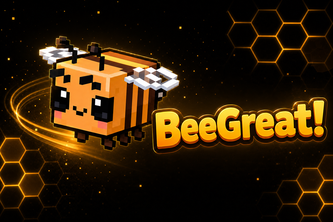
BeeGreat is a self-reported focus app that claims to turn user goals into one clear next step, using playful mechanics like a "Hive" and "GolieBees" to visualize progress. It is built as a mobile and web application with shared backend and AI agent components, leveraging technologies such as Expo, TanStack, Clerk, Convex, Flue, OpenRouter, and ElevenLabs. The author states that the app enables users to move from spoken intention to task completion with real-time feedback.
The project appears to be a solo effort by one founder, Francesco Oddo, submitted to the OpenAI 2026 hackathon. It is not evidenced to have any revenue, customers, or traction beyond its own description. The business model and pricing are not described. There is no evidence of competitive positioning or market validation.
The single most important open question is: What is the actual utility and adoption rate of this app in real-world use?
What The Product Actually Is
The description states that BeeGreat is a focus app. It turns user goals into one clear next step, and completing actions rewards progress with "Honey" and brings the user's "Hive" and "GolieBees" to life.
It is built as both a mobile application (using Expo) and a web application (using TanStack), with shared backend components. The app uses Clerk for authentication, Convex for backend, Flue-powered Bee agent using OpenRouter and ElevenLabs, and integrates with Google Health API and ChatGPT via a Codex Adapter.
The author claims the app enables users to move from spoken intention to task completion and provides live Hive feedback.
Positioning & Claim Evolution
The description states that BeeGreat grew from a frustration with existing productivity apps becoming "another thing to manage." It takes inspiration from Forest’s and Habitica's playful motivation.
The product is positioned as a focus app that uses gamification elements like Honey rewards, Hive visualization, and GolieBees to make progress tangible and engaging. The author describes it as turning goals into one clear next step.
There is no evidence of prior positioning or evolution beyond this single self-reported description.
Target Customer & ICP
The description states that BeeGreat is for anyone who has a goal in life, since "ANYONE has a goal in life!" It does not specify any细分 customer segments or personas beyond this broad claim.
It is unclear whether the app targets specific user types (e.g., students, professionals, entrepreneurs) or if it's designed for general use. No evidence of target customer segmentation or ICP definition exists.
Business Model & Pricing Evidence
The description does not state anything about a business model or pricing structure. There is no mention of monetization strategies, subscription tiers, or payment mechanisms.
Technical & Delivery Signals
The app is built with:
- Mobile: Expo
- Web: TanStack
- Backend: Convex
- Authentication: Clerk
- AI Agent: Flue-powered Bee agent using OpenRouter and ElevenLabs
- Integration: Google Health API, ChatGPT via Codex Adapter
- Other tools: bun, cloudflare-r2, cloudflare-workers, react, react-native, sentry, typescript
The author claims that mobile and web versions share the same conversations, goals, agent, and real-time data.
Traction & Maturity Signals
There is no evidence of traction or maturity. The description states that this was a hackathon submission (OpenAI 2026), and there is no mention of users, downloads, revenue, or adoption metrics.
The author mentions building the complete first-focus loop but does not provide any data on usage or retention.
Competitive Context
The description mentions inspiration from Forest and Habitica, which are known productivity/gamification apps. However, there is no evidence of competitive analysis or differentiation beyond these references.
No information is provided about other players in the focus or productivity app space, nor how BeeGreat compares to them.
Open Questions & Risks
- Solo founder (1 person team) may indicate limited execution capacity.
- No revenue, customer base, or traction data — all self-reported.
- The app appears to be a hackathon project with no evidence of long-term development or market validation.
- The author claims GPT 5.6 Sol is a beast at computer use but does not provide any objective measure of performance or user experience.
- No mention of scalability, security, or data privacy practices.
Questions the description leaves open
- What specific problem are you solving that existing apps don’t?
- How do you plan to monetize this app?
- Have you conducted any user testing or gathered feedback from real users?
- What is your roadmap for development beyond the current MVP?
- Are there any technical limitations or dependencies that could affect scalability or performance?
- What are your plans for team expansion or partnerships?
Overall Assessment
Not evidenced.
The project is described as a solo hackathon submission with no evidence of traction, revenue, or customer adoption. The business model and pricing are not disclosed. There is insufficient information to assess commercial viability or investment potential.
The description is self-reported and unverified; there is no independent validation of claims made about the product or its market fit.
User Stories BotA demo video on every pull request
Get a demo video on every new feature
GitHub App that watches your pull requests and records a narrated, captioned demo.
Save time on demo prep and make informed decisions faster with a video walkthrough of every new feature.
Source
Submitted to the OpenAI 2026 hackathon on Devpost. Project home on Devpost. Back to the full gallery on Devpost.
This competitive analysis was produced by top-founders.com (opens in a new tab)
Generated by a language model from this project's public Devpost page — its tagline, the author's own write-up and any built-with tags listed there — as captured in August 2026. Short quotations are the author's words. It is an opinion on the idea as a business, not on the people behind it, and it reflects the description as published then. If the project has moved on, request a correction below. The analysis is not independent research and contains no verified traction, revenue or customer data.
An independent guide by KFG International LLC — not affiliated with, endorsed by, or connected to Devpost or OpenAI.