

Archive position — measured, not model output
0 likes on Devpost
2,263 of the 7,850 archived projects have more likes, and 5,587 share exactly 0 — so this project's #2,883 place in the like-ranked listing is a tie-break inside that group, not a ranking.
Projects (log scale)
Likes on Devpost. ▲ marks this project's group.
Show the figures
| Likes | Projects | Share of archive |
|---|---|---|
| 0 | 5,587 | 71.2% |
| 1 | 1,758 | 22.4% |
| 2 | 284 | 3.6% |
| 3–4 | 132 | 1.7% |
| 5–9 | 75 | 1.0% |
| 10+ | 14 | 0.2% |
 User Stories BotA demo video on every pull request
Get a demo video on every new feature
GitHub App that watches your pull requests and records a narrated, captioned demo.
Save time on demo prep and make informed decisions faster with a video walkthrough of every new feature.
Executive Summary
What the company appears to be
BayFlow is a self-reported interactive 3D factory digital twin built with OpenAI Codex and Three.js. The author states it allows manufacturing teams to explore assembly layouts, logistics, safety clearances, crane workflows, and usable floor area before physical changes.
What changed
This is a single-person project submitted to an OpenAI hackathon. It represents an experimental prototype that the author claims can convert real factory spaces into interactive 3D models with operational logic and feedback mechanisms.
Single most important open question
Is there evidence of any commercial traction, revenue, or customer adoption beyond the author's own development work?
What The Product Actually Is
The description states that BayFlow is an interactive browser-based 3D factory digital twin. It uses:
- Three.js for rendering
- JavaScript, HTML, and CSS for implementation
- OpenAI Codex to translate domain knowledge into code iteratively
- Procedurally generated models without external 3D assets
- A real-world meter-based coordinate system
Key features include:
- Switching between perspective and top-down views
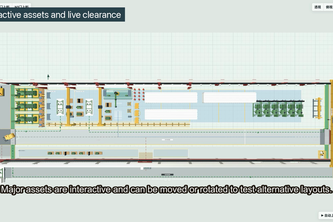
- Dragging and rotating components (engines, forklifts, cranes, etc.)
- Simulating logistics workflows through doors
- Operating cranes with trolley, hook, lifting-beam, sling, and release logic
- Live clearance measurements and usable area tracking
- Offline Windows 10 package generation
The author describes it as closer to an interactive engineering sand table than a static rendering.
The description states BayFlow is an interactive browser-based 3D factory digital twin built with OpenAI Codex and Three.js, using procedural modeling and real-world meters for coordinate consistency.
Positioning & Claim Evolution
The author positions BayFlow as a tool that:
- Turns local measurements, annotated photos, operator knowledge, and production constraints into an interactive model
- Enables manufacturing teams to explore layouts together before making physical changes
- Supports testing of assembly layouts, logistics, safety clearances, crane workflows, and usable floor area
It is described as a co-creation tool between a manufacturing specialist and AI coding agent, aimed at rapid iteration and early feedback.
The description states BayFlow was built to test how people, materials, forklifts, cranes, doors, safety zones, and production equipment interact in the same space — turning local observations into an interactive model.
Target Customer & ICP
The author does not explicitly name target customers or define an ideal customer profile (ICP). However, based on the use case described:
- Primary users appear to be manufacturing teams, particularly those involved in factory layout planning and production logistics
- The tool is designed for industrial environments where physical changes are costly and require careful coordination
The description states BayFlow supports manufacturing teams exploring layouts together, but does not name specific industries or roles.
Business Model & Pricing Evidence
There is no evidence of a business model or pricing structure in the provided description. The project is described as a single-person hackathon submission, with no mention of monetization, licensing, or customer acquisition strategies.
The description states this was built for an OpenAI hackathon and does not indicate any commercial business model or pricing.
Technical & Delivery Signals
- Built using Three.js (a JavaScript 3D library)
- Implemented in JavaScript, HTML, CSS
- Uses OpenAI Codex to assist development
- Models are procedurally generated, avoiding external assets
- Supports offline Windows 10 package generation
- Includes real-time clearance feedback and dynamic area tracking
- Designed with operational roles, assembly relationships, movement constraints, snap/release behavior, collision-aware zones
The description states BayFlow was built through iterative collaboration with OpenAI Codex, using procedural modeling and real-time feedback logic.
Traction & Maturity Signals
There is no evidence of traction or maturity beyond the author’s own development work:
- Project is self-reported as a hackathon submission
- No mention of users, customers, revenue, or adoption
- No data on usage frequency, retention, or product iteration history outside of the author's revisions
- The project has not been commercialized or scaled beyond one developer
The description states this was submitted to an OpenAI 2026 hackathon and does not indicate any traction or commercialization.
Competitive Context
The description does not provide information about competitors or market positioning. It is unclear whether similar tools exist in the marketplace, nor what the competitive landscape looks like for digital twins in manufacturing.
The description does not mention competitors or existing solutions in the digital twin space for manufacturing.
Open Questions & Risks
- Single-person development: No team, no external validation, no product-market fit evidence
- Hackathon prototype: Not a commercial product or scalable solution
- No revenue or customer data: No indication of monetization or traction
- Unverified claims: All features and capabilities are self-reported without independent verification
- Limited scope: Only one example use case (generator assembly bay) is described
The description indicates this is a single-developer hackathon project with no evidence of commercial viability, traction, or scalability.
Questions the description leaves open
- What specific manufacturing challenges does BayFlow address that current tools don’t?
- Has the author tested the tool with actual factory teams or operators?
- Are there any plans to expand beyond the current prototype and into production use?
- How is the AI-assisted development process integrated into ongoing product development?
- Is there a plan for monetization, licensing, or customer acquisition?
These questions aim to probe whether the self-reported claims have any basis in real-world application or commercial intent.
Overall Assessment
There is no evidence of commercial traction, revenue, or customer adoption. The project is described as a single-person hackathon submission, with no indication of product-market fit, scalability, or monetization strategy.
The description states this is an unverified, self-reported prototype submitted to a hackathon — not a commercial product or investment-ready venture.
User Stories BotA demo video on every pull request
Get a demo video on every new feature
GitHub App that watches your pull requests and records a narrated, captioned demo.
Save time on demo prep and make informed decisions faster with a video walkthrough of every new feature.
Source
Submitted to the OpenAI 2026 hackathon on Devpost. Project home on Devpost. Back to the full gallery on Devpost.
This competitive analysis was produced by top-founders.com (opens in a new tab)
Generated by a language model from this project's public Devpost page — its tagline, the author's own write-up and any built-with tags listed there — as captured in August 2026. Short quotations are the author's words. It is an opinion on the idea as a business, not on the people behind it, and it reflects the description as published then. If the project has moved on, request a correction below. The analysis is not independent research and contains no verified traction, revenue or customer data.
An independent guide by KFG International LLC — not affiliated with, endorsed by, or connected to Devpost or OpenAI.