

Archive position — measured, not model output
0 likes on Devpost
2,263 of the 7,850 archived projects have more likes, and 5,587 share exactly 0 — so this project's #2,689 place in the like-ranked listing is a tie-break inside that group, not a ranking.
Projects (log scale)
Likes on Devpost. ▲ marks this project's group.
Show the figures
| Likes | Projects | Share of archive |
|---|---|---|
| 0 | 5,587 | 71.2% |
| 1 | 1,758 | 22.4% |
| 2 | 284 | 3.6% |
| 3–4 | 132 | 1.7% |
| 5–9 | 75 | 1.0% |
| 10+ | 14 | 0.2% |
 User Stories BotA demo video on every pull request
Get a demo video on every new feature
GitHub App that watches your pull requests and records a narrated, captioned demo.
Save time on demo prep and make informed decisions faster with a video walkthrough of every new feature.
Executive Summary
What the company appears to be
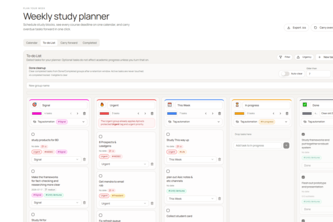
Aptivo is a self-management tool suite built by a single developer (Jason Norg Nguyen) using AI tools like ChatGPT, Codex, GitHub, and Lovable Cloud. It includes features such as calendars, Kanban boards, habit tracking, skill trees, flashcards, and timers. The product was developed during a hackathon and is currently bootstrapped.
What changed
The project evolved from an experimental personal tool into a more structured platform with AI-assisted development workflows, including manual code modifications via Codex and GitHub, and integration with Lovable for hosting and authentication.
Single most important open question — the commercial due-diligence read
Is there evidence of any external user adoption or product-market fit beyond the founder’s personal use? The description does not indicate whether others are using Aptivo or if it has traction beyond its creator's experience.
What The Product Actually Is
The description states that Aptivo is a "suite of self-management for everyone. Useful for life." It includes:
- Planners: Auto-tagging Kanban to-do list with drag-and-drop functionality, stopwatches and timers, calendars, task filters using tags and mini to-do lists, long-term goal setting through skill trees.
- Trackers: Study logs and diagnostics, wake-up and energy logs, leaderboards, assessment priority trackers, habit journals and frameworks, habit systems and daily simulations.
The author describes building the app using AI tools (ChatGPT, Codex), GitHub for version control, and Lovable Cloud for hosting. The app supports Google account authentication and multi-account syncing.
Inference: The product appears to be a personal productivity tool aimed at individuals managing tasks, habits, and goals, with some gamification elements like leaderboards and skill trees.
Positioning & Claim Evolution
The author positions Aptivo as a tool for self-management, targeting people who struggle with structure and self-direction—particularly those with ADHD or depression. The tagline “A suite of self-management for everyone. Useful for life.” suggests broad applicability but lacks specificity about target segments.
There is no indication that the positioning has evolved beyond its initial personal use case. The narrative emphasizes the founder’s journey from feeling overwhelmed to building a solution, implying that Aptivo was born out of necessity rather than market research or user feedback.
Claim: “I wanted to live a life without being bound to medication and so I wanted to build that life with Aptivo.”
This is a self-reported claim about intent and personal motivation, not evidence of traction or product-market fit.
Target Customer & ICP
The description does not identify specific customer personas or an ideal customer profile (ICP). The founder mentions interviewing friends and building tools for them, but no names, demographics, or usage data are provided.
Inference: Based on the narrative, the primary users might be individuals with ADHD or depression seeking non-medication-based self-management solutions. However, this is inferred from the author’s personal story rather than verified customer data.
Business Model & Pricing Evidence
There is no evidence of pricing information, revenue streams, or monetization strategy in the description. The project is described as bootstrapped and built during a hackathon, with no mention of paid features or subscriptions.
Claim: “With sufficient funding, more AI-powered capabilities could help bridge the gap between the need to learn and a genuine passion for learning.”
This reflects a potential future business model but does not constitute current evidence of monetization.
Technical & Delivery Signals
The author reports using:
- AI tools: ChatGPT, Codex
- Development environment: GitHub (two-way synced repository)
- Hosting platform: Lovable Cloud
- Authentication method: Google account syncing
- Code modification approach: Manual coding and agentically modified code via Codex/GitHub
The author also notes challenges with cost and development inefficiencies in Lovable, leading to manual code changes.
Inference: The product is built using modern AI-assisted development practices and integrates with standard platforms. However, there is no evidence of scalability, performance metrics, or technical architecture details beyond the developer’s process.
Traction & Maturity Signals
There is no evidence of customer adoption, user engagement, or revenue generation. The description focuses entirely on the founder's personal experience and development journey.
Claim: “I’m particularly proud of how useful Aptivo has become in helping me manage my day-to-day life.”
This is a self-reported statement about utility, not proof of traction or external validation.
Competitive Context
The description does not mention competitors or market positioning relative to existing tools. It implies that Aptivo is unique in its approach due to AI integration and personalization, but no comparison with other apps like Notion, Todoist, or Forest is made.
Inference: The product may compete with general productivity and habit-tracking tools, but there is no evidence of competitive analysis or differentiation beyond the founder’s perspective.
Open Questions & Risks
- Single-founder model: Only one person is involved in development.
- Bootstrapped without traction: No revenue, customers, or external validation.
- Dependency on AI tools: Reliance on ChatGPT and Codex may limit scalability or introduce dependency risks.
- Lack of formal product-market fit evidence: The tool seems to be built for personal use rather than validated market demand.
- No clear monetization path: No indication of how the product will generate revenue.
Questions the description leaves open
- What specific feedback have you received from people outside your immediate circle who are using Aptivo?
- Have you conducted any formal user testing or surveys to validate demand for these features?
- How do you plan to scale beyond a single developer and maintain product quality?
- Are there any plans to introduce paid tiers or monetization strategies?
- What are the key technical limitations or bottlenecks currently preventing further growth?
Overall Assessment
Not evidenced: There is no evidence of revenue, customers, or traction beyond the founder’s personal use. The project is described as a hackathon effort that evolved into a bootstrapped tool with no external validation.
Confidence level: Low — based on self-reported narrative only, with no third-party data or performance indicators.
Assessment: Early-stage concept with unclear commercial viability and no demonstrated product-market fit. Further due diligence would require evidence of user adoption, monetization plans, and scalability beyond the founder’s current capacity.
User Stories BotA demo video on every pull request
Get a demo video on every new feature
GitHub App that watches your pull requests and records a narrated, captioned demo.
Save time on demo prep and make informed decisions faster with a video walkthrough of every new feature.
Source
Submitted to the OpenAI 2026 hackathon on Devpost. Project home on Devpost. Back to the full gallery on Devpost.
This competitive analysis was produced by top-founders.com (opens in a new tab)
Generated by a language model from this project's public Devpost page — its tagline, the author's own write-up and any built-with tags listed there — as captured in August 2026. Short quotations are the author's words. It is an opinion on the idea as a business, not on the people behind it, and it reflects the description as published then. If the project has moved on, request a correction below. The analysis is not independent research and contains no verified traction, revenue or customer data.
An independent guide by KFG International LLC — not affiliated with, endorsed by, or connected to Devpost or OpenAI.