

Archive position — measured, not model output
1 like on Devpost
505 of the 7,850 archived projects have more likes, and 1,758 share exactly 1 — so this project's #605 place in the like-ranked listing is a tie-break inside that group, not a ranking.
Projects (log scale)
Likes on Devpost. ▲ marks this project's group.
Show the figures
| Likes | Projects | Share of archive |
|---|---|---|
| 0 | 5,587 | 71.2% |
| 1 | 1,758 | 22.4% |
| 2 | 284 | 3.6% |
| 3–4 | 132 | 1.7% |
| 5–9 | 75 | 1.0% |
| 10+ | 14 | 0.2% |
 User Stories BotA demo video on every pull request
Get a demo video on every new feature
GitHub App that watches your pull requests and records a narrated, captioned demo.
Save time on demo prep and make informed decisions faster with a video walkthrough of every new feature.
Executive Summary
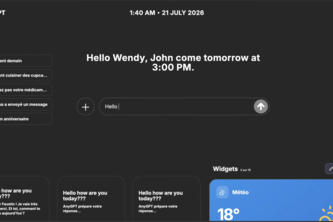
The description states that AnyGPT is a tool designed to make AI accessible to people of all ages, abilities, and technical levels — particularly targeting the elderly and those with disabilities. It is presented as a simplified interface for ChatGPT-like functionality, incorporating smart widgets and plugins. The author, Faustin Daub, built it using Codex, Figma, Next.js, and PostgreSQL. No revenue, customers, or traction data are provided; this is a self-reported project description from a hackathon submission.
Key open question
What is the actual commercial viability of a simplified AI interface for under-served demographics, and how does the author intend to scale beyond a single-person build?
What The Product Actually Is
The description states that AnyGPT is a tool that offers a simplified interface to ChatGPT-like functionality. It includes smart widgets and plugins to make accessing information easier. It was built using Codex for AI features, Figma for design, Next.js for the frontend, and PostgreSQL for data storage.
Inference The product appears to be an AI-powered web application focused on accessibility and ease-of-use, likely aimed at users who are not tech-savvy or have physical or cognitive limitations.
Positioning & Claim Evolution
The author states that AnyGPT was inspired by the digital divide affecting elderly and disabled individuals. It is positioned as a solution to make powerful AI tools accessible to everyone, regardless of age, disability, or technical skill level.
Inference The positioning evolved from an idea rooted in social impact (bridging the digital divide) to a product concept that leverages AI and plugin architecture to simplify access.
Target Customer & ICP
The description states that AnyGPT is intended for anyone — regardless of age, disability, or technical level. It specifically mentions targeting the elderly and people with disabilities as key user groups.
Inference The ICP appears to be a broad demographic that includes older adults and individuals with disabilities who may struggle with current AI interfaces.
Business Model & Pricing Evidence
Not evidenced.
Explanation
No information is provided about pricing, monetization strategy, or business model. The description does not mention any revenue streams or customer acquisition plans.
Technical & Delivery Signals
The author states that AnyGPT was built using Codex, Figma, Next.js, and PostgreSQL. It includes smart widgets and plugins for enhanced functionality.
Inference The technical stack suggests a modern web application with AI integration (via Codex), UI design (Figma), and backend data handling (PostgreSQL). The use of plugins implies extensibility, but no details are given on how this is implemented or scaled.
Traction & Maturity Signals
Not evidenced.
Explanation
There is no evidence of customers, revenue, usage metrics, or product maturity beyond the single-person build. The project was submitted to a hackathon and has no stated traction or growth indicators.
Competitive Context
Not evidenced.
Explanation
No mention of competitors or market positioning relative to existing AI tools or accessibility solutions. The description does not reference similar products or platforms in the space.
Open Questions & Risks
- Single-person build: The project is described as a solo effort, which raises questions about scalability and long-term development capacity.
- No commercial evidence: No revenue, customers, or traction data are provided, making it difficult to assess viability.
- Unverified claims: All claims are self-reported and unverified; there is no independent validation of the product’s functionality or impact.
- Lack of clarity on monetization: No indication of how the project intends to generate value or sustain itself beyond a hackathon submission.
Questions the description leaves open
- What specific user research or testing has been done with elderly or disabled users?
- How does AnyGPT differentiate from existing AI tools in terms of accessibility features?
- Are there any plans to partner with organizations focused on aging or disability support?
- What is the roadmap for scaling beyond a single-person development effort?
- Is there any intention to monetize the product, and if so, how?
Overall Assessment
Not evidenced.
Explanation
No information is provided about funding, partnerships, or investment interest. The project is described as a hackathon submission with no indication of commercial intent or traction. It cannot be evaluated for investment or partnership potential without further evidence.
User Stories BotA demo video on every pull request
Get a demo video on every new feature
GitHub App that watches your pull requests and records a narrated, captioned demo.
Save time on demo prep and make informed decisions faster with a video walkthrough of every new feature.
Source
Submitted to the OpenAI 2026 hackathon on Devpost. Project home on Devpost. Back to the full gallery on Devpost.
This competitive analysis was produced by top-founders.com (opens in a new tab)
Generated by a language model from this project's public Devpost page — its tagline, the author's own write-up and any built-with tags listed there — as captured in August 2026. Short quotations are the author's words. It is an opinion on the idea as a business, not on the people behind it, and it reflects the description as published then. If the project has moved on, request a correction below. The analysis is not independent research and contains no verified traction, revenue or customer data.
An independent guide by KFG International LLC — not affiliated with, endorsed by, or connected to Devpost or OpenAI.