

Archive position — measured, not model output
0 likes on Devpost
2,263 of the 7,850 archived projects have more likes, and 5,587 share exactly 0 — so this project's #2,559 place in the like-ranked listing is a tie-break inside that group, not a ranking.
Projects (log scale)
Likes on Devpost. ▲ marks this project's group.
Show the figures
| Likes | Projects | Share of archive |
|---|---|---|
| 0 | 5,587 | 71.2% |
| 1 | 1,758 | 22.4% |
| 2 | 284 | 3.6% |
| 3–4 | 132 | 1.7% |
| 5–9 | 75 | 1.0% |
| 10+ | 14 | 0.2% |
 User Stories BotA demo video on every pull request
Get a demo video on every new feature
GitHub App that watches your pull requests and records a narrated, captioned demo.
Save time on demo prep and make informed decisions faster with a video walkthrough of every new feature.
Executive Summary
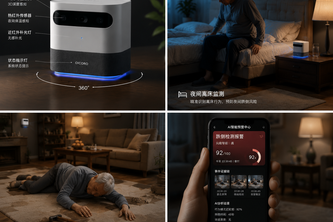
The description states that this is an AI-powered smart elderly care hardware system. The author describes a system that monitors vital signs and environmental conditions using wearable and environmental sensors, applies AI to detect anomalies and reduce false alarms, and can trigger emergency responses. It claims to support independent living while giving caregivers peace of mind.
What changed: This is a hackathon submission describing an idea for a smart elderly care system. The author states they built it as part of a Devpost project, but there is no evidence of commercial traction or deployment.
The single most important open question: Is this a viable product concept that could be developed into a scalable business, or is it a proof-of-concept that lacks the technical depth, regulatory compliance, or market validation to become a real solution?
What The Product Actually Is
The description states that this is an AI-powered smart elderly care system. It collects data from various sensors including:
- Heart-rate sensors
- Blood oxygen monitors
- Fall-detection modules
- Motion sensors
- Smart medication boxes
- Bed-pressure sensors
- Temperature and air-quality sensors
- Cameras and depth sensors
The system uses machine learning models to analyze behavioral and physiological patterns, create personalized health baselines, and detect abnormal patterns that may indicate emergencies.
It claims to have an AI engine that filters out non-essential alerts and reduces false alarms. It can automatically activate emergency response protocols, notify family members and caregivers, share health information, contact emergency medical services, and provide voice guidance.
The system combines wearable devices, environmental sensors, edge-computing hardware, and an AI-powered health analysis platform.
Positioning & Claim Evolution
The description states that the system is positioned to improve daily living environments for elderly people, provide assistive tools, monitor health conditions, and optimize treatment plans. It aims to protect elderly people while preserving their independence, privacy, and dignity.
The author claims this system goes beyond simple health monitoring by understanding individual behavior patterns, identifying meaningful risks, and responding according to the severity of each situation.
The positioning evolved from a general "smart elderly care" concept to a specific focus on intelligent alert filtering, personalized health baselines, real-time emergency detection, and local emergency detection without internet access.
Target Customer & ICP
The description states that the target customer is elderly people who are living alone or managing chronic illnesses without continuous support. It also targets families and caregivers who want peace of mind about their loved ones' wellbeing.
The system is described as supporting users in ordinary homes, nursing facilities, hospitals, and community healthcare centers.
Business Model & Pricing Evidence
Not evidenced. The description does not contain any information about pricing models, revenue streams, or business model details.
Technical & Delivery Signals
The description states that the system combines wearable devices, environmental sensors, edge-computing hardware, and an AI-powered health analysis platform.
It claims to use machine-learning models to analyze long-term behavioral and physiological patterns to create personalized health baselines for each user.
Edge computing is used for urgent risk detection locally, while cloud services support historical analysis, caregiver dashboards, remote updates, and treatment recommendations.
The system includes features such as intelligent alert-filtering system, real-time fall and emergency detection, local emergency detection without internet access, automated emergency response protocols, privacy-focused edge AI processing, and a simple dashboard for families and caregivers.
Traction & Maturity Signals
Not evidenced. The description states this is a hackathon submission to the OpenAI 2026 hackathon on Devpost. There is no evidence of revenue, customers, or deployment beyond the project's own self-description.
Competitive Context
Not evidenced. The description does not contain any information about competitors or market positioning relative to existing solutions in the elderly care technology space.
Open Questions & Risks
The description states that one of the biggest challenges was distinguishing real emergencies from normal daily activities, which suggests a risk of false alarms. It also mentions challenges including reducing false alarms, protecting user privacy, maintaining reliable monitoring during network failures, supporting users who forget to wear monitoring devices, integrating data from different sensors, making AI decisions understandable and explainable, and designing hardware that is comfortable and easy to use.
The system appears to be a proof-of-concept rather than a commercial product. There is no evidence of regulatory compliance or clinical validation.
Questions the description leaves open
- What specific regulatory requirements must this system meet for deployment in healthcare settings?
- How does the system handle edge cases where user behavior deviates significantly from their baseline?
- What are the privacy implications of using cameras and depth sensors in home environments?
- How is the AI model trained, and what data sources are used to create personalized health baselines?
- What is the plan for addressing false positive rates that could lead to alert fatigue?
- How does the system integrate with existing healthcare infrastructure and medical professionals?
- What are the hardware costs and scalability considerations for mass deployment?
- How do you plan to validate the accuracy of emergency detection in real-world conditions?
Overall Assessment
Not evidenced. The description states this is a hackathon submission with no evidence of commercial traction, revenue, or customer validation. It is unclear whether this represents a viable business opportunity or merely an idea that requires significant development before it could become a product.
User Stories BotA demo video on every pull request
Get a demo video on every new feature
GitHub App that watches your pull requests and records a narrated, captioned demo.
Save time on demo prep and make informed decisions faster with a video walkthrough of every new feature.
Source
Submitted to the OpenAI 2026 hackathon on Devpost. Project home on Devpost. Back to the full gallery on Devpost.
This competitive analysis was produced by top-founders.com (opens in a new tab)
Generated by a language model from this project's public Devpost page — its tagline, the author's own write-up and any built-with tags listed there — as captured in August 2026. Short quotations are the author's words. It is an opinion on the idea as a business, not on the people behind it, and it reflects the description as published then. If the project has moved on, request a correction below. The analysis is not independent research and contains no verified traction, revenue or customer data.
An independent guide by KFG International LLC — not affiliated with, endorsed by, or connected to Devpost or OpenAI.